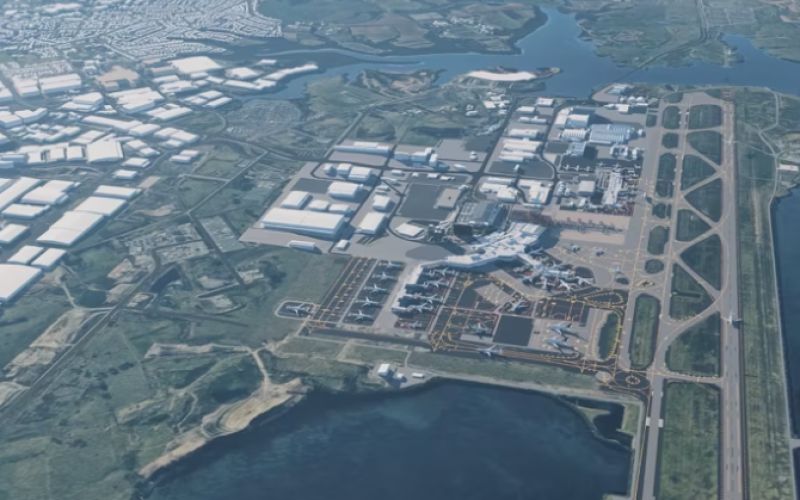
Domestic Jet Terminal - Airfield Stage 2
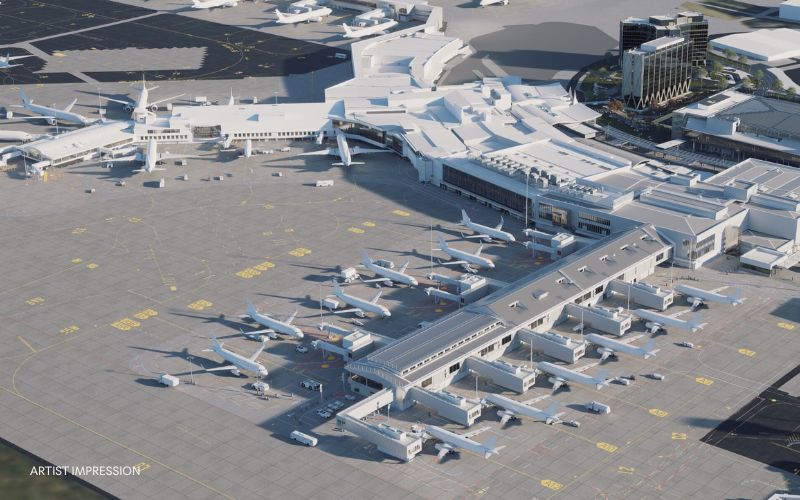
Delivering critical airfield infrastructure and 12 new aircraft stands for Auckland Airport’s Domestic Jet Terminal expansion.
Customer: Auckland Airport
Contract type: Construct only
Location: Auckland International Airport, Auckland (AKL)


Fast Facts
- 12 new aircraft stands
- 70,000 m2 of new concrete pavement
- 4000 m2 of asphalt pavement
- New fuel hydrant system (FHS) with 1000m of fuel main
- 30 hydrants
- 6 fuel valve pits
We are proud to delivering the Airfield
- Stage Two project for Auckland International Airport Limited (AIA), part of
the Domestic Jet terminal Upgrade, the largest private infrastructure project
underway in New Zealand.
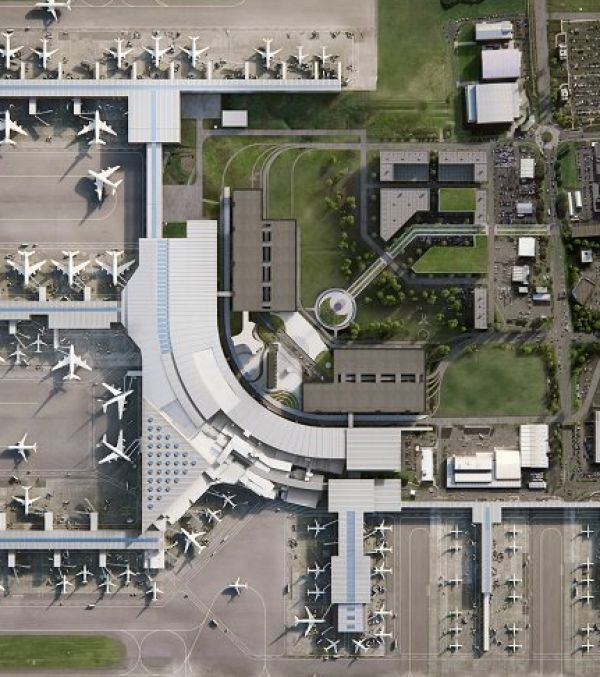
The new Domestic Jet Terminal (DJT) is
being constructed at the eastern end of the International Terminal Building, to
replace the existing building as part of a longer-term a programme of work to
upgrade airport facilities and increase capacity over the next 10 years.
The DJT project is separated
into different packages to minimise risk, help reduce operational disruption
and manage access for contractors working within the airport precinct.
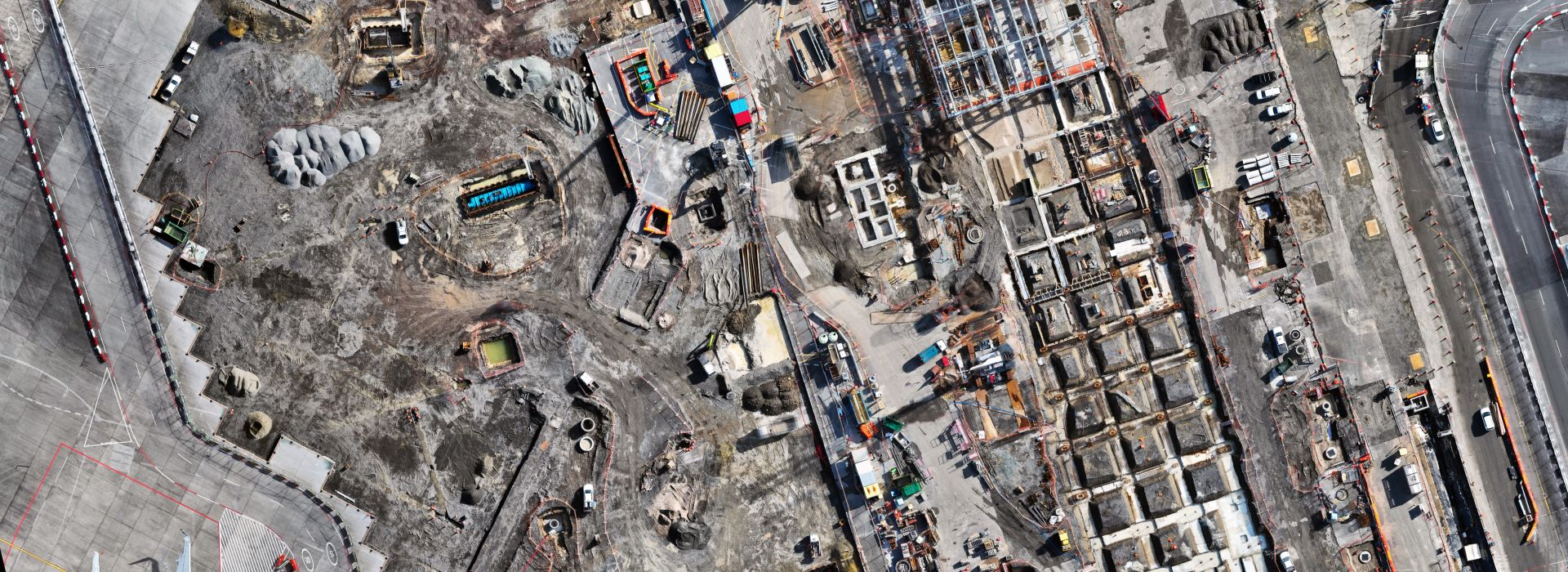
We began construction on the Airfield Stage Two, and 12 new aircraft stands in mid-2025, shortly after the contract was awarded. The scope includes:
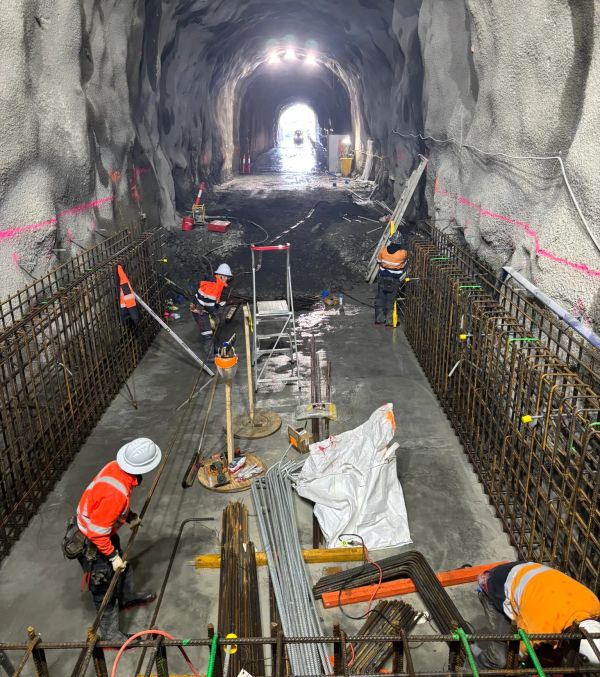
- Demolition and excavation of the existing concrete and asphalt
pavement
- New airfield pavement and roading:
·
70,000 m2 of new concrete
pavement
·
4000m2 of asphalt pavement
- 1197 m of new fuel main:
·
1000 linear metres of DN450
·
197 linear metres of DN200
·
30 hydrants
·
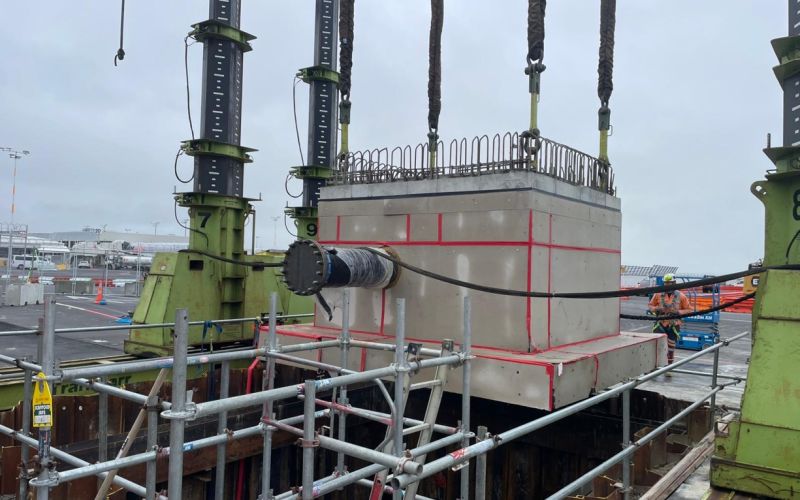
six 70 T pre-cast concrete
fuel hydrant system pits
- Complex electronic, security, lighting, and utility services:
·
Visual Docking Guidance System
(VDGS), Fixed Ground Power (FGP), Preconditioned Air (PCA), Variable Message
Signs (VMS)
·
High Mast Lighting, EV
charging, CCTV cameras, Access Control System (ACS), Wi-Fi
·
Airfield Ground Lighting (AGL)
and Movement Area Guidance (MAG) signs
- Security fencing between airside and landside.
This complex project is being completed while the adjacent airfields remain operational, transporting more than 10 million international passengers and 8.5 million domestic passengers a year.
Some of the value engineering the team are
implementing on the project include:
- a clean build methodology to minimise risk installing the new
fuel main
- pre-cast fuel valve pits will reduce inground works, making
installation faster and easier
- our proprietary fuel testing system will be used to ensure
quality.
The team completed the enabling works in late 2025, began construction on the main works in August 2025 and the project is scheduled for completion in 2029.