Capability Statement
Prepared for Prepared for the Port of Melbourne
May 2026
Introduction - Recruitment
Thank you for considering McConnell Dowell. This short capability statement explains a bit more about the benefits of working with us and showcases our capabilities and some of the interesting projects we deliver.
About Us (typically use first)
For over 65 years customers have been coming to McConnell Dowell with complex projects that require innovative solutions. That's why we're known as the Creative Construction company.
From remote resources and energy projects to city-shaping infrastructure, we've built thousands of quality assets and facilities.
Engineering-led, our expertise has grown steadily to span building, civil, electrical, fabrication, marine, mechanical, pipelines, rail, tunnel and underground construction..
Purpose & Values (typically use 2nd or 3rd)
We are a Purpose and Values driven organisation. These define what's important to us, guide our decision making and unite us behind a common goal.
Our Purpose is Providing a Better Life.
We do that through delivering projects that connect, sustain and enhance communities, and through providing career opportunities that challenge, reward and grow our people.
We also have five company values that guide our behaviours and decisions. Our values are:
Our Approach (typically use 2nd or 3rd)
We approach every project with a focus on creativity and certainty - seeking the right blend of innovation and safe, proven approaches so we can exceed our customers' expectations.
We also understand that construction today is as much about community and sustainability as it is about concrete and steel. Our unwavering objective and commitment is to deliver what we promise to our customers, while protecting and enhancing our people, the community and the environment.
Social
We consider the 'Social' aspect of ESG to encompass everything related to people.
That's from ensuring everyone goes Home Without Harm, to making a positive and meaningful impact on the well-being and prosperity of our employees, stakeholders, and the communities we engage with. This focus aligns seamlessly with our purpose of 'Providing a Better Life'.
Our commitment begins with our rigorous safety management system and extends to maximising local employment and supply opportunities, as well as delivering needs-based community support and uplift initiatives through our projects.
Our Solutions (typically use 4th to 8th)
We offer our customers engineering and construction solutions in transport, water & wastewater, ports & coastal, energy, resources, and building.
Our services encompass the complete project lifecycle—from early concept design to commissioning and ongoing maintenance. We tailor each solution to suit our customer's specific project objectives and preferred delivery approach.
Ports & Coastal Solutions
With over 330 marine projects completed across six decades, McConnell Dowell is synonymous with marine infrastructure.
From wharves and jetties to ocean outfalls, breakwaters, and submarine pipelines — we bring coastal confidence to every project.
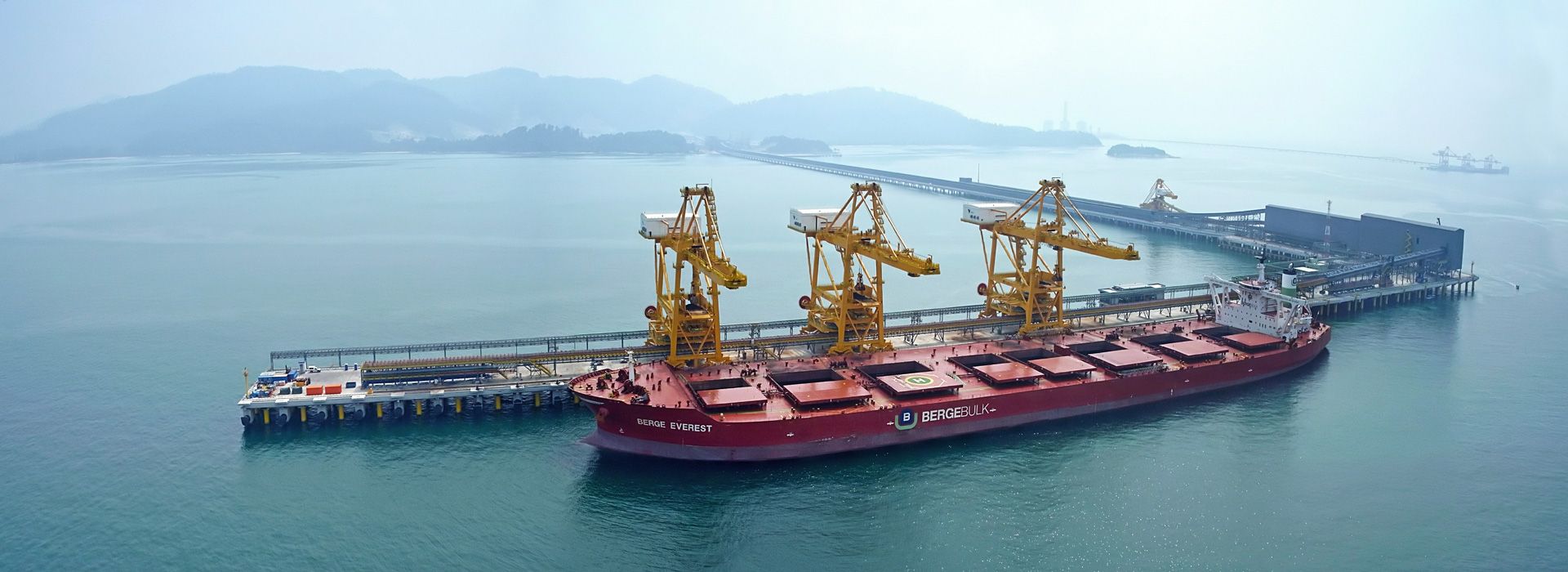
Our modular approach to construction has helped create productive ports for clients like Rio Tinto, FMG, Vale, and BHP, where over 1.2 billion tonnes of iron ore are shipped annually from wharves we built.
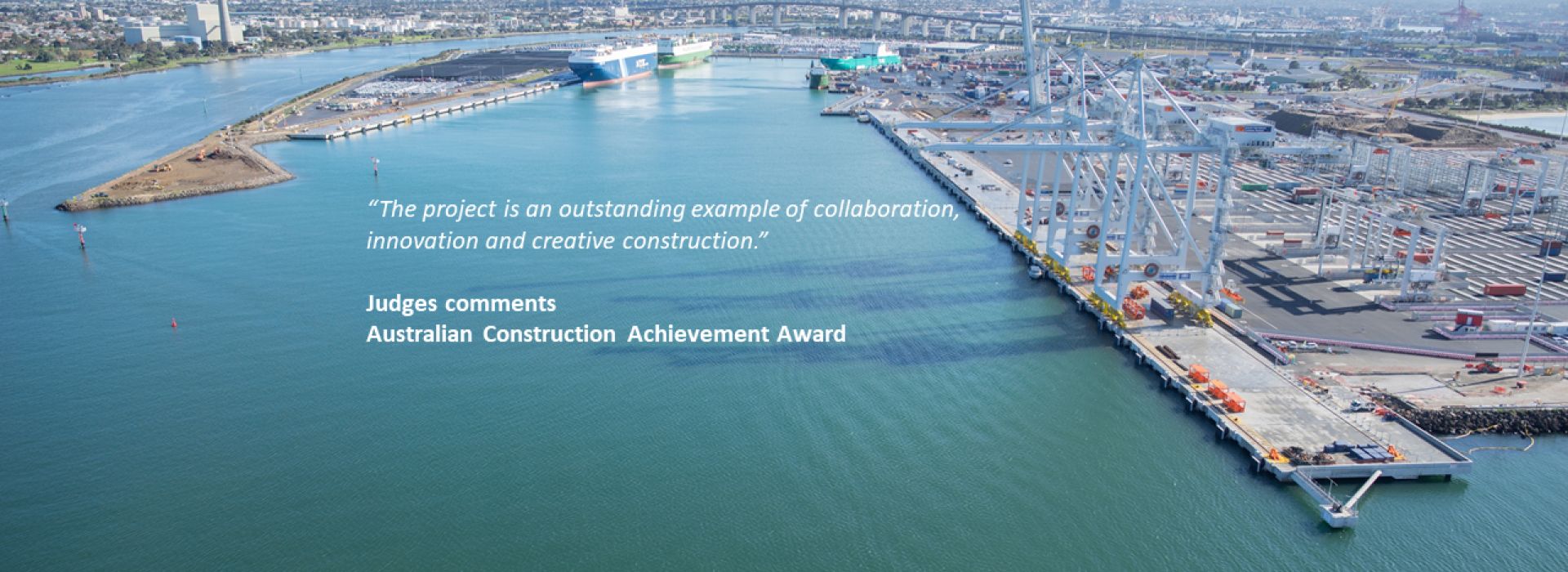
Port Capacity Project - Webb Dock
Enhancing and expanding Australia's busiest container port
We received the Australian construction industry's highest accolade for this major wharf redevelopment within Melbourne's main port precinct.
This was a large and complex marine project delivered within Australia's busiest operational container port, and within very tight environmental controls to protect the rich marine life within the surrounding bay.
Fast Facts
- 900 tubular steel piles up to 1500 mm diameter and 45 m long driven as single length piles.
- 40,000 m³ of structural concrete.
- 10,000 tonnes of reinforcing steel.
- 40,000 m of sheet pile installation.
- 210,000 tonnes of imported quarry product.
- 15,000 m³ of rehabilitated concrete deck.
Swanson Dock East Berths 1 & 2 Rehabilitation
Collaborative Approach, Safety Focus, and Minimising Disruptions in Port Rehabilitation Project
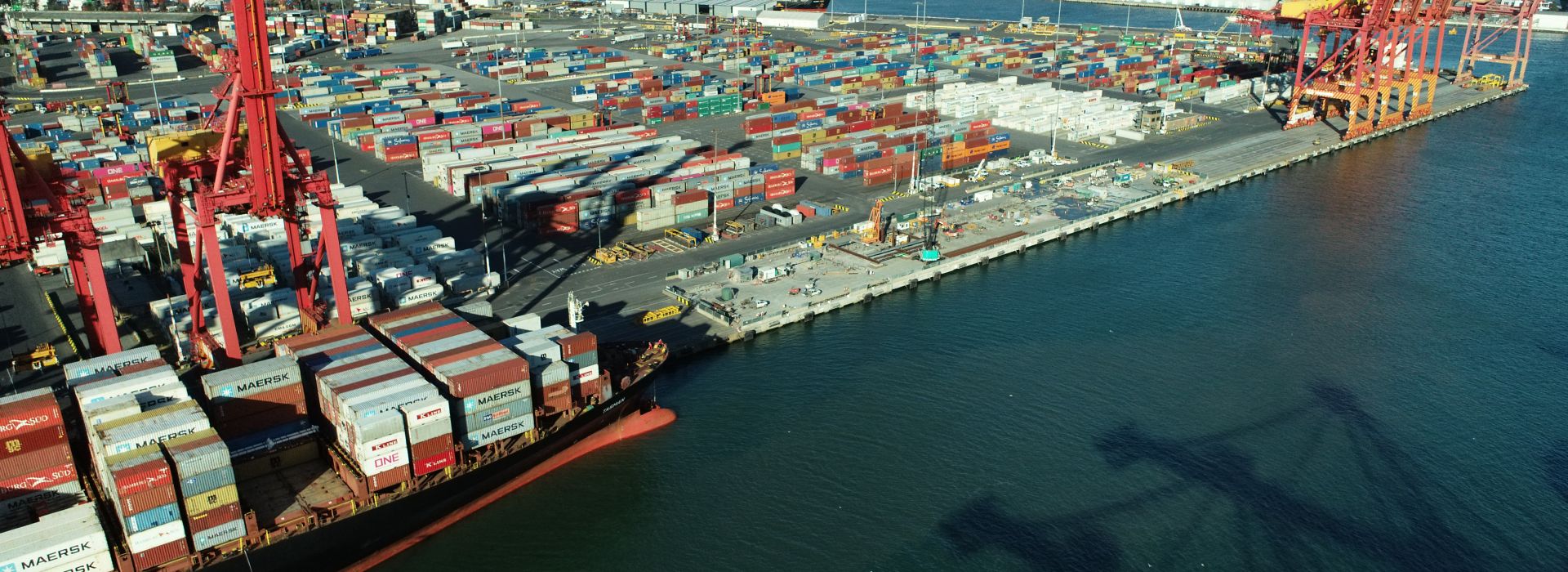
Working in collaboration with the Port of Melbourne, we successfully completed four contracts at Swanson Dock between 2017 and 2020.
After completing the award winning Port Capacity Project, we continued our partnership with Port of Melbourne with a series of smaller contracts to rehabilitate the iconic Swanson Dock - the heart of Australia's busiest container terminal.
Fast Facts
- Multiple projects successfully completed without disrupting port operations
- 412 piles driven
- 570 tonnes of reinforcement used
- 3,600 m2 of new wharf deck laid
Marine
With over 330 marine projects completed across six decades, McConnell Dowell is synonymous with marine infrastructure.
From wharves and jetties to ocean outfalls, breakwaters, and submarine pipelines — we bring coastal confidence to every project.
Our modular approach to construction has helped create productive ports for clients like Rio Tinto, FMG, Vale, and BHP, where over 1.2 billion tonnes of iron ore are shipped annually from wharves we built.
We thrive in complex, operational environments — delivering innovative temporary works and safe, efficient methods that protect people, environment, and productivity. From purpose-built barges to proven marine systems, we engineer safe harbours with precision and care.
At McConnell Dowell, we don’t just build marine infrastructure — we deliver it with certainty, creativity, and a commitment to results.
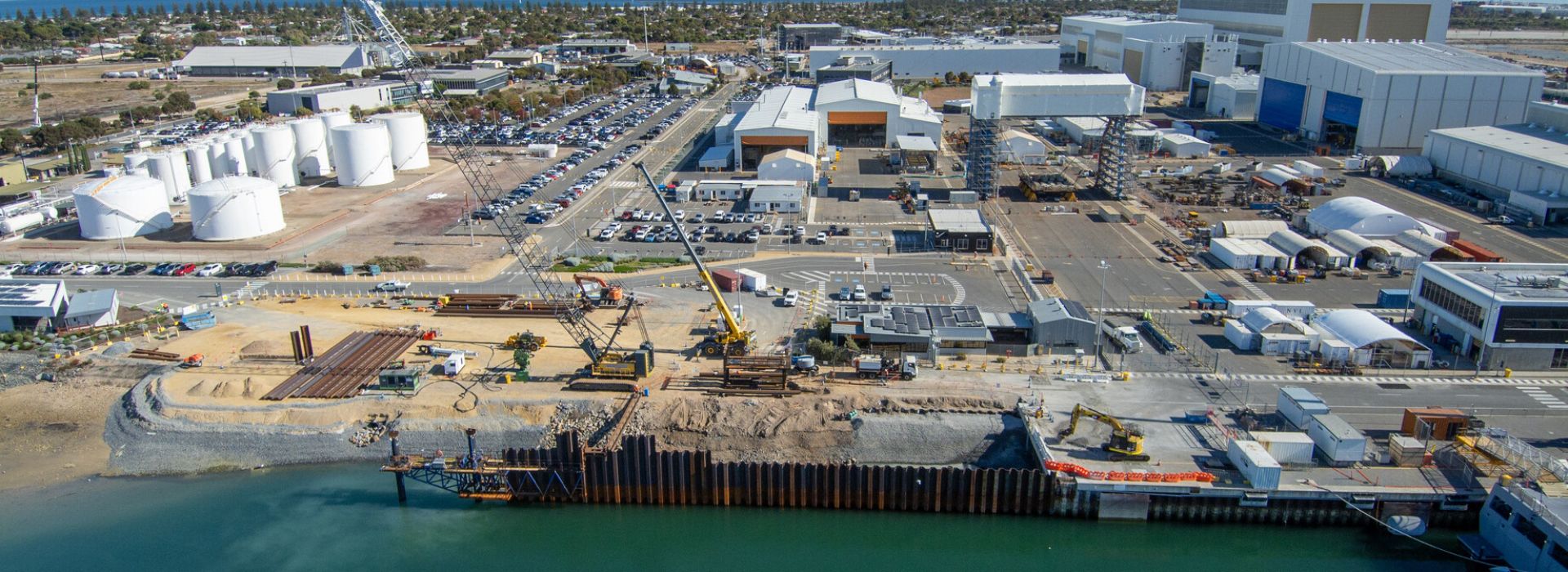
CUF Marine Development Works
Supporting Australia's shipbuilding capacity
Fast Facts
- Construction of 80 - 100 m land backed wharf
- 40,000 m3 of dredging
- Berth kiosk services, including water and eletrical supplies
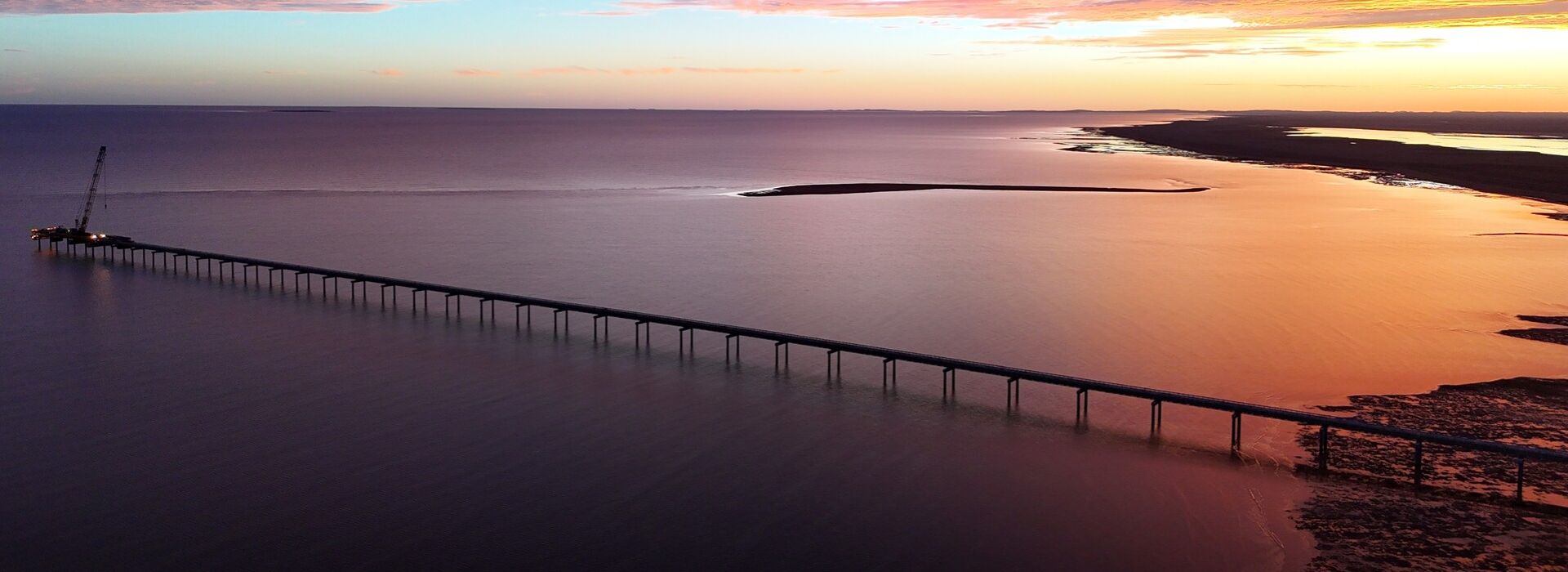
Mardie Salt & Potash Marine Structures
Delivering new marine facilities to grow Australian exports
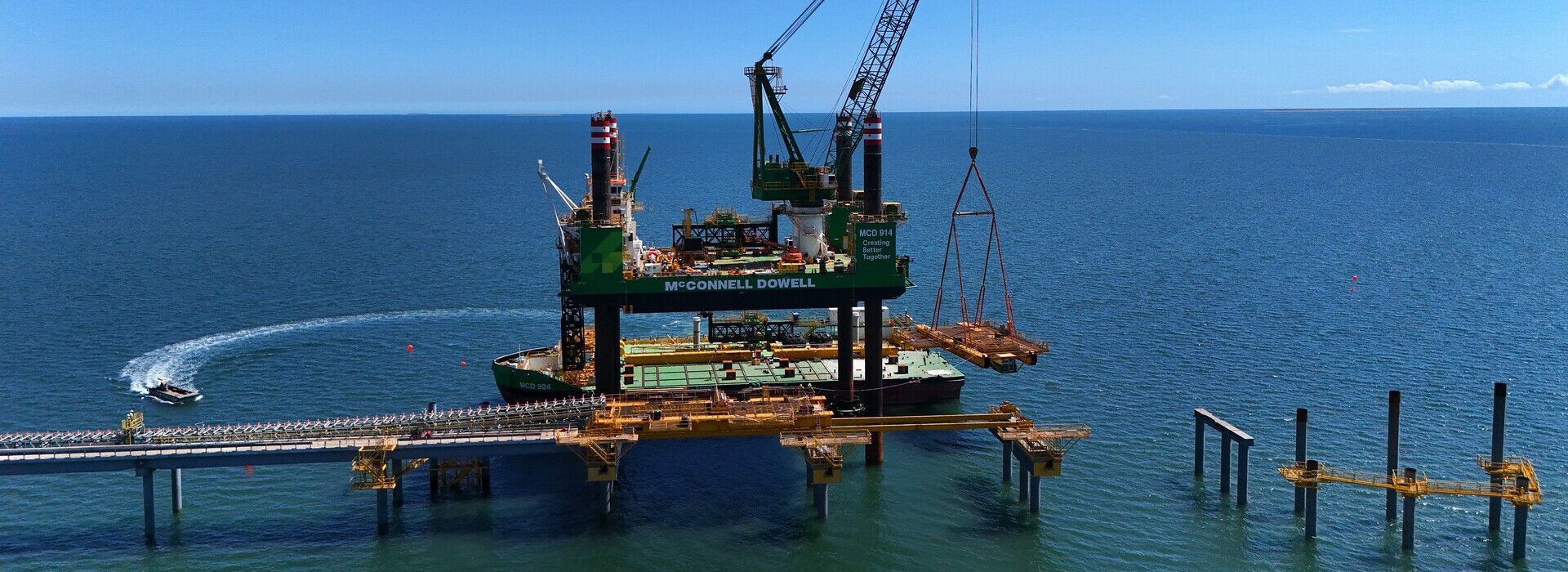
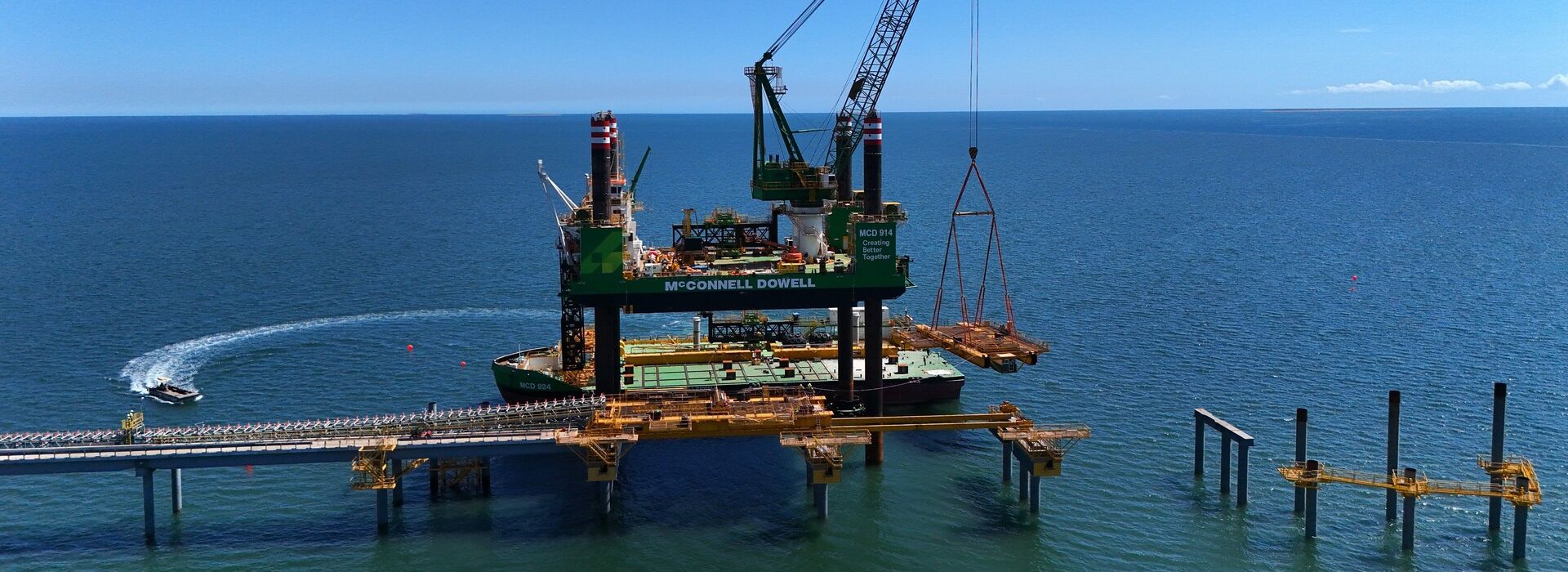
We designed and constructed the marine structures for BCI Minerals’ Mardie Salt & Potash Project in Western Australia, using our innovative canti-traveller system for speed and low impact delivery.
The 'Mardie' Project is a large-scale, solar evaporation operation on the Pilbara coast. Capacity of the completed facility is estimated to be 5.35 million tonnes per annum of high purity salt and 140,000 tonnes per annum of sulphate of potash, over an operating life of at least 60 years.
Fast Facts
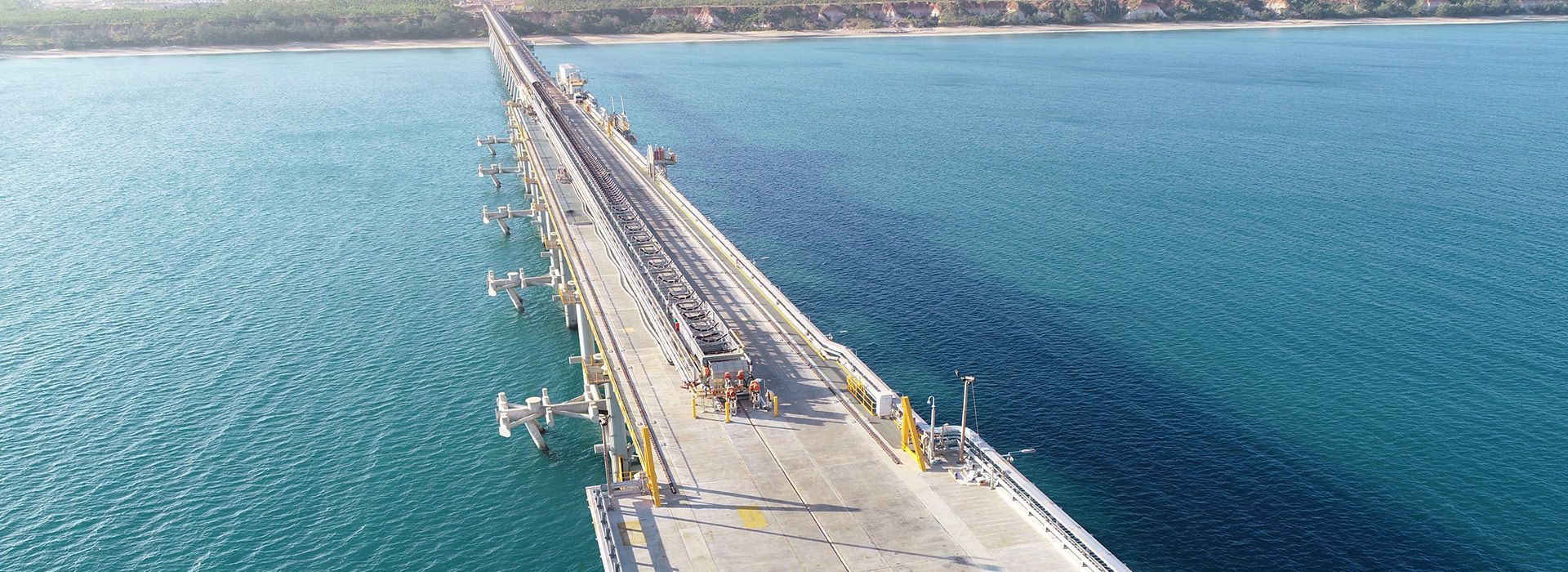
- 2.4 km long jetty with berthing and mooring dolphins
- 200 steel piles, up to 30 metres long
- 100 m of jetty completed every 10 days using innovative canti-traveller system
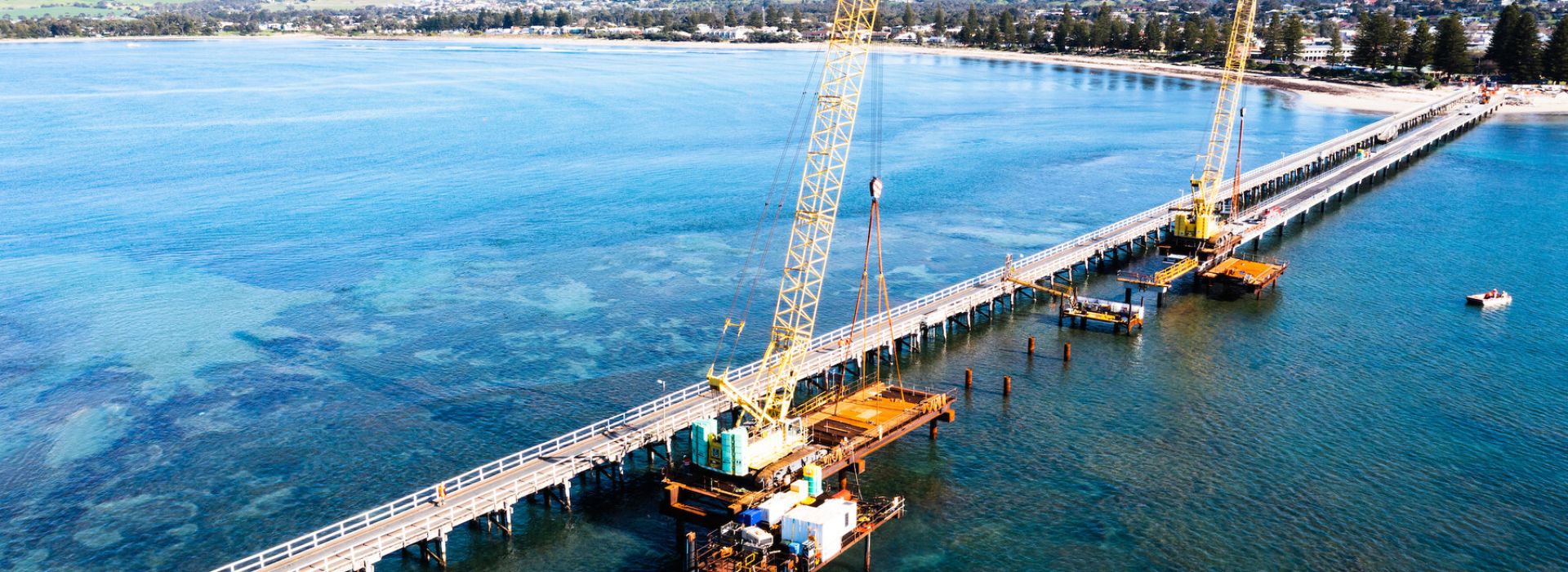
Granite Island Causeway
Providing new Causeway structure for community and tourists
We partnered with the Department for Infrastructure and Transport (DIT) to design and construct the new Granite Island Causeway Project. The awarding of the contract followed a collaborative design development process involving DIT, ourselves and our design consultant, WGA.
The Granite Island Causeway, located 83 kilometres south of Adelaide in Victor Harbor is a tourism, commercial and recreational landmark. It is the only link between Granite Island and Victor Harbor and is used by pedestrians, the iconic horse drawn tram service, a small number of vehicles that service the island, tourism attractions and the fishing industry. It is estimated that the number of pedestrians accessing the Causeway is approximately 700,000 per annum.
Fast Facts
- 650 m long, 6 m wide new causeway
- New rail line on causeway for historic horse-drawn tram
- New boat landing facility
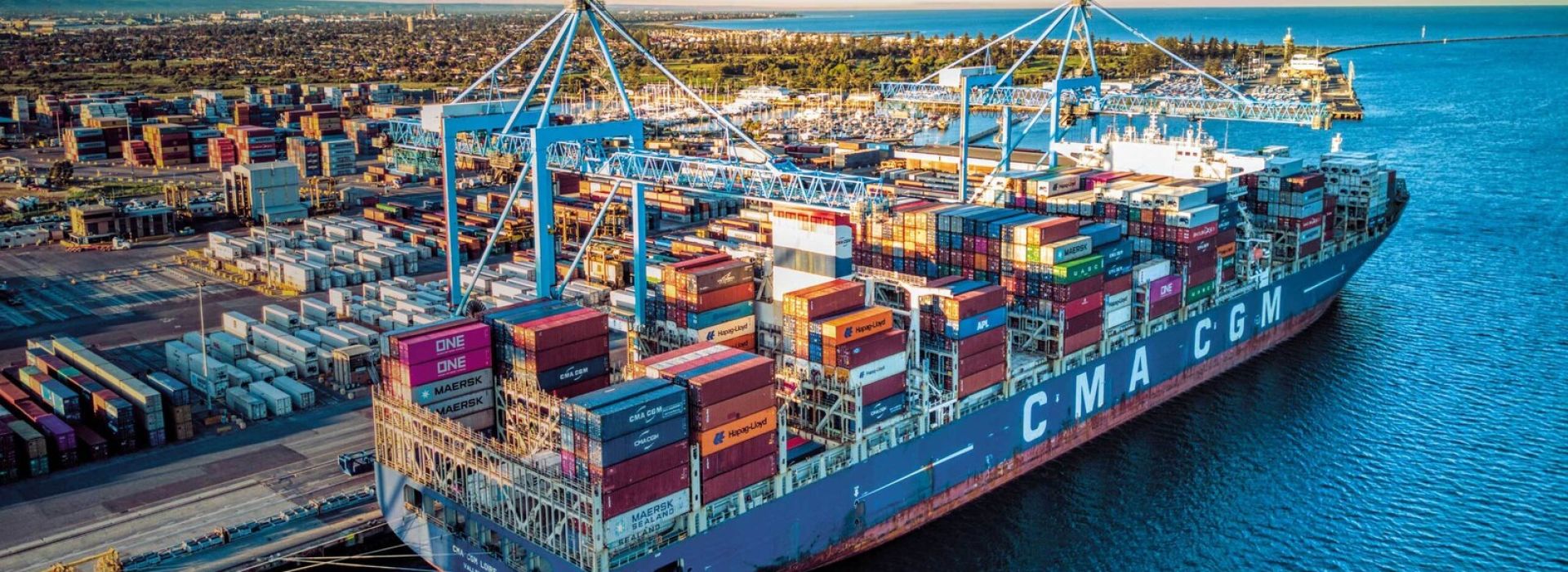
Outer Harbour Berth 6 Extension
Increasing container port capacity in South Australia
After a 6-month Early Contractor Involvement process, we're now delivering a berth extension and remediation works at the Flinders Adelaide Container Terminal (FACT) — South Australia’s only container terminal.
Our works form part of Flinders Port Holdings’ (FPH) A$350 million GatewaySA Program, a multi-year initiative designed to increase capacity, efficiency and sustainability across the terminal.
Fast Facts
- 135 m berth extension
- Quay-line extention and strutural remediation
- Site-wide services, hardstands and access road upgrades.
Creative Construction
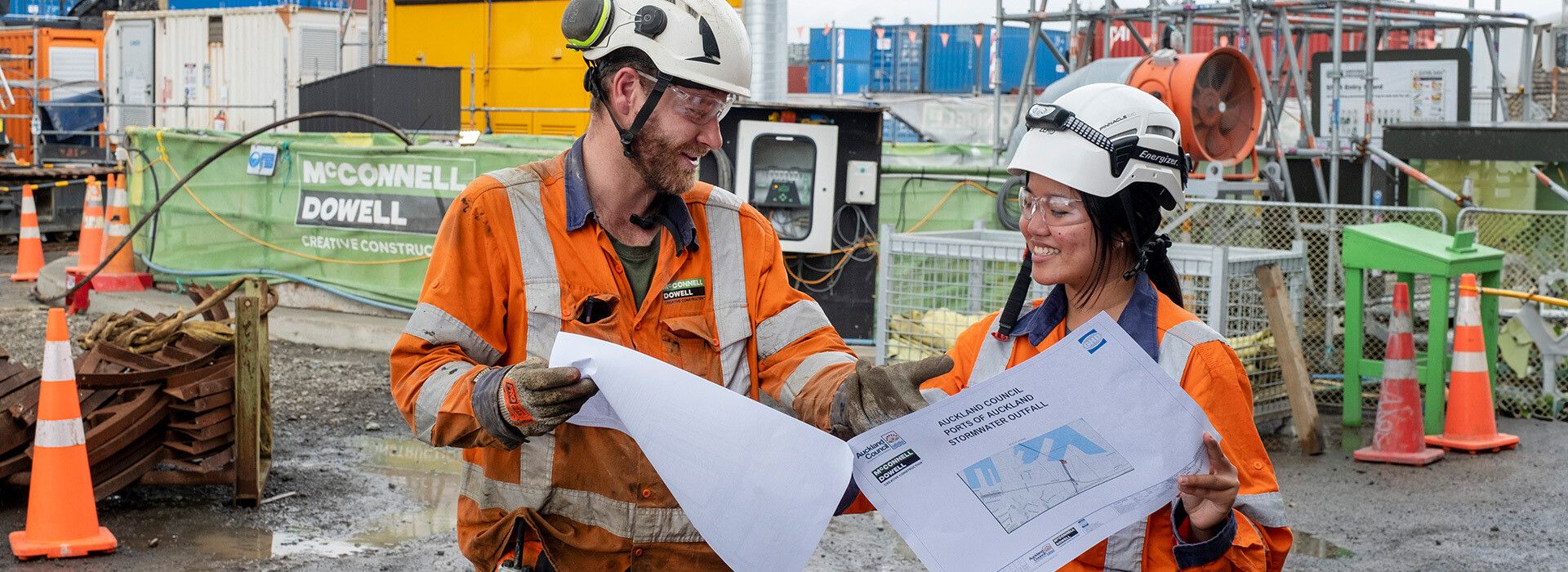
Creative Construction at McConnell Dowell is the inspired engineering behind the complex infrastructure we deliver.
It's the technical problems and challenges solved behind the scenes by people empowered to think creatively and work collaboratively. It’s the alternative idea or innovation that saves time, reduces cost, makes us safer, and delivers more value.
It might not always be evident when you look at the end product, but it's there, inside every McConnell Dowell project.
Low impact marine construction
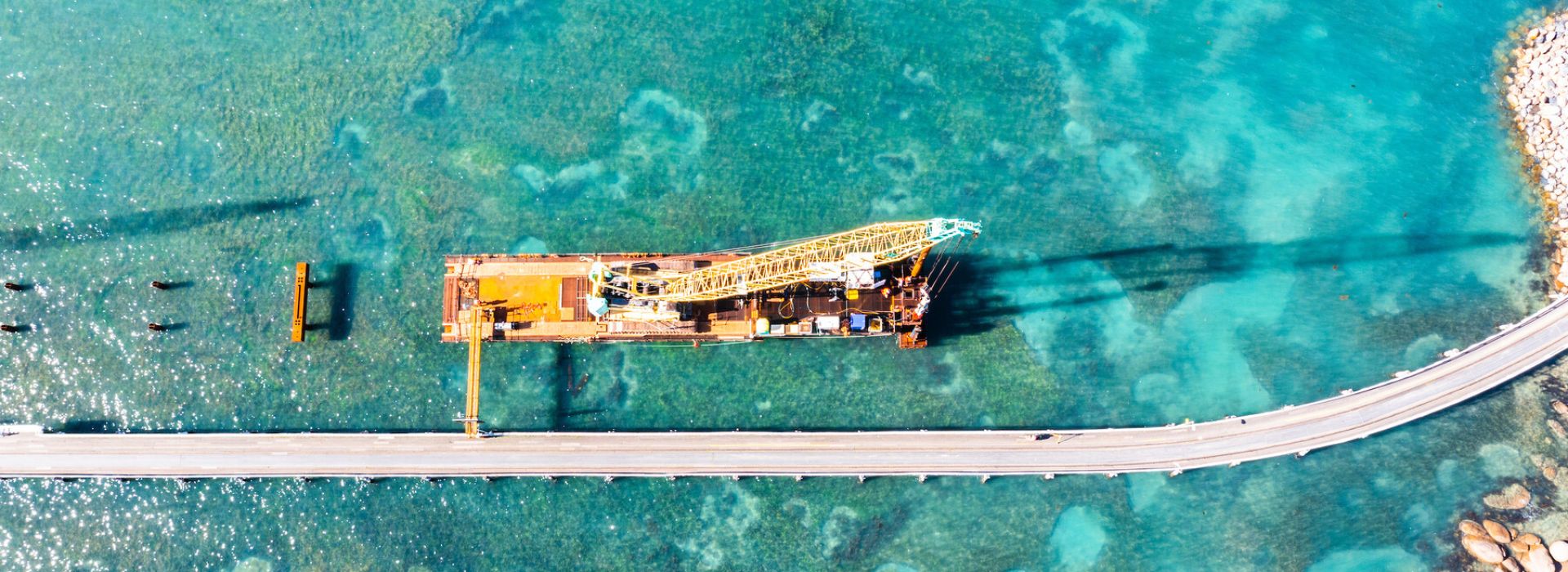
On the Granite Island Causeway Project in South Australia our team used the 'hand over hand' construction method to minimise environmental impacts and ensure delivery on time.
The 'hand over hand' method employs three concurrent work fronts:
- Front one installing the permanent piles
- Front two installing the grouted HDPE sleeves and the precast headstocks
- Front three installing the precast longitudinal girders and decks.
As the structure advances out into the water it acts as a construction platform for the work crews to build the next stage. Each work front takes a similar duration, ensuring maximum certainty in productivity and schedule.
Analysis was conducted on various construction approaches during the tender phase, including the use of jack-up barges or a temporary bridge structure to facilitate construction. However, the 'hand over hand' method was the only one capable of achieving completion by the target date.
The other benefit of the method is its minimal footprint. Minimising the impact on the sensitive marine environment was a key consideration during the tender and design phases of the project.
The adoption of the method, along with the use of precast prestressed deck units which pushed the span out as far as possible, minimised the number of pile driving operations further reducing the impact on the marine environment.
The design and construction methodology was fit-for-purpose and extremely efficient. It resulted in on time and on budget completion and had a low impact on Victor Harbor's rich marine ecology.
Award-winning innovation for safer working over water
In marine environments, where the margin for error is razor-thin, temporary works aren’t mere enablers—they’re foundational to safe, efficient delivery.
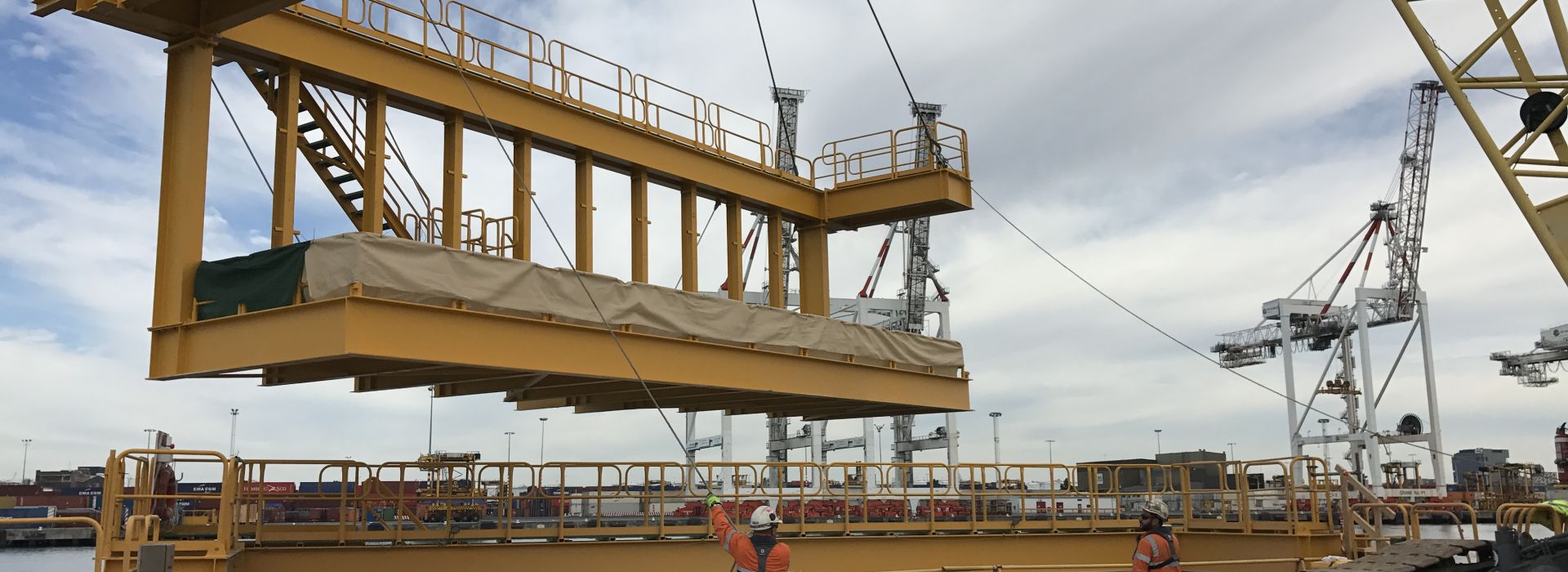
Take the Swanson Dock upgrade at the Port of Melbourne. Our temporary works team engineered an innovative fender access platform, earning the a WorkSafe Victoria award for “Best Solution to a Specific Workplace Health and Safety Issue”
Here’s what set it apart:
- Comprehensive access with one setup – The platform spanned 15 × 4 m and included removable mid‑level decks, enabling seamless access to all faces of the fender beams—front, soffit, and rear—for hydro-demolition, rebar replacement, and gunite spraying.
- Spatial efficiency in live operations – Designed to work within a daily operation window on the busiest container terminal in Australia, the platform kept works tightly within a small footprint.
- Reusability factors in long-term value – Not a one-off rig—it was engineered to be reusable for future fender rehabilitation works, reducing waste and delivering cost efficiencies over time.
- Award-level impact – The solution directly addressed specific HSE risks of working over water, giving our crews a safer, more controlled environment to complete high-risk tasks without compromise.
Why Temporary Works Matter
-
Prioritising safety at early design stages – Proactively engineering safe access platforms significantly diminishes risk in live marine settings.
-
Driving productivity through better access – Easier, safer access means faster cycle times and fewer quay-side delays.
-
Enabling precise engineering works – Demolition, rebar placement, and spraying all demand stable, safe working environments—temporary works deliver just that.
-
Promoting sustainability and reuse – Modular, reusable temporary works not only save time but also cut embodied carbon across projects.
By spotlighting temporary works as a core part of project delivery—not an afterthought—we’re reshaping how marine construction tackles safety, efficiency, and sustainability.
World first wharf modularisation
We helped revolutionise the design and construction approach for large-scale marine infrastructure on Rio Tinto's Chith Export Facility project in remote Far North Queensland.
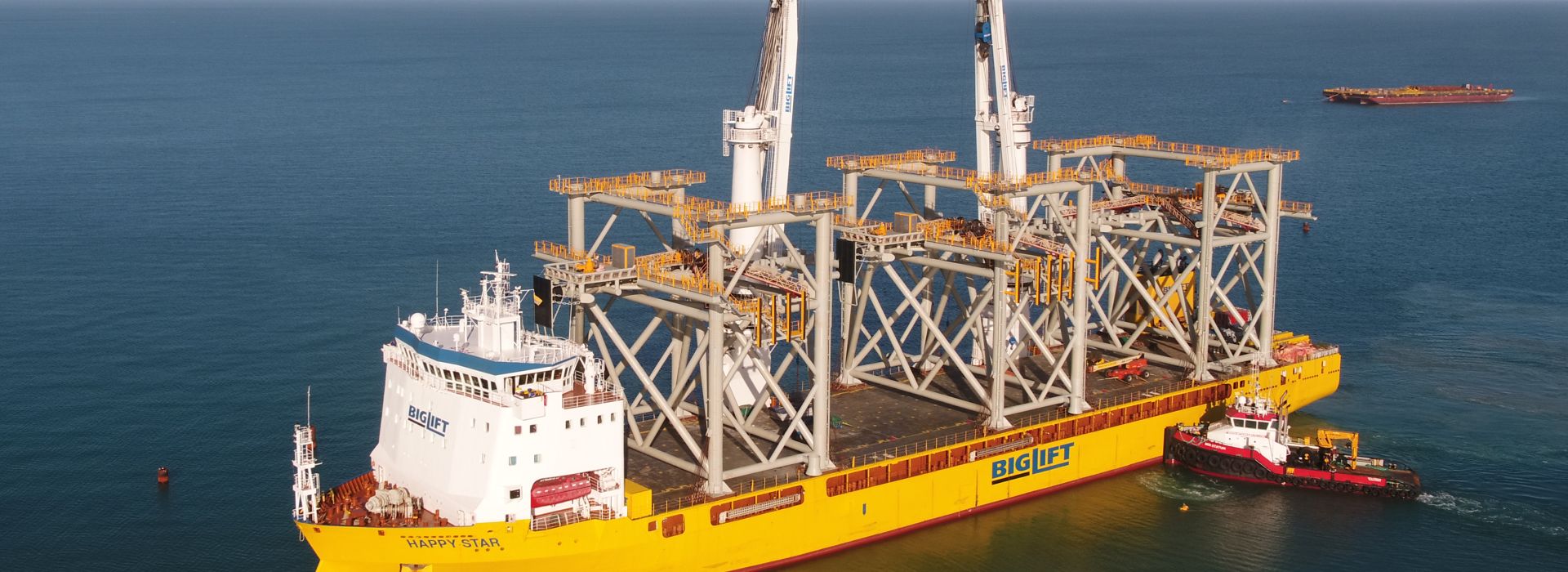
The 350m wharf structure was split into seven, first-of-a-kind ‘jacket’ modules (the substructure) and six topside modules. Weighing approximately 680 tonnes each and standing 30m high, the jacket modules, with integrated dolphins, reduced the number of permanent wharf piles required from 100 to just 28, minimising environmental impact to marine life – a core focus for the Chith Export Facility team.
The wharf topside modules, placed on the jackets, ranged from 600 to 1400 tonnes and were fabricated complete with all services, conveyors, concrete roadways and access walkways.
In true ‘plug and play’ fashion, the modules were delivered and installed by a heavy-lift ship in a safe, clean and efficient operation.
The project, completed in just 10 months, was awarded the Australian Construction Achievement Award by Engineers Australia and the Brunel Medal by the Institute of Civil Engineers (UK).
Closing text - with contacts and Video
Summary
Thank you for taking an interest in McConnell Dowell's skills, capabilities and approach. Additional information is available on our website, including additional project case studies.
Contact us through the link(s) at the bottom for advice or assistance with your project.
Contacts