Capability Statement
Prepared for AG&P- Outer Harbor LNG Project
May 2026
Introduction General
Thank you for the opportunity to present this brief capability statement which details a cross-section of our skills and experience, and showcases a selection of our recent projects.
About Us (typically use first)
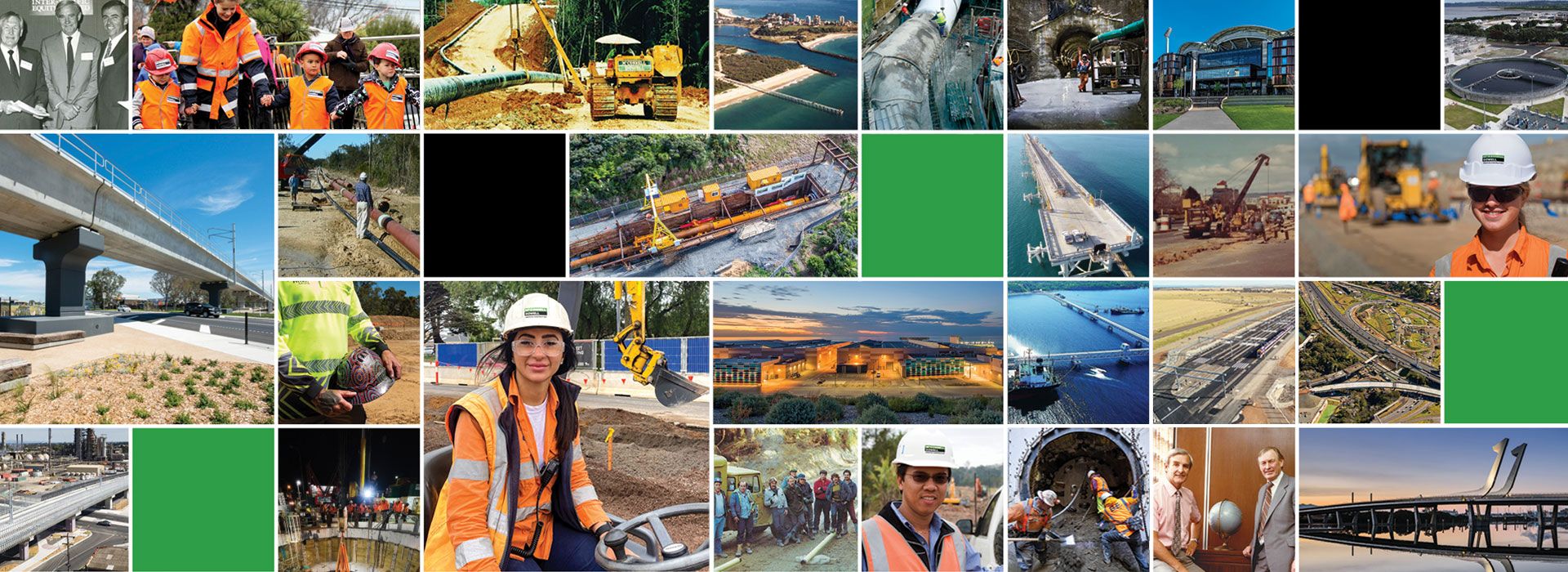
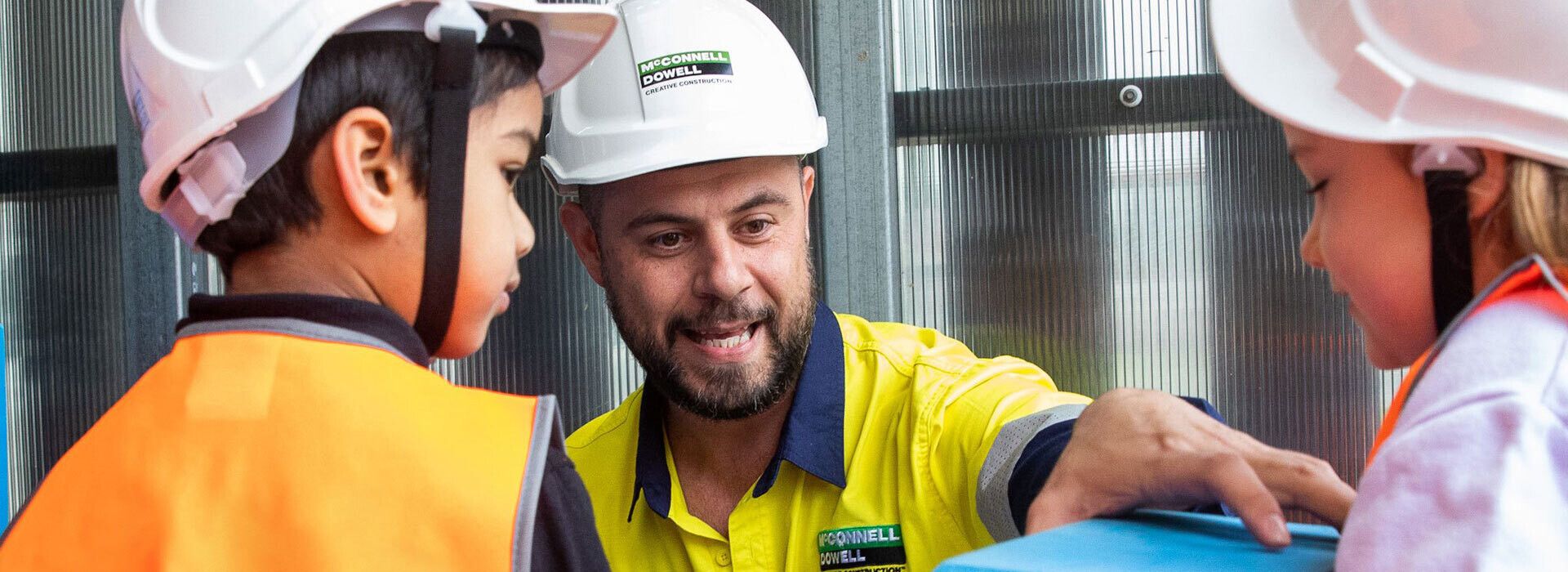
For over 65 years customers have been coming to McConnell Dowell with complex projects that require innovative solutions. That's why we're known as the Creative Construction company.
From remote resources and energy projects to city-shaping infrastructure, we've built thousands of quality assets and facilities.
Engineering-led, our expertise has grown steadily to span building, civil, electrical, fabrication, marine, mechanical, pipelines, rail, tunnel and underground construction..
Purpose & Values (typically use 2nd or 3rd)
We are a Purpose and Values driven organisation. These define what's important to us, guide our decision making and unite us behind a common goal.
Our Purpose is Providing a Better Life.
We do that through delivering projects that connect, sustain and enhance communities, and through providing career opportunities that challenge, reward and grow our people.
We also have five company values that guide our behaviours and decisions. Our values are:
Our Approach (typically use 2nd or 3rd)
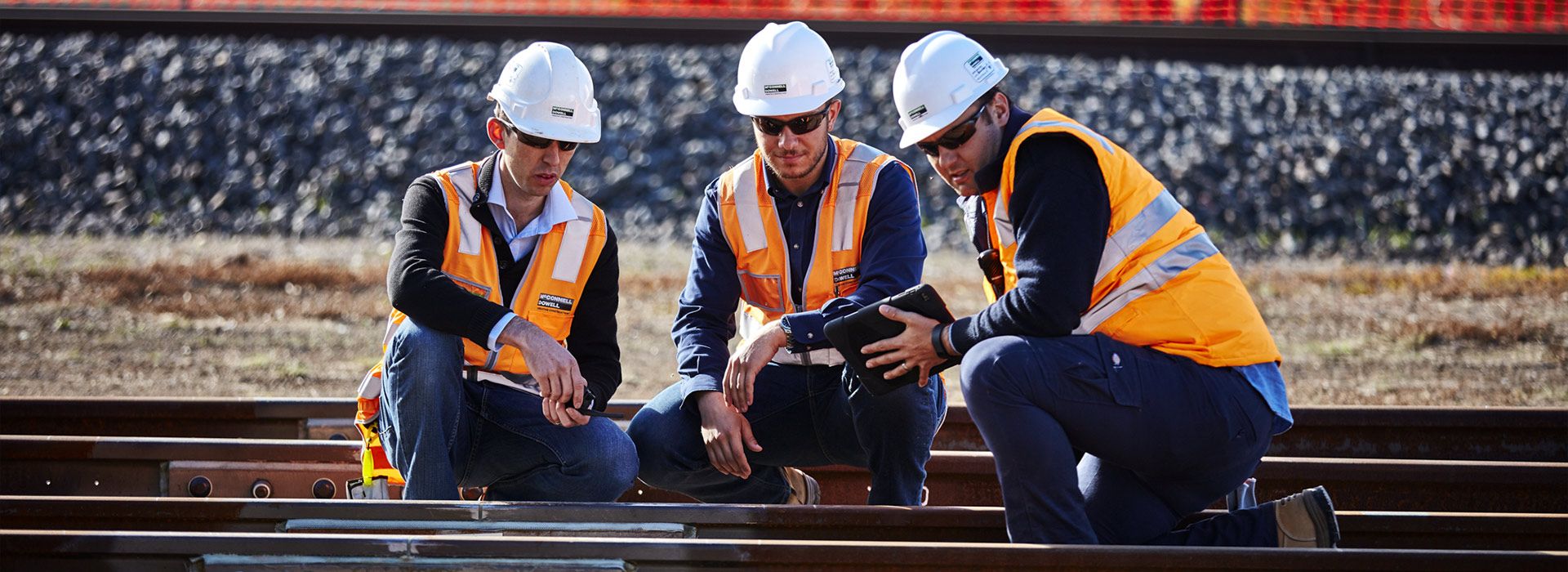
We approach every project with a focus on creativity and certainty - seeking the right blend of innovation and safe, proven approaches so we can exceed our customers' expectations.
We also understand that construction today is as much about community and sustainability as it is about concrete and steel. Our unwavering objective and commitment is to deliver what we promise to our customers, while protecting and enhancing our people, the community and the environment.
Safety
We never compromise on safety.
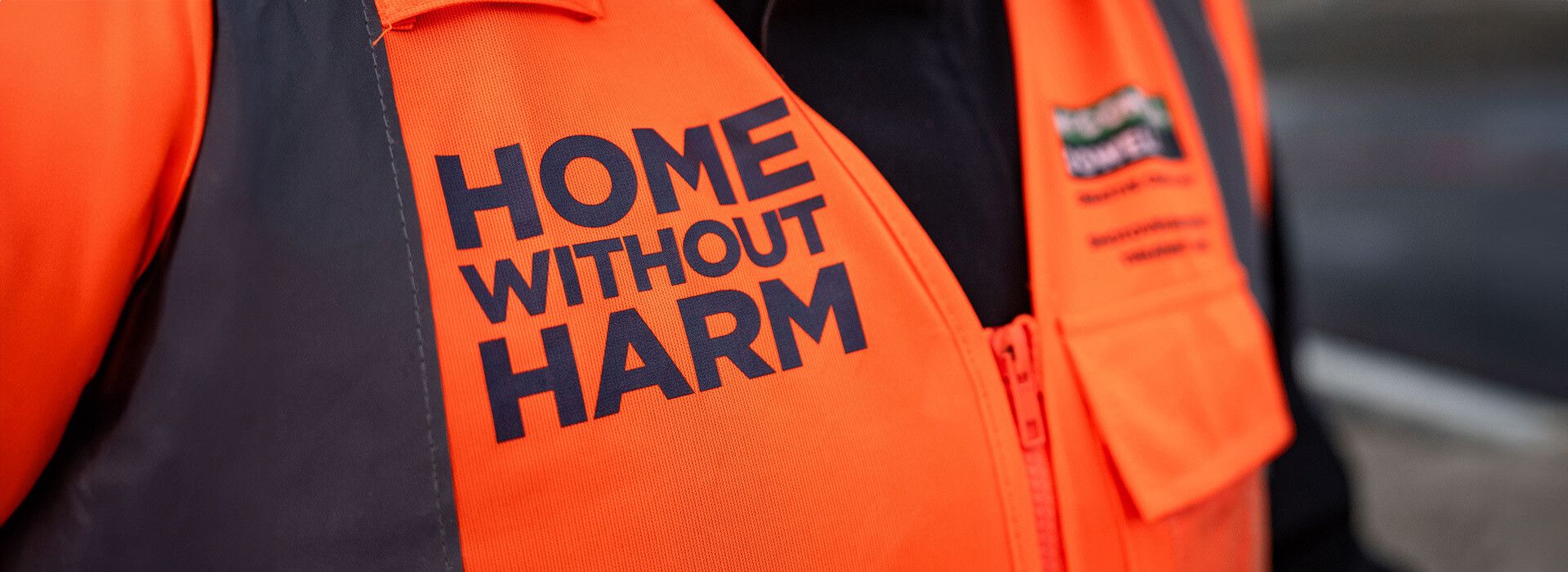
We foster our 'Home Without Harm' safety culture through robust processes, effective systems, and by recognising and rewarding safe behaviours.
Our Site Safety Managers are always on our project leadership teams, ensuring safety is prioritised in all site activities. Every team member has clear safety responsibilities, aimed at protecting themselves, their colleagues, and the community.
We're also leading our industry in the adoption of new safety technologies, like virtual reality plant simulators and AI-enabled blind spot elimination. Check out the case studies below for more information.
Underpinning it all are our Safety Golden Rules. Built on our long-term collective knowledge and learnings, they are specifically targeted at preventing fatalities and serious injuries.


Tangguh Marine Works
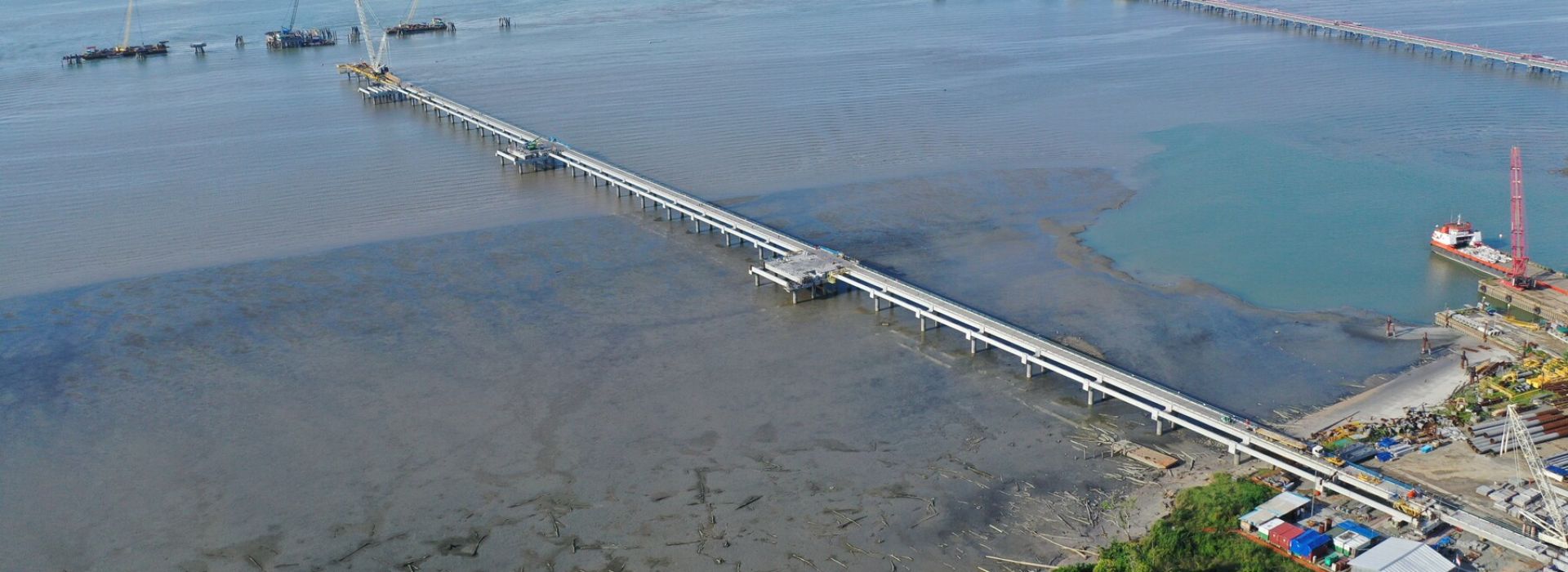
We delivered the marine works for BP’s LNG expansion project in Tangguh, located in the remote area of Bintuni Bay in West Papua. Our customer, PT Saipem Indonesia, was part of an EPC joint venture involving Chiyoda-Saipem -Tritati -SAE.
The overall expansion project comprised a full additional natural gas liquefaction train, including an onshore receiving facility (ORF), an additional Boil of Gas (BOG) recovery, utilities, flares, and all infrastructure to support the facility.
Fast Facts
- A 1056 m long access trestle, including decks for the control room, substation and sea water intake
- 29 m x 42.5 m loading platform
- 4 breasting dolphins
- 6 mooring dolphins
Lake Way and Karlawinda Gas Pipelines
We constructed the Lake Way Gas Pipeline (LWP) and the Karlawinda Gas Pipeline (KGP) projects for APA Group in Western Australia.
The LWP pipeline is located 15 kilometres south of Wiluna and transports natural gas from APA’s Goldfields Gas Pipeline (GGP) to SO4’s Lake Way facility. SO4 aims to become a major exporter of Sulphate of Potash and the LWP pipeline provides gas for fuelling power generating facilities and other equipment within their process plant.
Fast Facts
- Two high pressure gas pipeline projects
- 26 km of DN100 gas pipeline
- 56 km of DN100 gas pipeline
Agnew Gas Pipeline
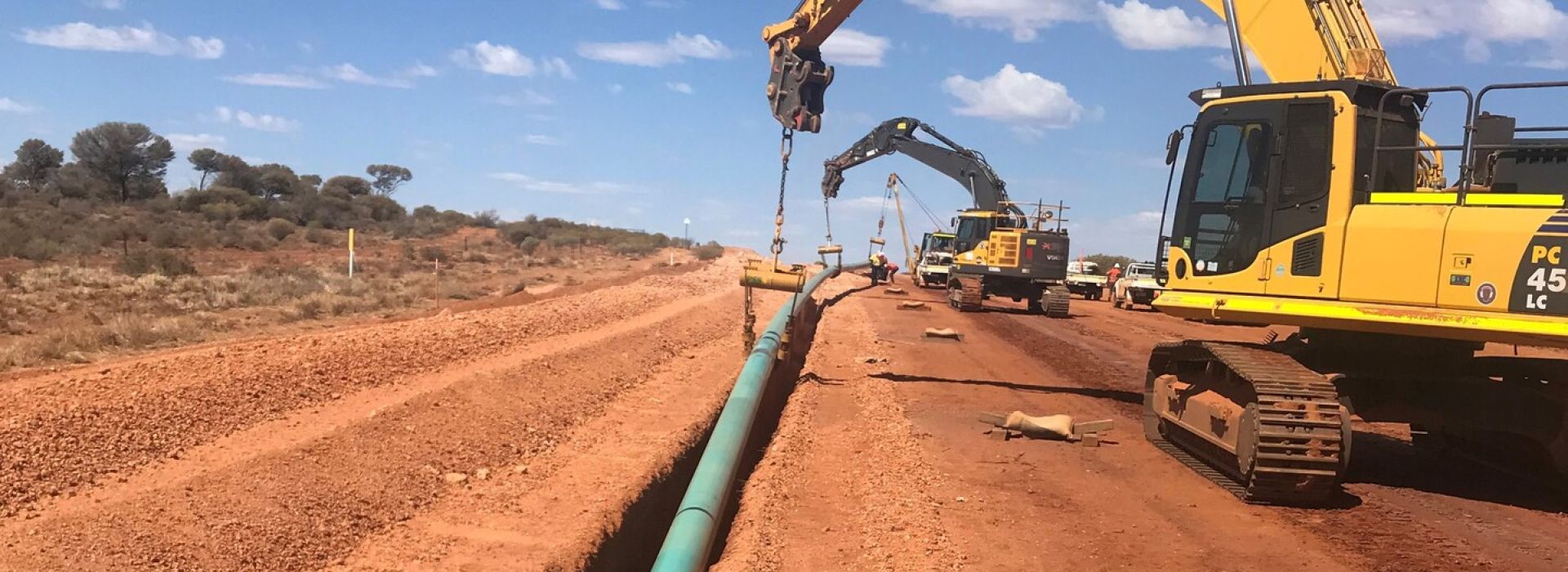
After extensive pre-planning and a fast mobilisation, we constructed the Agnew Gas Pipeline Project for APA Group in the south-southwest of Western Australia. The new pipeline supplies gas to the Agnew gold mine site to supplement the mine’s renewables-fuelled power supply.
Our scope consisted of the construction of a 25 km long, DN150 mm, dual layer FBE coated, AS2885 compliant, high pressure natural gas pipeline, along with the tie-ins to the swan necks at the above ground Kyarra Offtake Station and the Agnew Delivery Station.
Fast Facts
- 25 km long, 150 mm diameter gas pipeline
- Multiple horizontal directional drills (HDDs) under roads
- Fast mobilisation
- Computerised radiography used
Northern Gas Pipeline
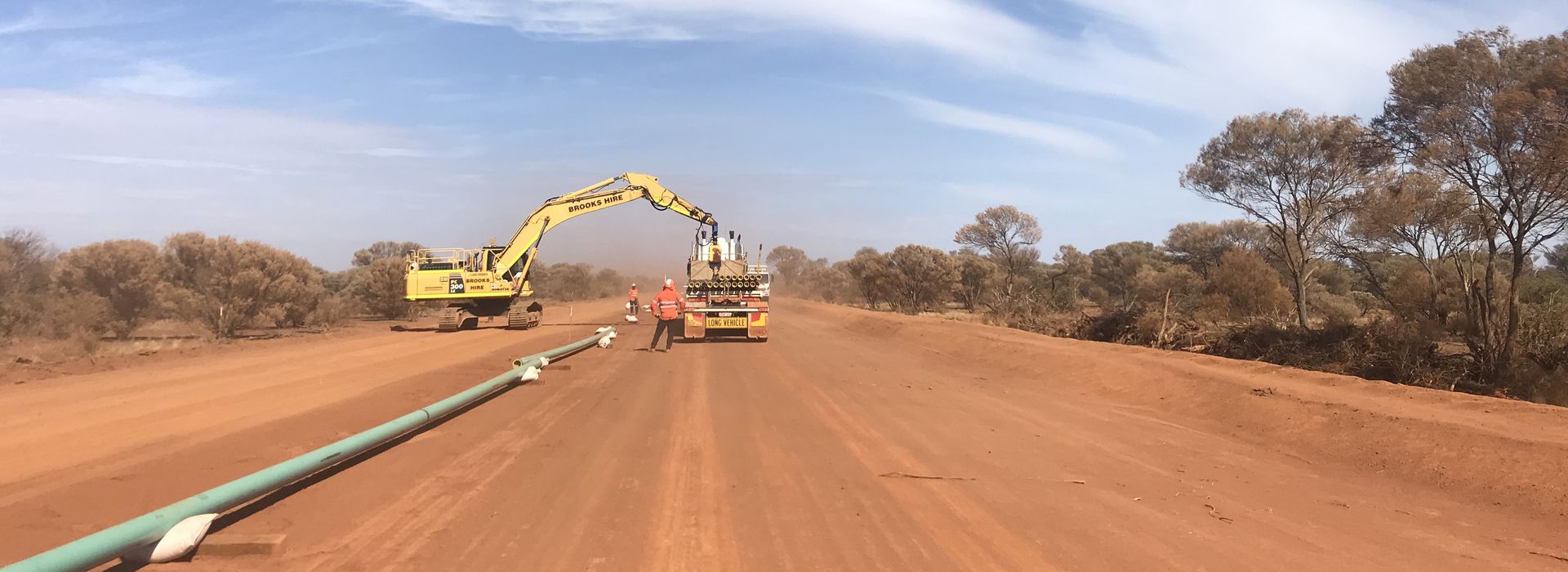
Constructing a 481 km transmission pipeline providing gas reserves to industries in Mt Isa
Engaged by Jemena under an exclusive ECI agreement, we designed and constructed the remote Northern Gas Pipeline, opening up the Northern Territory's gas reserves to industries in Mt Isa, Queensland.
Our scope involved the design and construction of approximately 481 km of 12-inch diameter high pressure gas transmission pipeline and associated pipeline facilities including two mainline valves and a midline scraper station. The pipeline transports gas from existing offshore and onshore gas reserves in the Northern Territory and will supply this gas to Incitec Pivot’s Phosphate Hill plant located south of Mt Isa and other users.
Fast Facts
- 481 km, 12 inch pipeline
- Three cathodic protection stations
- Three mainline valve stattions
- One midline station (pig trap)
Murrin Murrin Gas Pipeline Looping
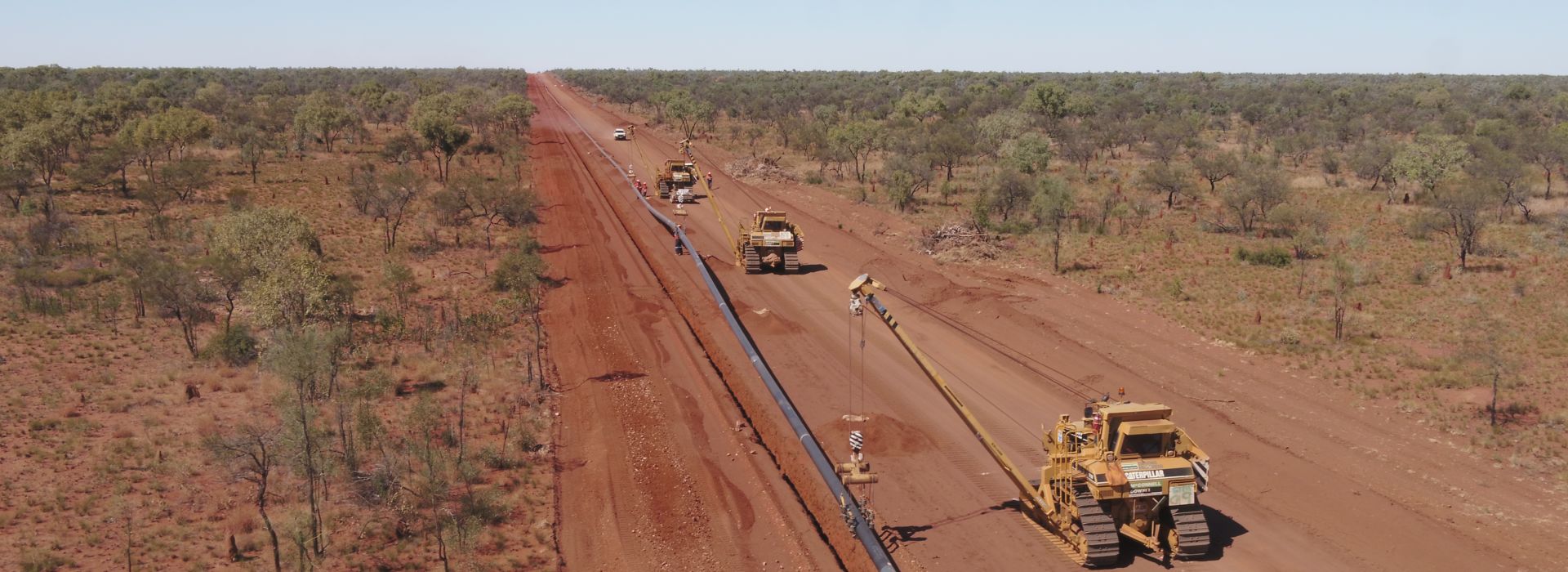
We constructed the Murrin Murrin Looping Project for APA Group, east of Lenora in Western Australia. The objective of the project was to increase the capacity of the Murrin Murrin Lateral to enable APA to service future downstream customers.
Our scope consisted of the construction of a 13.8 km long, 200 mm diameter high pressure gas pipeline, along with the tie-ins to an existing above-ground offtake station. The pipeline runs from a connection off the existing Murrin Murrin Lateral.
Fast Facts
- 13.8 km, 200 mm diameter gas pipeline
- Zero Lost Time Injuries
- Practical completion acheived 3 days early
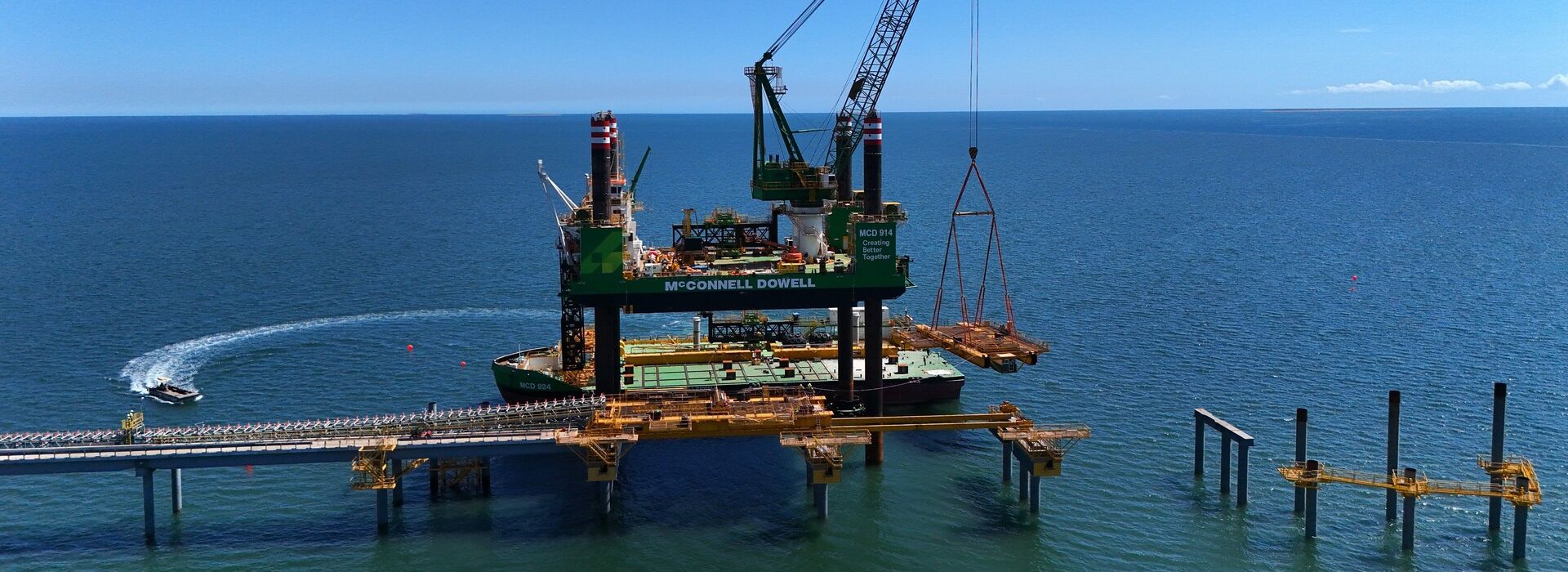
Ports & Coastal Solutions
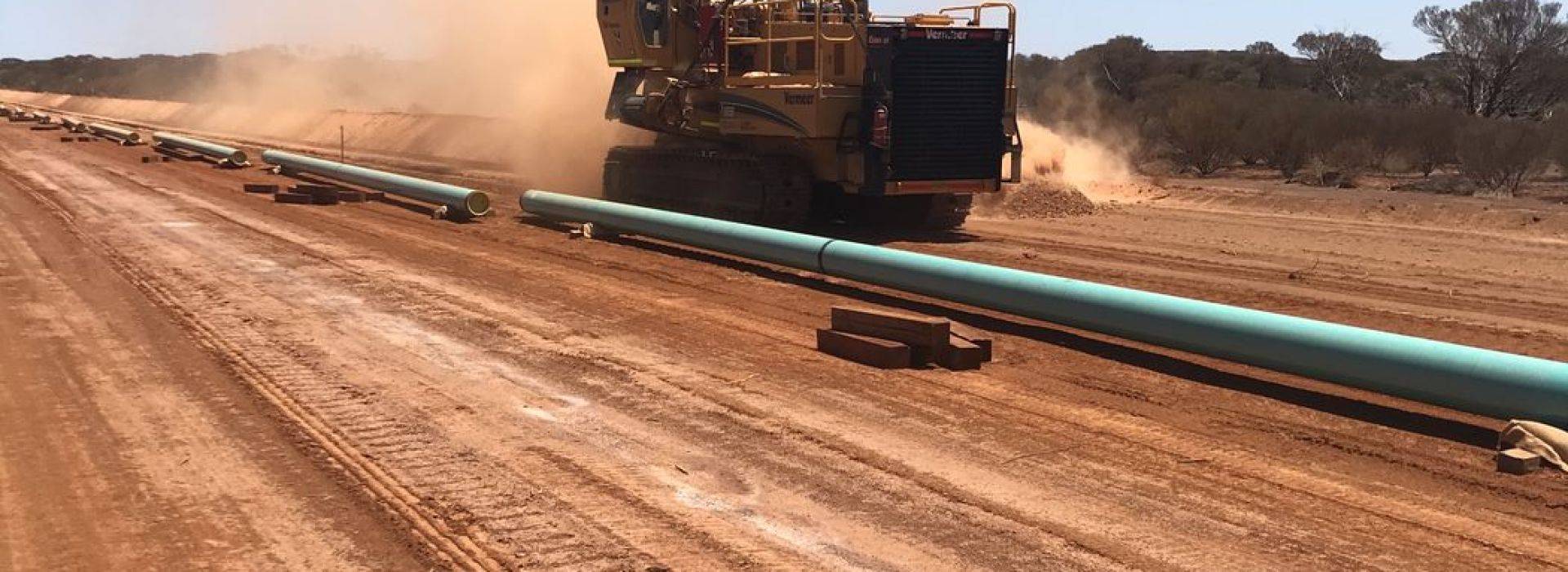
With over 330 marine projects completed across six decades, McConnell Dowell is synonymous with marine infrastructure.
From wharves and jetties to ocean outfalls, breakwaters, and submarine pipelines — we bring coastal confidence to every project.
Our modular approach to construction has helped create productive ports for clients like Rio Tinto, FMG, Vale, and BHP, where over 1.2 billion tonnes of iron ore are shipped annually from wharves we built.
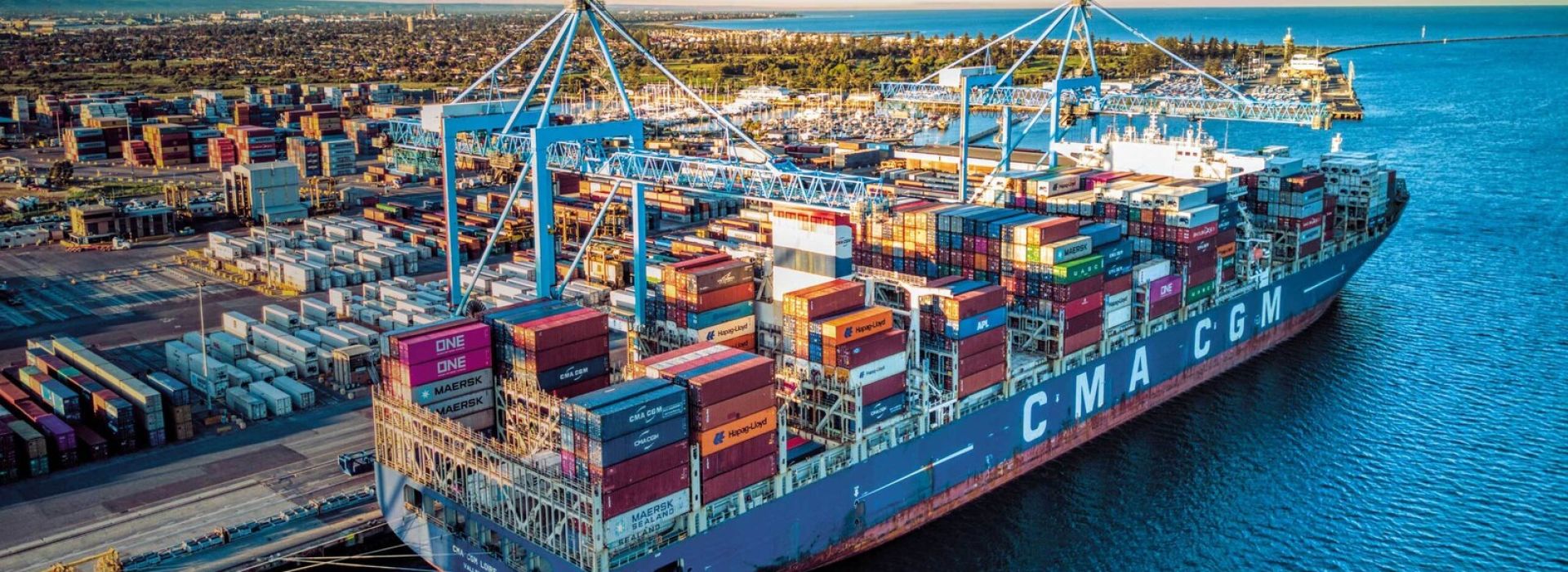
Outer Harbour Berth 6 Extension
Increasing container port capacity in South Australia
After a 6-month Early Contractor Involvement process, we're now delivering a berth extension and remediation works at the Flinders Adelaide Container Terminal (FACT) — South Australia’s only container terminal.
Our works form part of Flinders Port Holdings’ (FPH) A$350 million GatewaySA Program, a multi-year initiative designed to increase capacity, efficiency and sustainability across the terminal.
Fast Facts
- 135 m berth extension
- Quay-line extention and strutural remediation
- Site-wide services, hardstands and access road upgrades.
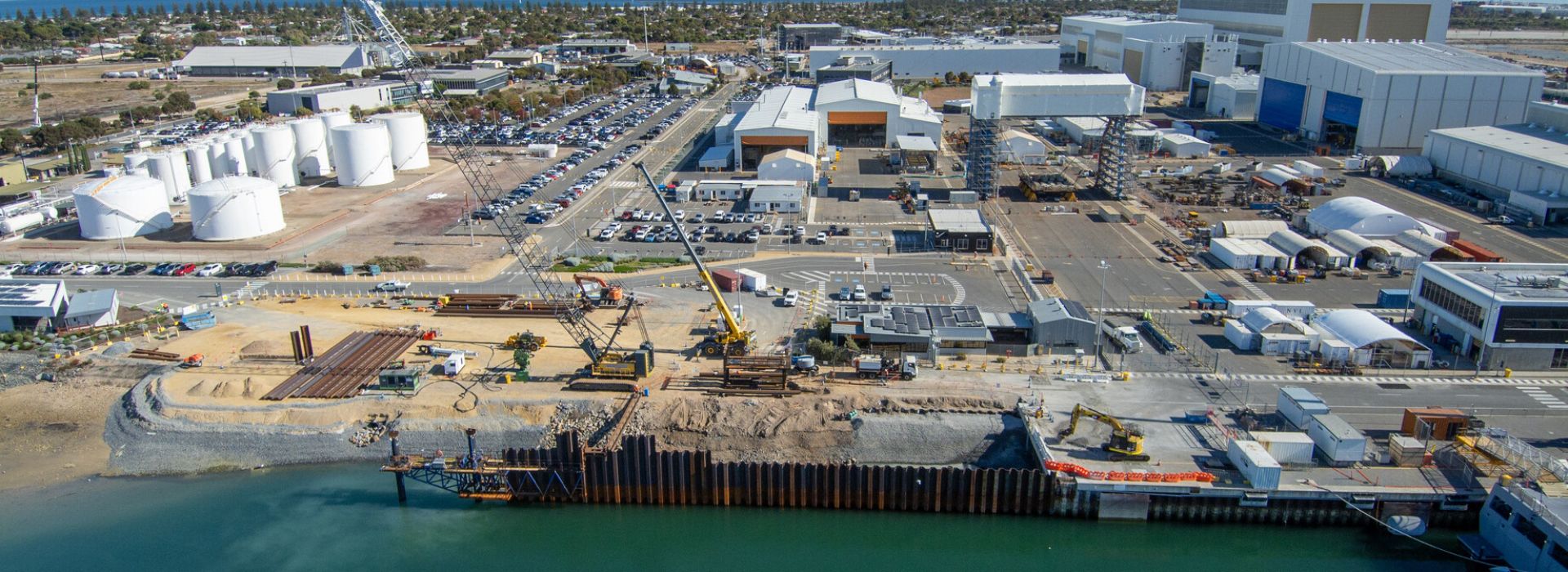
CUF Marine Development Works
Supporting Australia's shipbuilding capacity
Fast Facts
- Construction of 80 - 100 m land backed wharf
- 40,000 m3 of dredging
- Berth kiosk services, including water and eletrical supplies
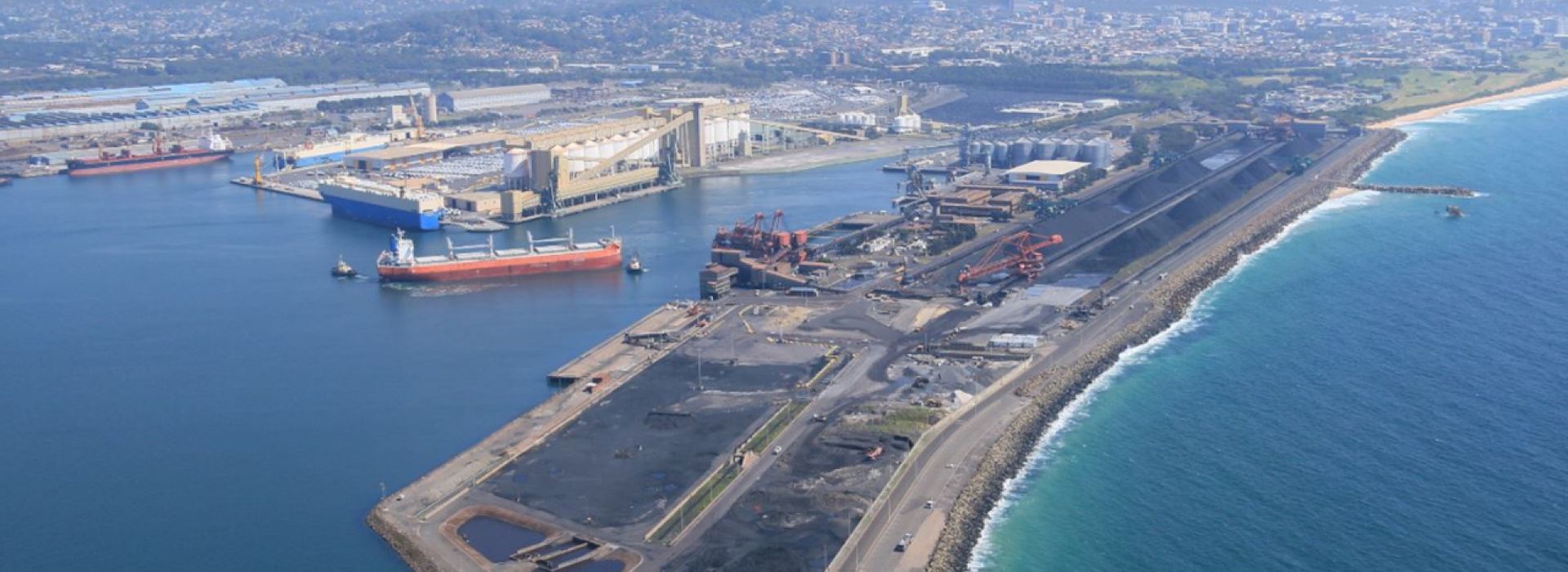
Port Kembla Energy Terminal
Converting disused coal terminal to provide flexible energy supply
Engaged by Squadron Energy, one of Australia’s leading renewable energy companies, we helped establish a new gas import facility at Port Kembla to bring flexible additional energy supply to the eastern seaboard of Australia.
The facility, built on an abandoned coal export terminal, has the capacity to supply more than 70% of NSW’s gas needs.
Fast Facts
- New gas import facility
- Two contracts completed - marine works and onshore receiving facilities
- Marine works involving 160 piles, each 1500 mm diameter
- Over 500 sheet piles
- Nine mooring dolphins
- Expected capacity: 130PJ annually
Batangas LNG Terminal
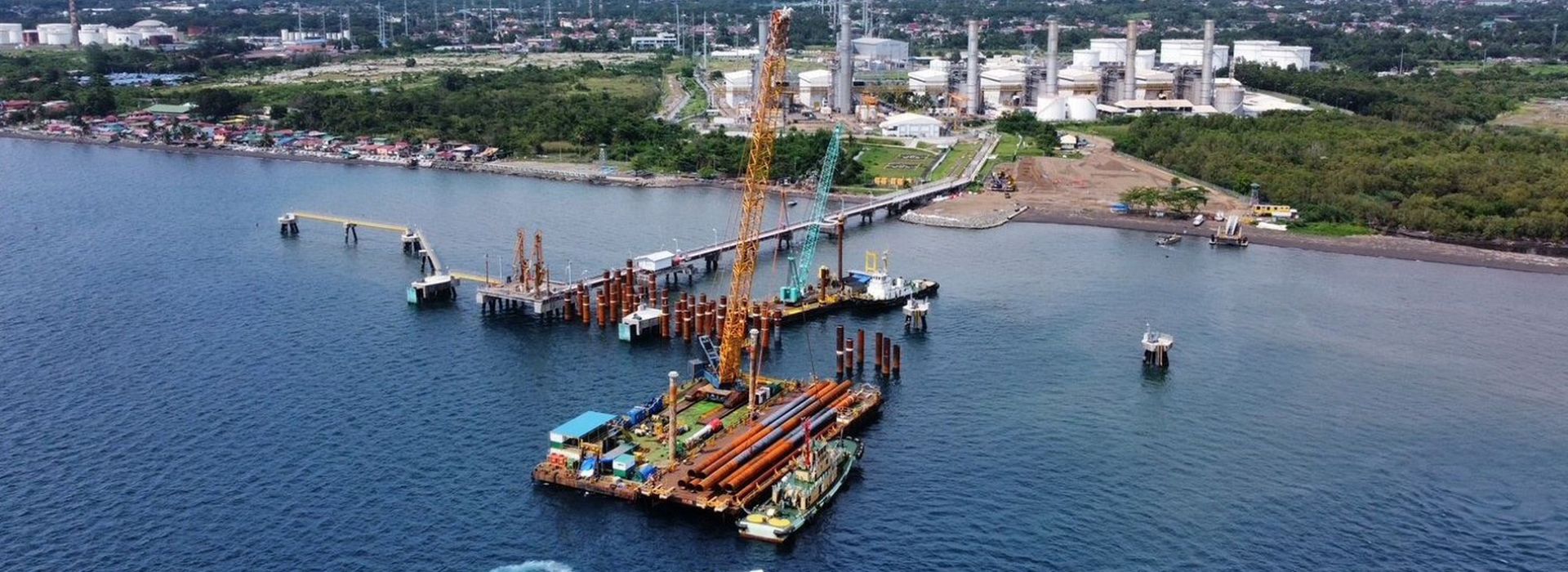
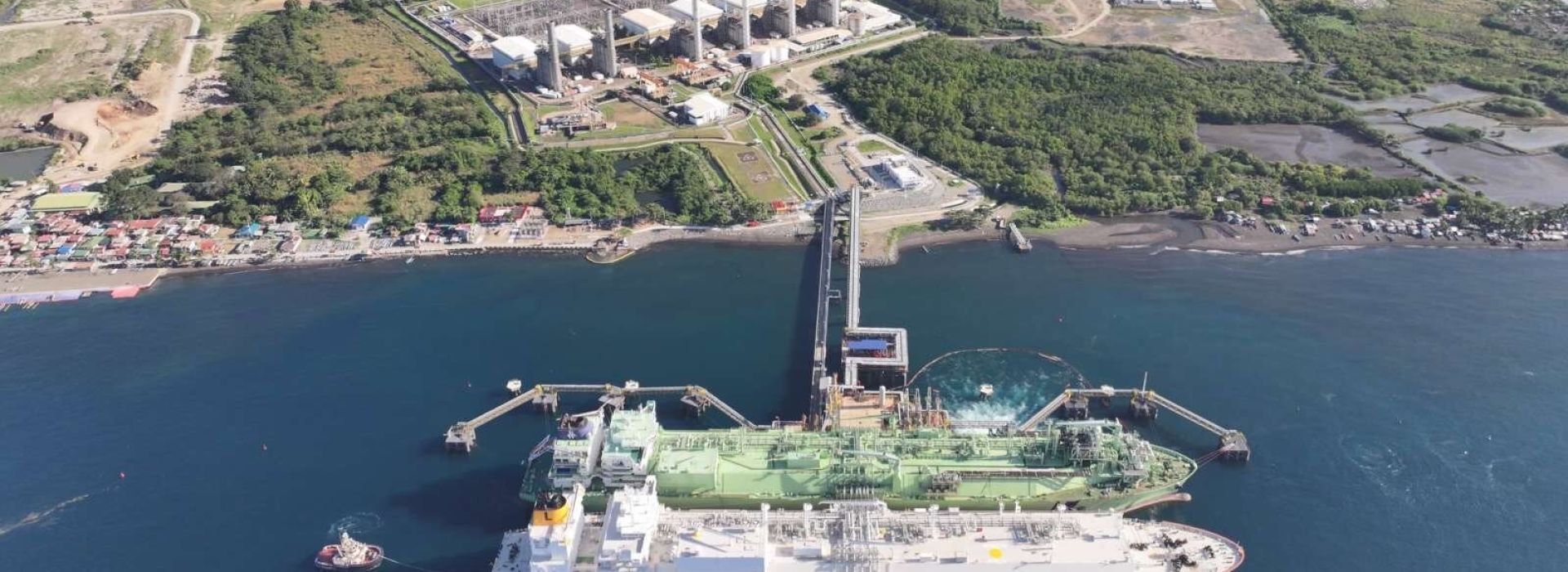
FGEN LNG Corporation (FGEN) engaged us to build and deliver the Interim Offshore Terminal Project ("IOT Project") at their LNG terminal in Batangas, in the Philippines.
We undertook the engineering, procurement and construction of both the Multi-Purpose Jetty and Onshore Gas Receiving Facility. The new Multiple Purpose Jetty is a permanent modification of the existing liquid fuel jetty which we constructed in 1998.
Fast Facts
- New multi-purpose jetty with topside infrastructure
- Onshore facilities, including control room
- 24 inch, 1.3 km long high pressure gas pipeline
- Extensive earthworks, including tsunami bund wall and access road
VTB Subsea Pipeline Jurong Island
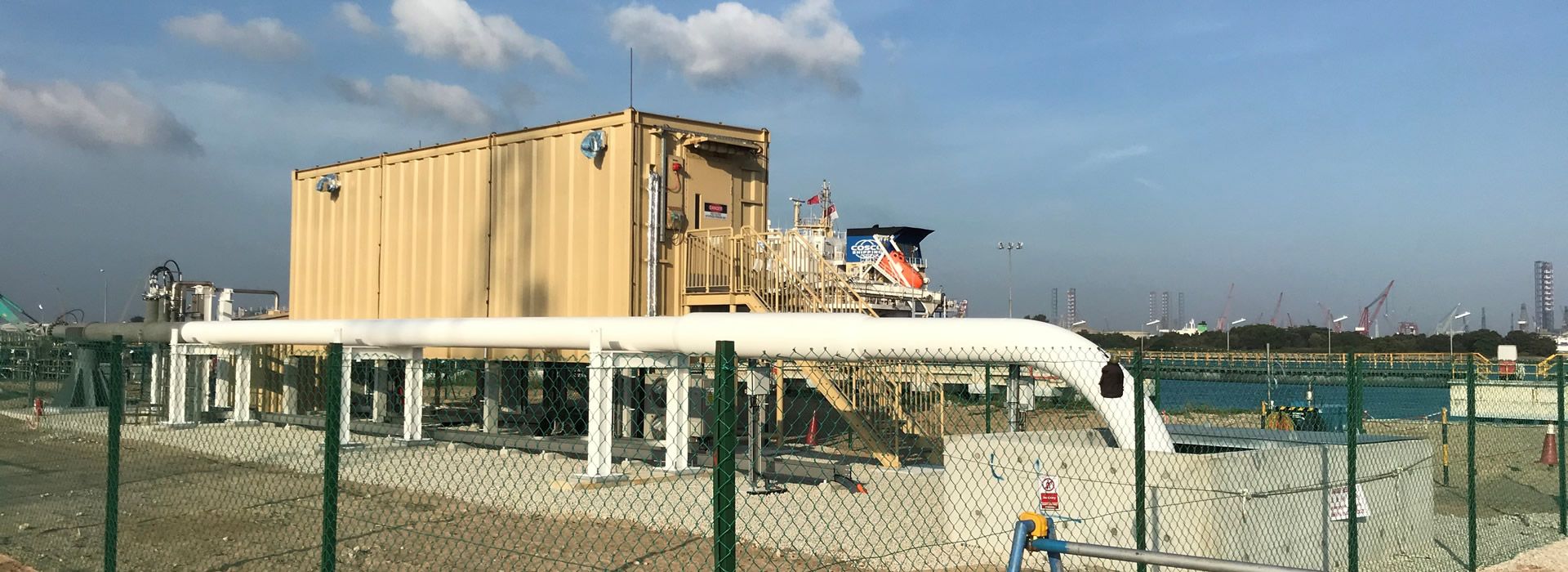
We joint ventured with ITP (IMJV) to design and construct the VTB (Vacuum Tower Bottoms) Subsea Pipeline for ExxonMobil in Jurong Island, Singapore.
Vacuum Tower Bottoms are the left over bottom product of distillation, which can be processed in cokers and used for upgrading into gasoline, diesel and gas oil.
Fast Facts
- 2 km long, 12 inch dia. subsea pipeline
- Pipeline heated to 200 degree celcius
- Shore crossings
Sangatta Offshore Works
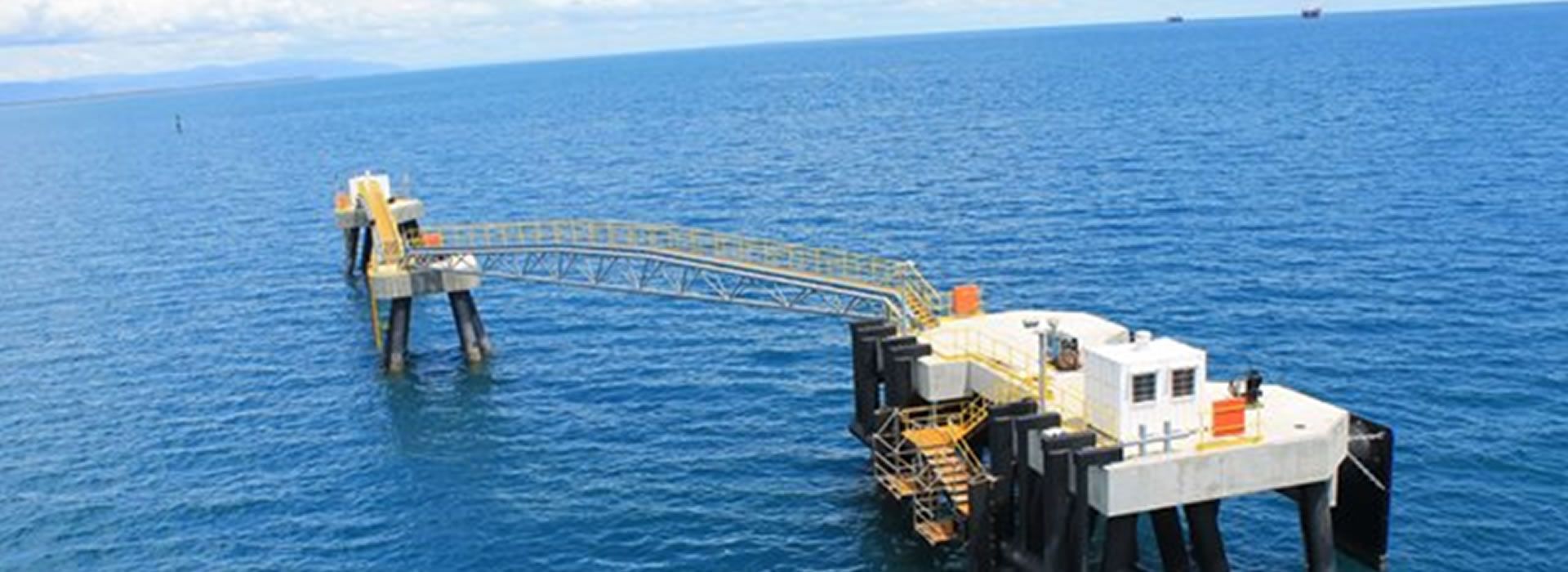
We were engaged to design and construct an eight-dolphin berthing facility, a pipeline end manifold (PLEM), and a new diesel supply pipeline for PT Petro Storindo Energy - a joint-venture between Oiltanking, BP and Kaltim Prima Coal.
Our scope of work included the dolphin mooring system (4 berthing and 4 mooring dolphins); a 3 km long, 20 inch diameter subsea/onshore pipeline; a subsea control unit; a PLEM (Pipeline End Manifold); a PIG Launcher and onshore PIG receiver; and miscellaneous pumps and tanks for the fuel supply. The line terminates at a diesel storage terminal that supports the operations of the Kaltim Prima Coal mine.
Fast Facts
- 4 berthing and 4 mooring dolphins
- Pipeline End Manifold (PLEM)
- 3 km long, 20 inch diameter subsea and onshore pipeline
Pipelines
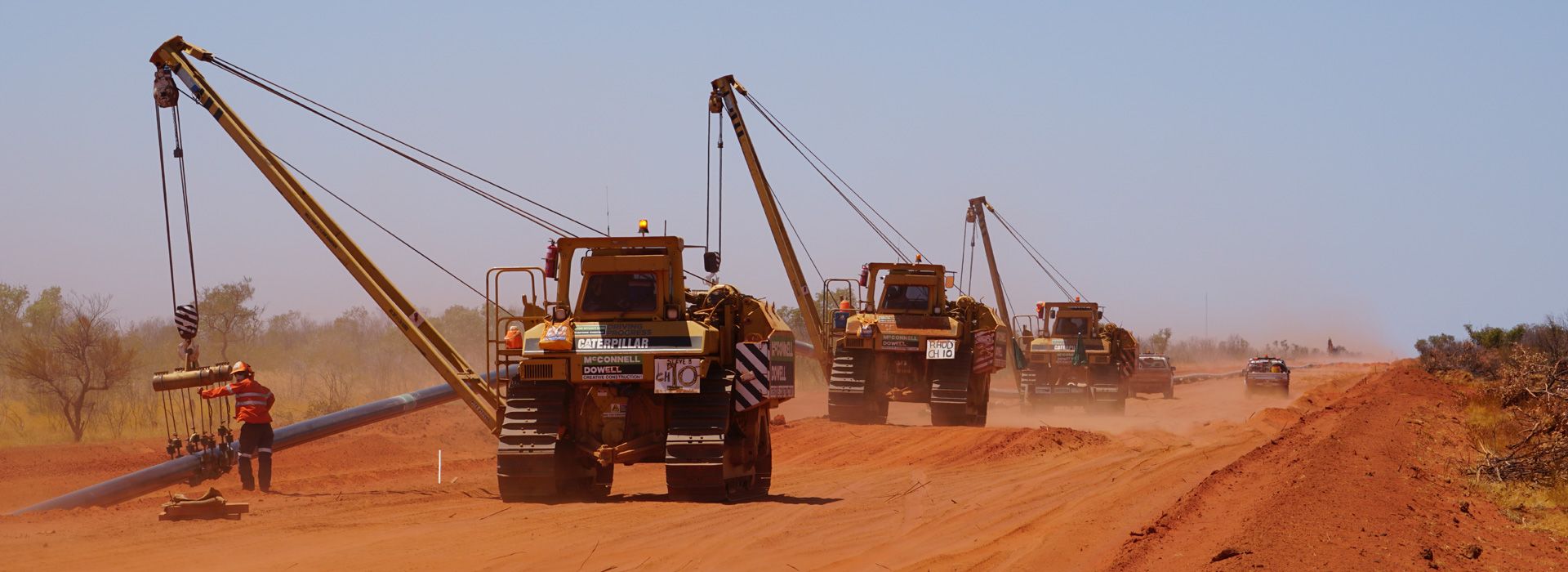
We've delivered over 20,000 km of new pipe networks.
McConnell Dowell is a leading international pipeline contractor. We have constructed over 20,000 km of new pipe networks across more than 200 projects including gas, petroleum, water and slurry pipelines. These pipelines help drive economic and social progress across Australia, New Zealand, and South East Asia.
We are experts in large diameter pipeline construction and have delivered gas pipelines up to 1300 mm (50”) in diameter and water pipelines up to 1800 mm (70”) in diameter. Our in-house specialist skills and plant enable execution of HDD, micro-tunnelling, marine pipe pulls, pipe bridges and other complex crossing solutions.
Lake Way and Karlawinda Gas Pipelines
We constructed the Lake Way Gas Pipeline (LWP) and the Karlawinda Gas Pipeline (KGP) projects for APA Group in Western Australia.
The LWP pipeline is located 15 kilometres south of Wiluna and transports natural gas from APA’s Goldfields Gas Pipeline (GGP) to SO4’s Lake Way facility. SO4 aims to become a major exporter of Sulphate of Potash and the LWP pipeline provides gas for fuelling power generating facilities and other equipment within their process plant.
Fast Facts
- Two high pressure gas pipeline projects
- 26 km of DN100 gas pipeline
- 56 km of DN100 gas pipeline
Narrows Crossing (QCLNG)
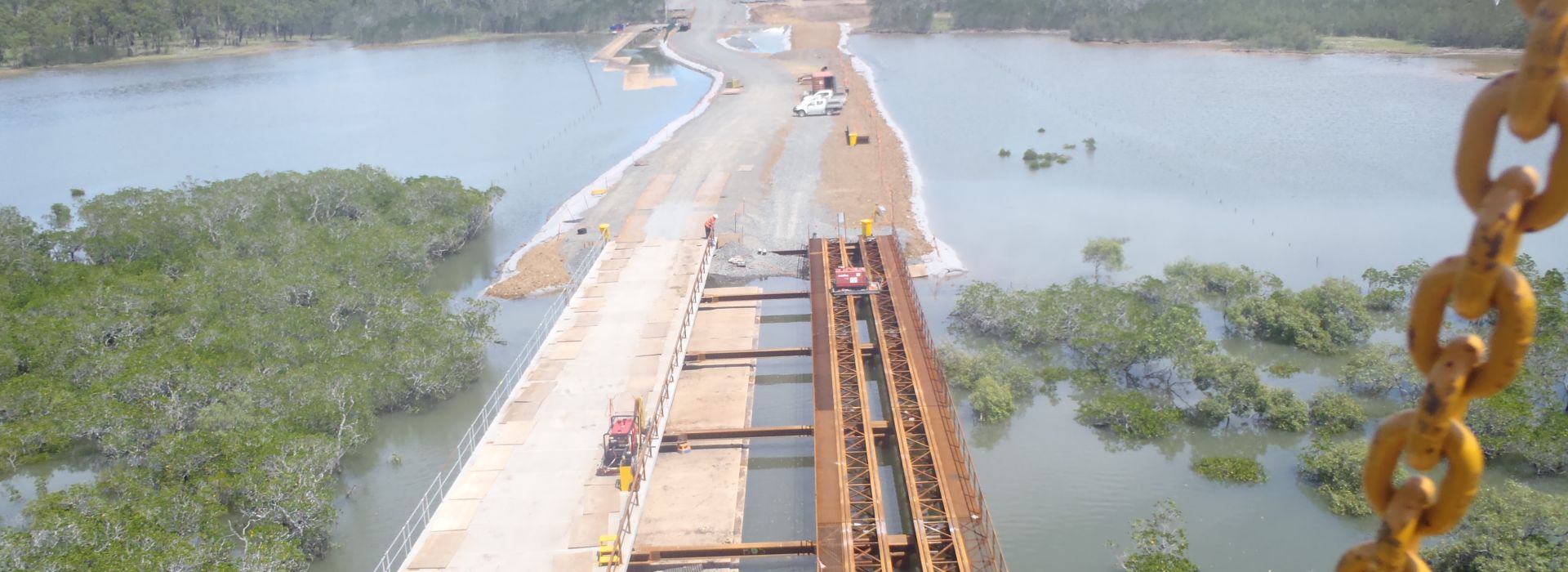
In joint venture with Consolidated Contracting Company (the MCJV), we designed and delivered the Narrows Crossing project, one of the most diverse and challenging pipeline projects ever completed in Australia.
Our scope involved the connection of the QCLNG and APLNG 42” export pipelines from their termination points across the Narrows Channel to the LNG plant on Curtis Island. We also delivered the QCLNG Delivery Station.
Fast Facts
- 12 km, 42 inch twin pipelines
- Two 8 inch FOC ducts
- 1.5 km HDD Crossing
- 2.3 km marine pipe pull
- Restricted right of way
- Extensive environmental controls
APLNG Pipeline
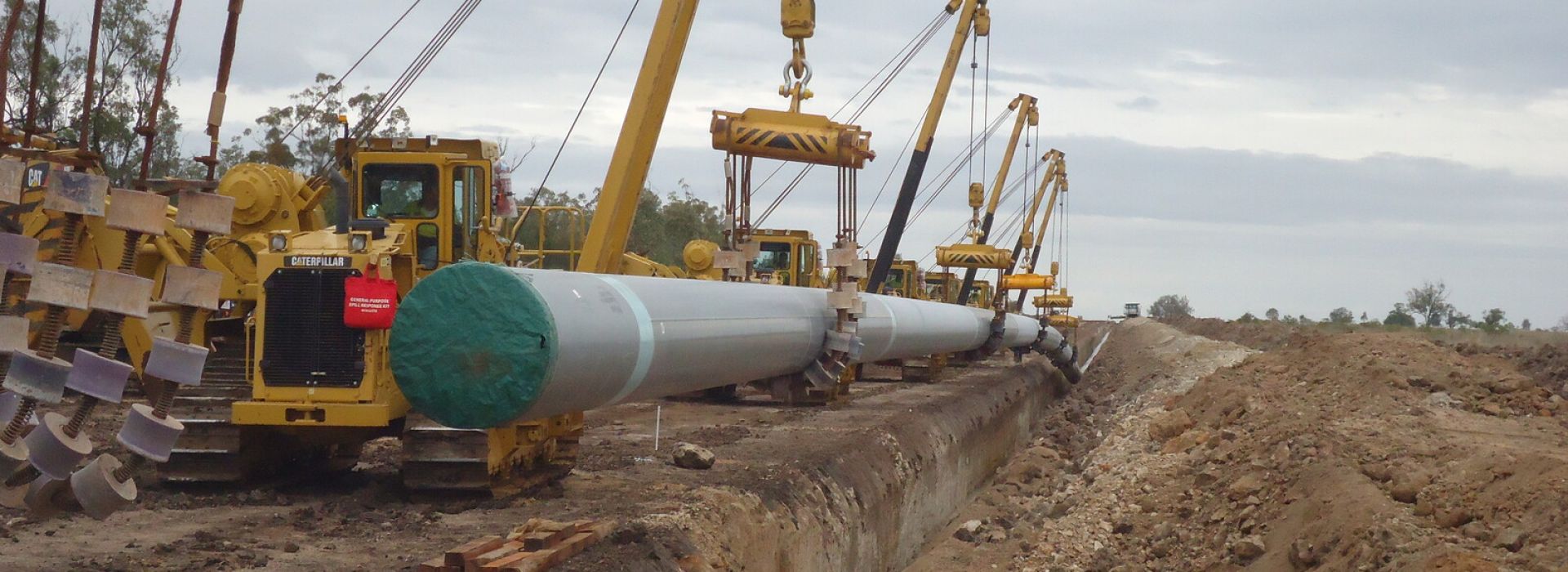
Following successful completion of an Early Works contract for the APLNG project, MCJV, a joint venture between ourselves and Consolidated Contracting Company Australia Pty Ltd, was awarded an EPC contract for delivery of 360 km of the main export pipeline, a 57 km lateral pipeline, and associated facilties.
The overall APLNG project included the development of substantial coal seam gas resources in the Surat and Bowen Basins. The key elements of the project were the transmission pipeline, subsea crossing (Narrows Crossing) and a multi-train LNG facility on Curtis Island, near Gladstone.
Fast Facts
- 360 km, 42" mainline pipeline
- 57 km, 36" lateral pipeline
- Launcher station at Condabri
- Pipeline hub
- Midline scraper station
- 4 mainline valve stations
Fourth Transmission Pipeline Phase 2 (FTP2)
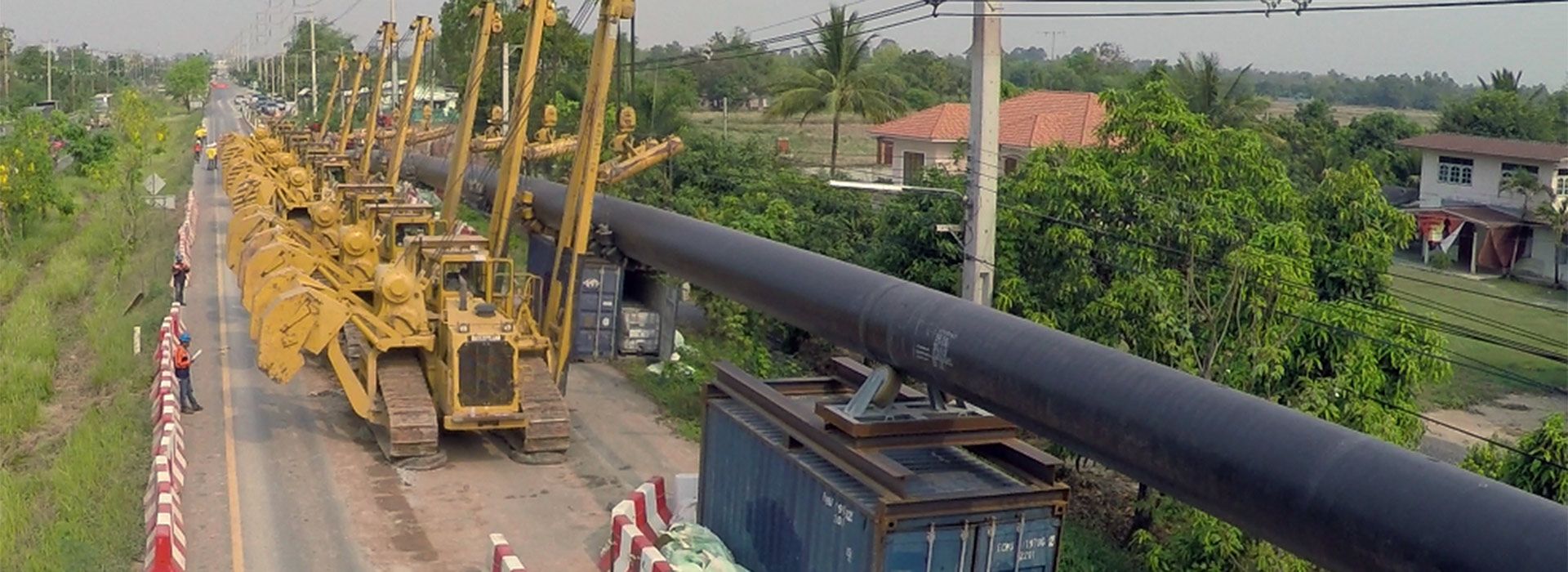
The FTP2 Project was awarded to our Thailand team and involved approximately 70 km of 42" high-pressure gas pipeline constructed between Rayong LNG Terminal in the south to the Wang Noi – Kaeng Khoi Pipeline Tie-in Station in the north.
Work was spread over 300 km and involved more than 20 km of trenchless pipe installation and construction of significant above-ground facilities. The peak site workforce exceeded 2,800 across 50 discrete work locations.
Fast Facts
- 70 km of 42" X70 High Pressure gas pipeline
- 3 km Thrust Bores
- 20 km of Horizontal directional drills and direct pipe installation
- Over 4 million hours worked LTI free
Mechanical & Electrical
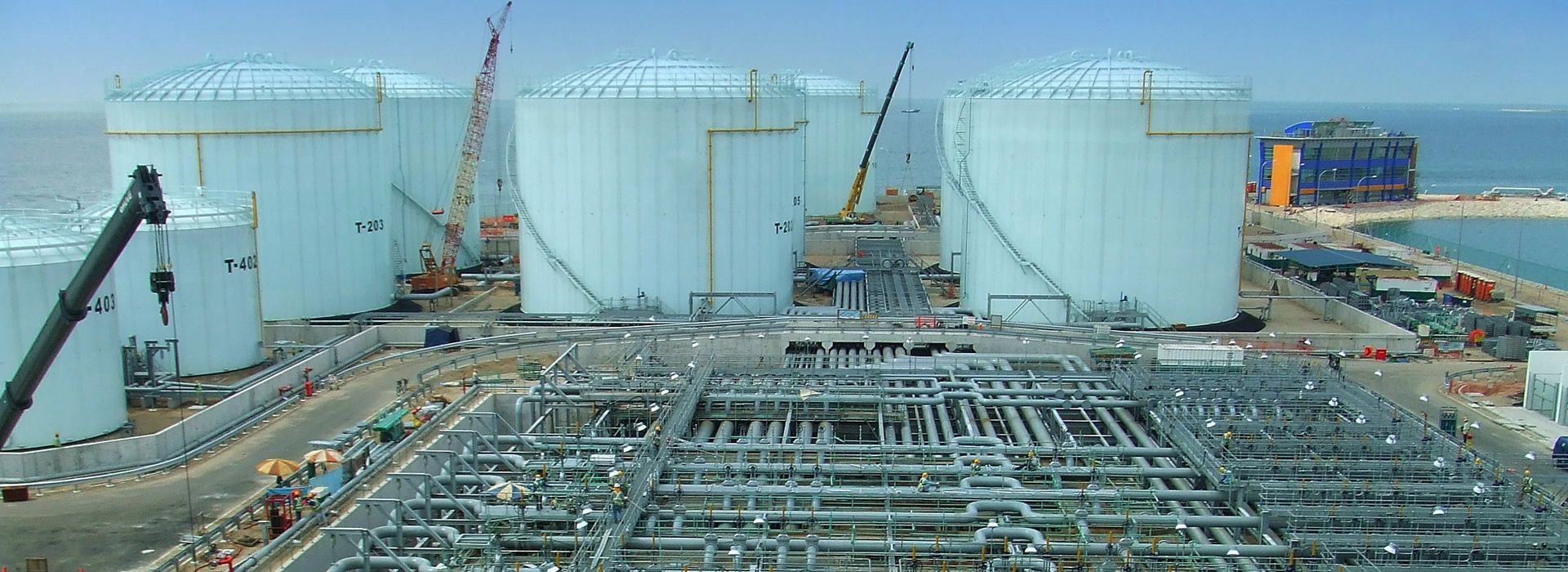
We have an extensive track record in delivering complex mechanical & electrical projects stretching back to the early 1980s.
We've delivered structural, mechanical and piping projects in live operating environments for multi-national customers such as ExxonMobil, BP, BHP, Rio Tinto, FMG, DuPont, and various water authorities.
Our project engineers and construction leaders have specialist skills in mechanical and electrical design and installation, and we have successfully managed projects with peak workforces in excess of 1000 people.
We optimise construction outcomes through the use of modularisation, prefabrication and preassembly - minimising site risks, durations and impacts, and ensuring cost savings and high quality outcomes for our customers.
We continue to achieve industry-leading results in safety performance and customer satisfaction.
Kidston Pumped Storage Hydro
A game-changing project for Australia's clean energy industry
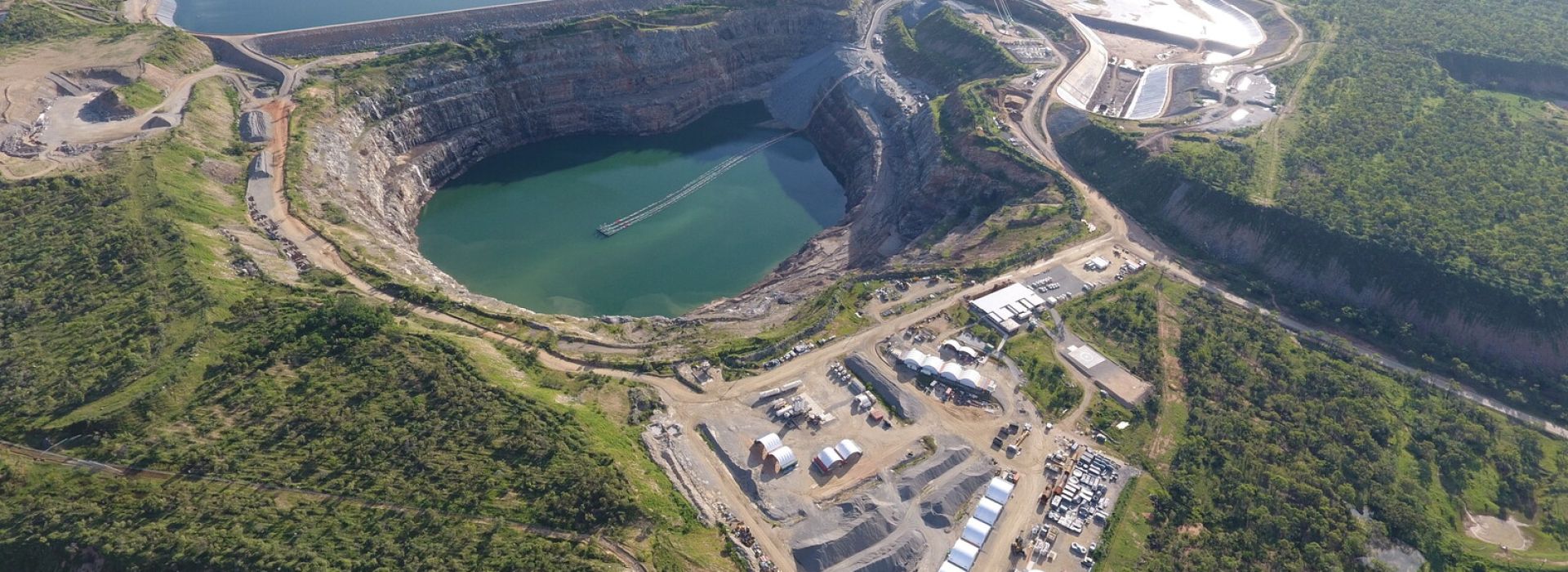
We are constructing the Kidston Pumped Storage Hydro Project in Far North Queensland - an innovative project that involves the world-first conversion of a disused gold mine into a pumped storage hydroelectric power generation facility.
This first-of-its-kind natural battery storage facility has the potential to generate up to 250 MW of rapid response (less than 30 seconds), flexible power to Australia’s National Electricity Market.
Fast Facts
- First-of-its-kind natural battery storage facility
- 250 MW of rapid response (30 seconds) renewable energy
- 4 year design development and technical optimisation leading up to construction
- 800 jobs to be created during construction
Maris South Canal Hydro Electric Power Project
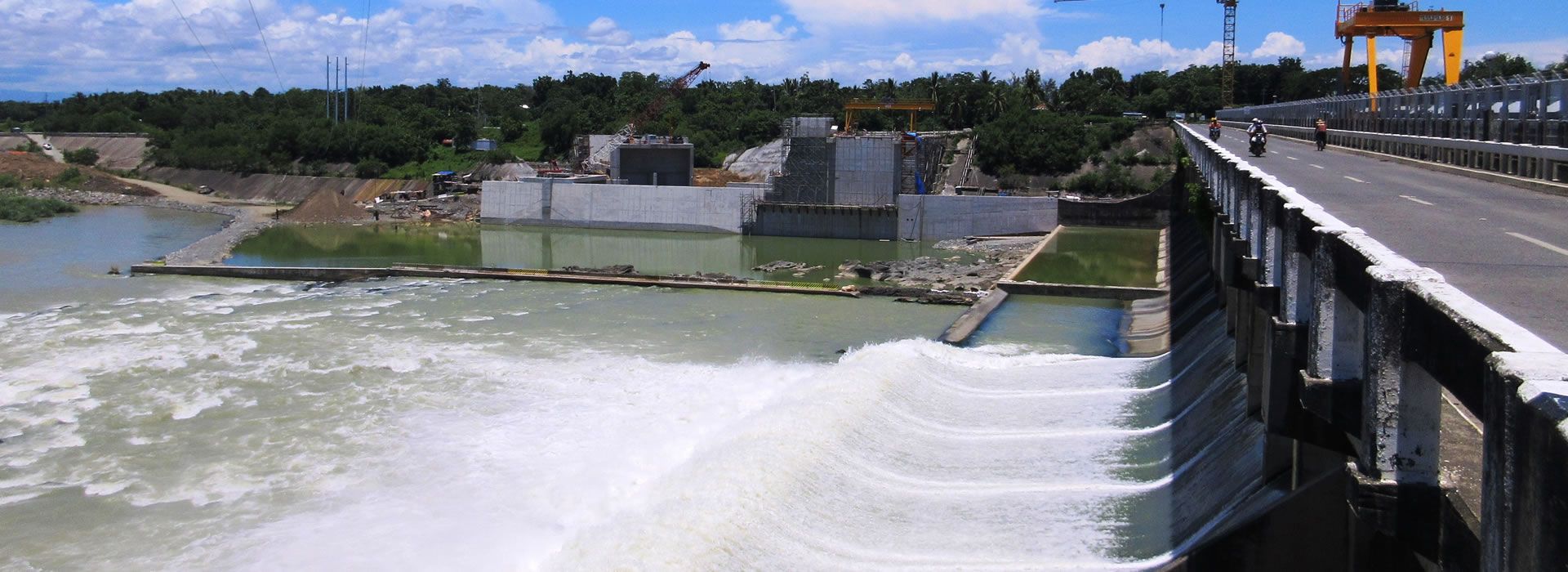
Statkraft Norfund Power Investment Group and Aboitiz Power (SNAP) awarded us the Maris South Canal Hydro Electric Power (HEPP) project - an 8.5 MW low head hydroelectric power station in North Luzon, Philippines.
The award built on our 10 year working relationship with SNAP, who are the owners of the Ambuklao Hydro Power Plant in the Philippines, which we rehabilitated for them.
Te Mihi Geothermal Power Station
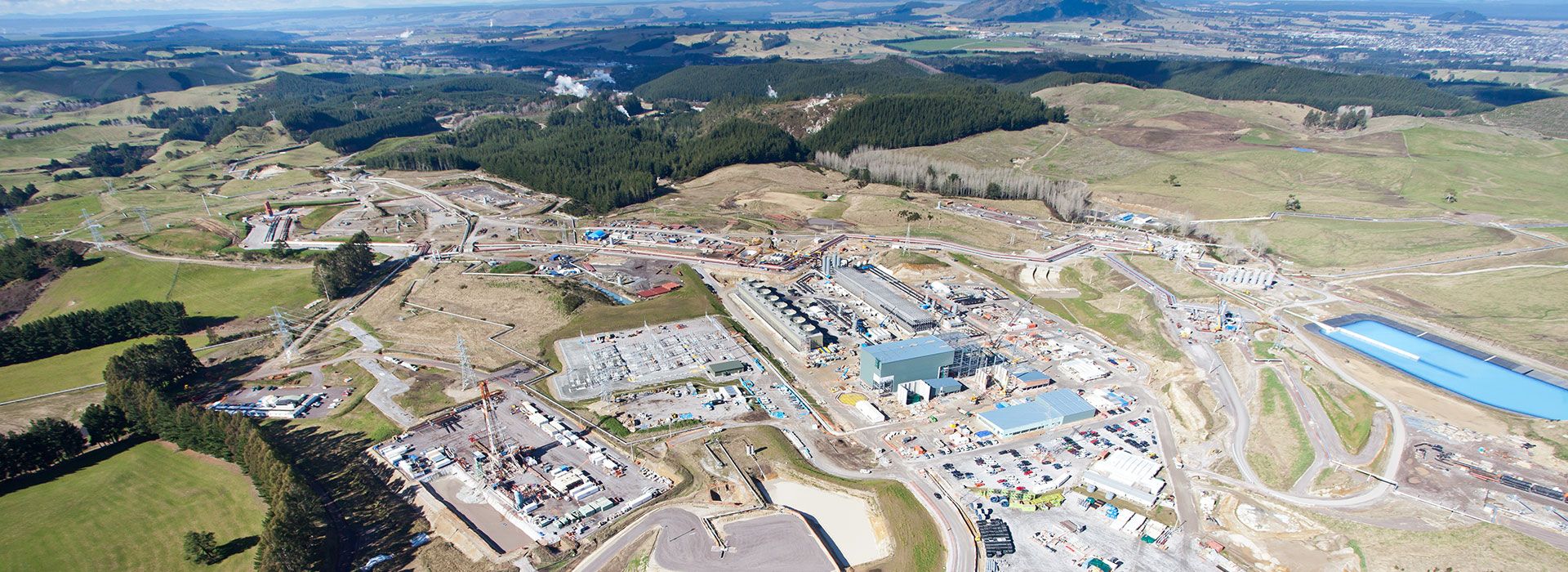
In joint venture, we designed, constructed and commissioned the 166 MW Te Mihi Geothermal Power Station, replacing the world's second largest power station - the 50 year old Wairakei Power Station.
With limited experience in complex EPC contracts in New Zealand, the joint venture, comprising ourselves, SNC Lavalin, and Parsons Brinckerhoff, brought together a strong team with extensive international expertise in power plants, to meet Contact Energy's specific requirements.
Fast Facts
- 495,200 m3 earthworks
- 5,550 lm piles
- 15,800 m3 concrete
- 2,050 tonnes reinforcing steel
- 1,390 tonnes structural steel
- 3,880 lm electrical duct banks
GLNG Upstream - Roma Hub and Pipelines
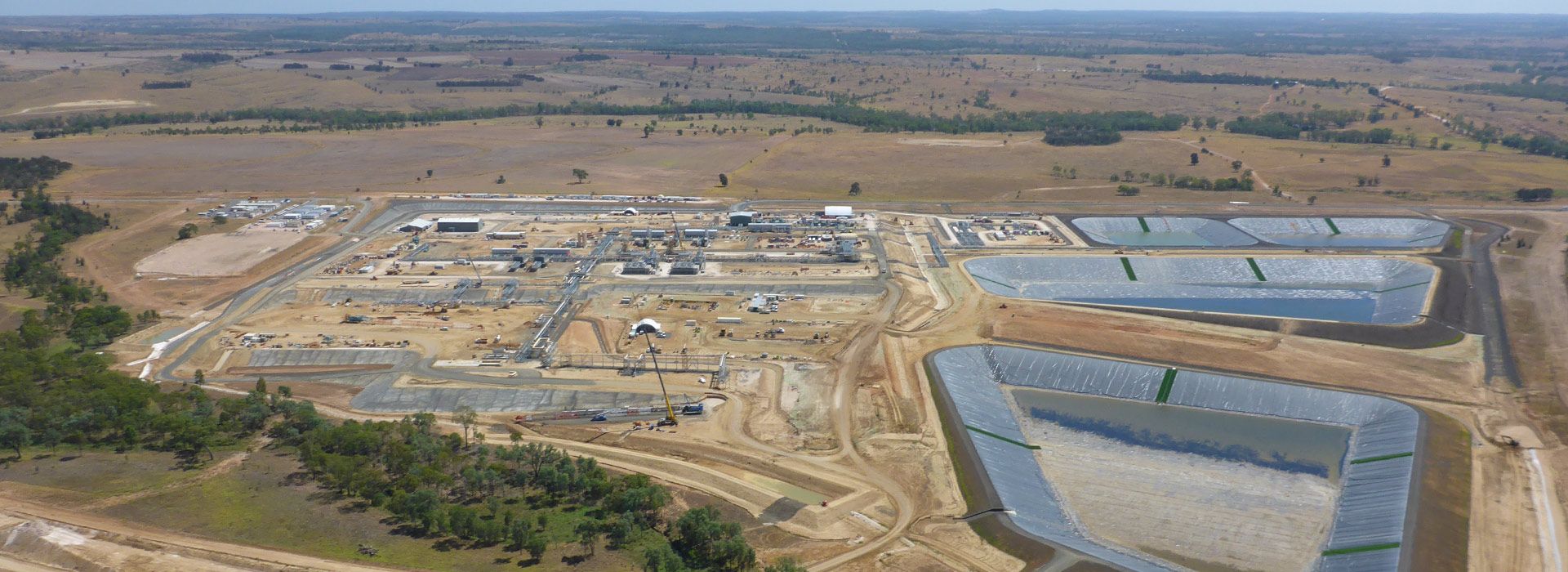
We constructed a 145 TJ per day gas compression and water treatment hub, with associated infrastructure and water gathering lines, at the coal seam gas fields north east of Roma in Queensland. The infrastructure enabled collection and processing of gas for delivery via an export pipeline to an LNG processing plant on Curtis Island, off Gladstone.
The large and complex project required a multi-disciplinary approach, with a focus on facilities for gas compression, power generation and water treatment, in addition to pipeline construction.
Fast Facts
- 287 km, 63-800 mm diameter PE pipelines
- 40 km, 100-250 mm diameter CS pipelines
- LTI free
Sustainability
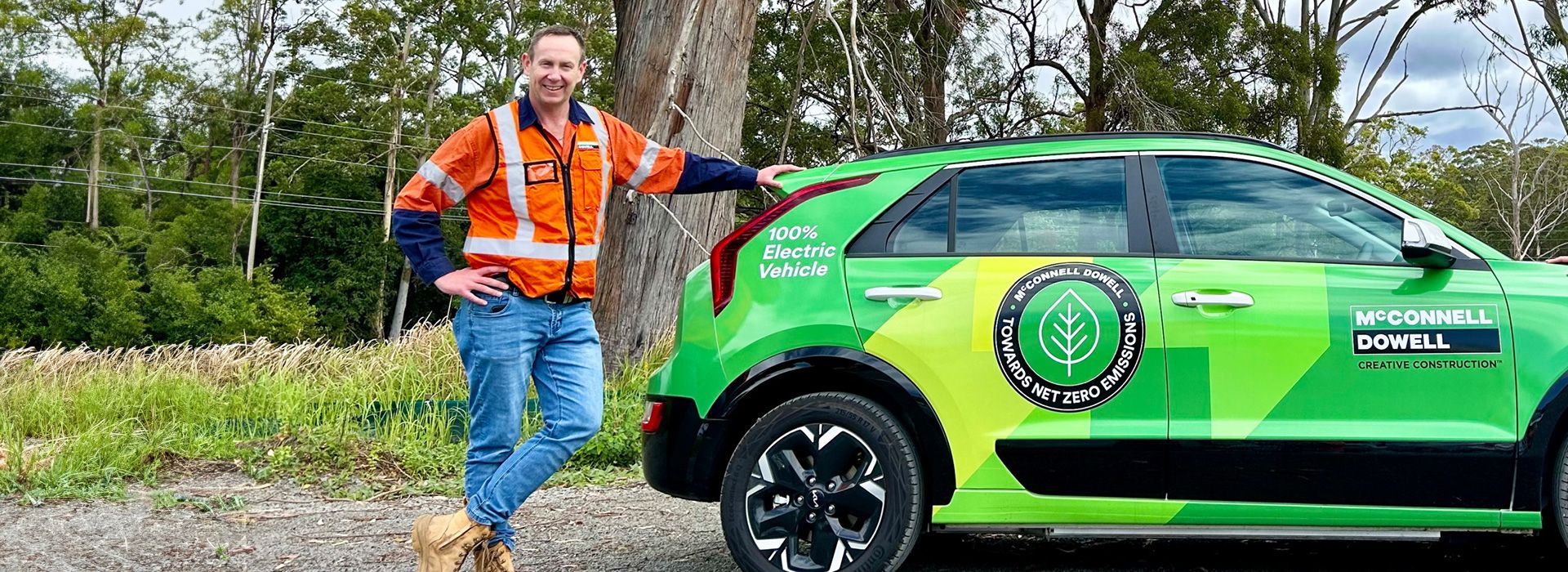
Our purpose is 'Providing a Better Life’ - today and into the future. That’s why sustainability, in all its forms, is considered in every project, process and product across our business.
Our approach is clearly articulated in our Sustainability Policy.
We're about action not just aspiration. Our ambitious but achievable carbon reduction road-map will see us be operationally net zero by 2030, with 44 initiatives that are being progressively rolled out across the company. Last year we reduced our carbon emissions by 442 tonnes through the use of solar technologies alone, and diverted almost two million tonnes of waste from landfill.
Smart water use on Kidston Pumped Storage Hydro project
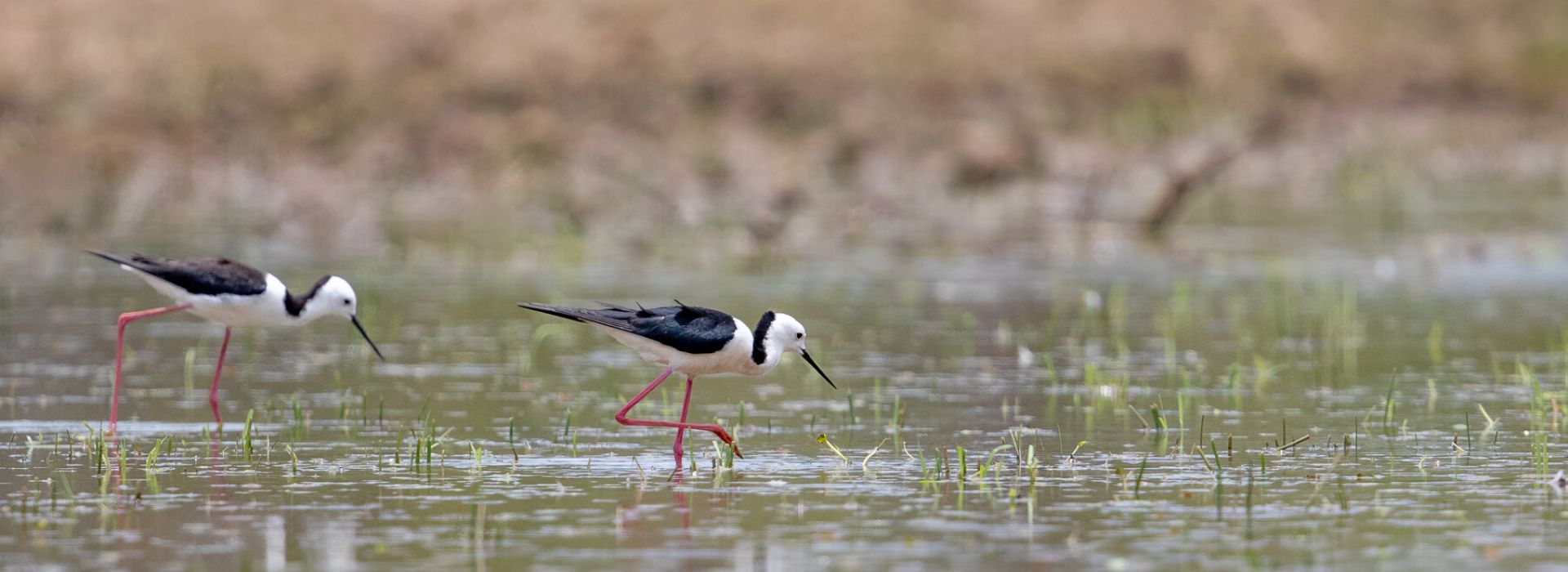
Our team on the Kidston Pumped Storage Hydro Project in outback Queensland has used 100% non-potable for construction purposes to date. The Kidston project involves the world first conversion of a disused gold mine into a pumped storage hydroelectric plant.
Water for construction use has been sourced from the Copperfield Dam and associated pipeline, which was constructed to supply the mine with water when operational. Water has also been used from one of the large pits on site, which has subsequently filled with rain water since the mine closure 20 years ago.
Over 25 megalitres has been sourced from the onsite pit (equivalent to 10 Olympic sized swimming pools), with the remainder coming from Copperfield Dam.
The water is used for various purposes on site such as dust suppression, concrete batching, conditioning, and also as an input to the onsite water treatment plant, which produces the site's drinking water.

Awarded for excellence in environmental outcomes
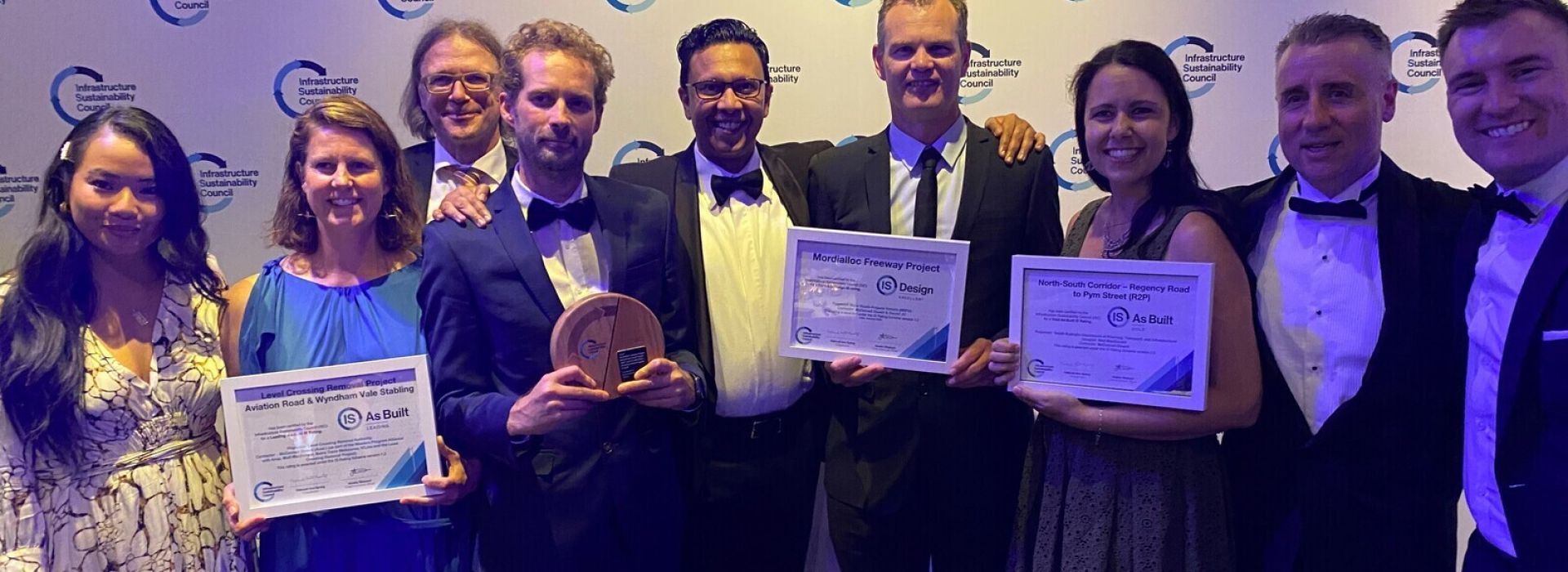
Our Mordialloc Freeway Project (MFP) won the Excellence in Environmental Outcomes Award at the Infrastructure Sustainability Council Gala Awards 2021. The awards celebrates sustainability best practices across Australia and New Zealand.
Infrastructure Sustainability Council (ISC) is the peak body for infrastructure sustainability, advocating for the delivery of cultural, social, economic and environmental benefits in all infrastructure projects.
The MFP is a 9 km freeway link in Victoria, incorporating interchanges, bridges over wetlands and a shared user path. The project implemented a range of world-first sustainability initiatives in response to Victoria’s waste crisis and shortage of quarry materials, creating ‘Australia’s greenest freeway’.
Thousands of tonnes of otherwise waste material were used to construct noise walls, asphalt pavements, concrete reinforcing mesh and stormwater drainage pipes. This shift to sustainable consumption of materials achieved a 27% reduction in embodied energy.
The judges acknowledged the significant effort in innovating new technologies to divert waste away from landfill, saying…
“The focus on reduced truck trips, local sourcing and recycling is a powerful way to improve industry practices.
“The MFP demonstrates the potential cost benefits of improvised sustainability practices while supporting development and scale-up of local industry.”
Low impact marine construction
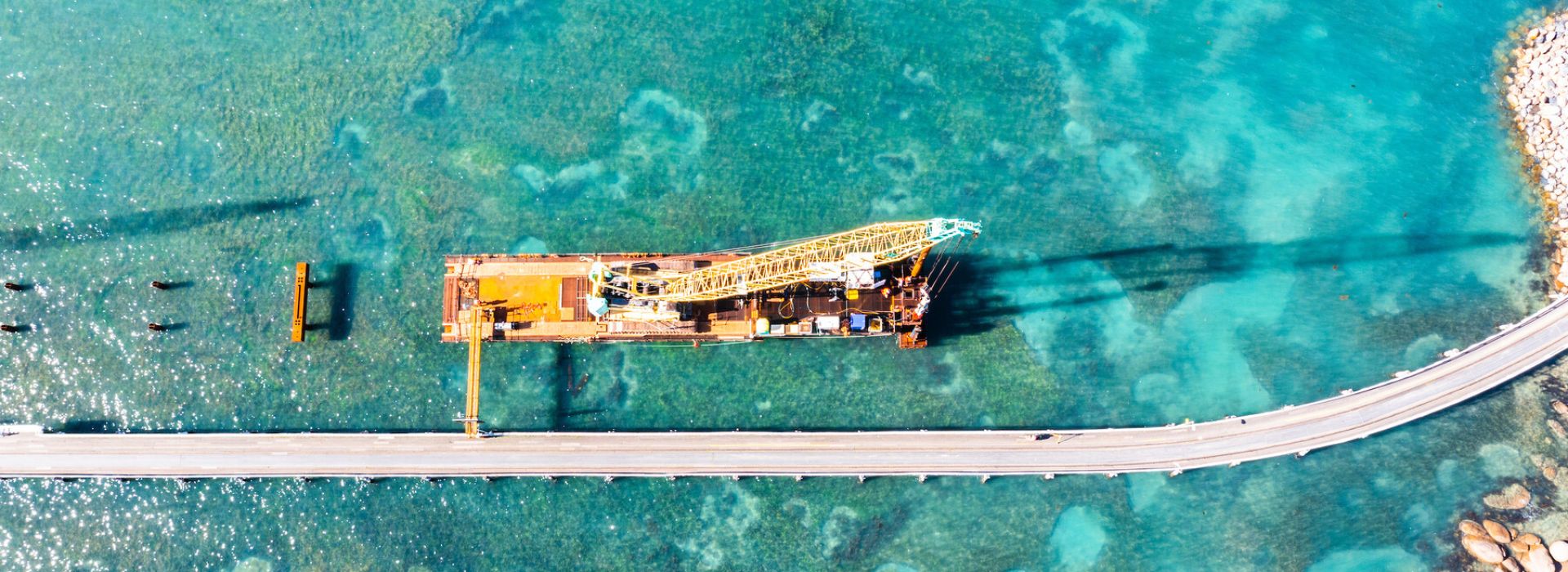
On the Granite Island Causeway Project in South Australia our team used the 'hand over hand' construction method to minimise environmental impacts and ensure delivery on time.
The 'hand over hand' method employs three concurrent work fronts:
- Front one installing the permanent piles
- Front two installing the grouted HDPE sleeves and the precast headstocks
- Front three installing the precast longitudinal girders and decks.
As the structure advances out into the water it acts as a construction platform for the work crews to build the next stage. Each work front takes a similar duration, ensuring maximum certainty in productivity and schedule.
Analysis was conducted on various construction approaches during the tender phase, including the use of jack-up barges or a temporary bridge structure to facilitate construction. However, the 'hand over hand' method was the only one capable of achieving completion by the target date.
The other benefit of the method is its minimal footprint. Minimising the impact on the sensitive marine environment was a key consideration during the tender and design phases of the project.
The adoption of the method, along with the use of precast prestressed deck units which pushed the span out as far as possible, minimised the number of pile driving operations further reducing the impact on the marine environment.
The design and construction methodology was fit-for-purpose and extremely efficient. It resulted in on time and on budget completion and had a low impact on Victor Harbor's rich marine ecology.
Reducing emissions through the use of SCM
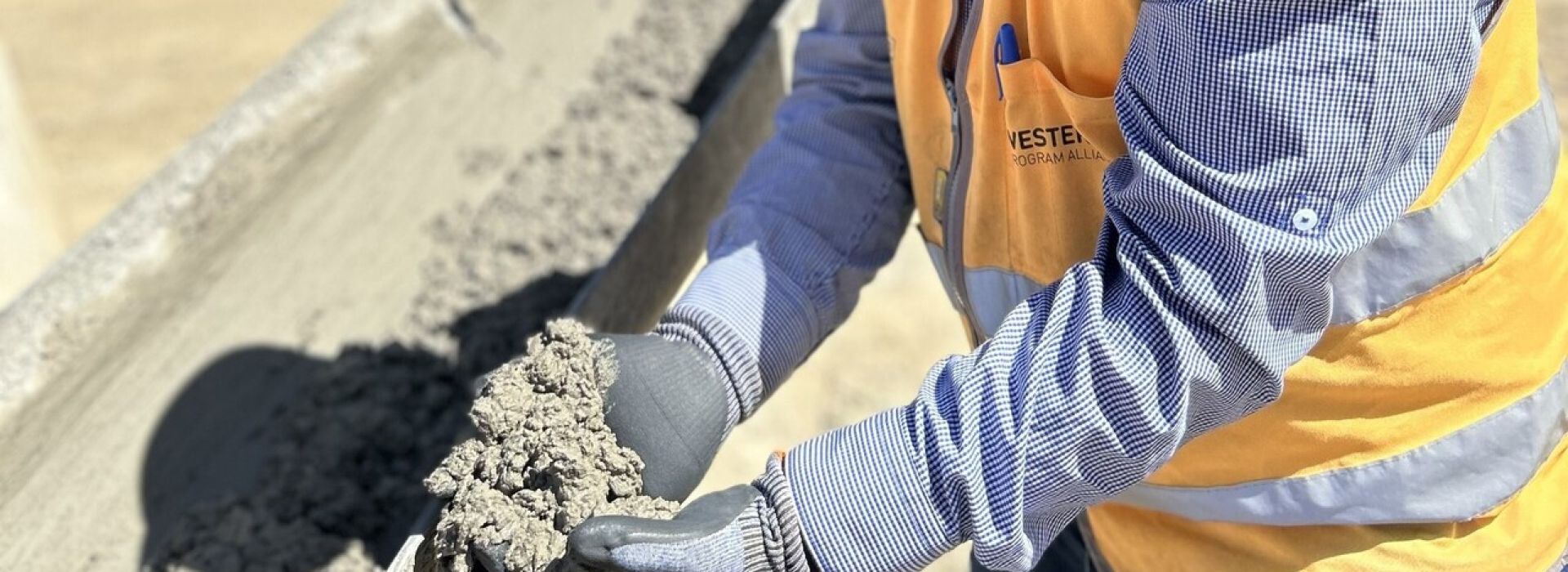
Our team on the Webb Street Level Crossing Removal Project in Melbourne has taken a proactive approach to address greenhouse gas emissions by incorporating 80% Supplementary Cementitious Materials (SCM) in their concrete slab, the highest SCM content in Victoria!
Portland Cement is a binding agent used in concrete, and traditional cement production is a significant contributor to global carbon emission. Using SCM in place of cement further reduces the amount of carbon emissions.
Described as strong and, fit for purpose, the 80% SCM concrete mix can be used for non-structural applications like share user paths or footings. Amongst other locations the Webb Street project is using this mix in the slab that will be the waste enclosure.
We're leading the way with sustainability innovations - working with our suppliers, designers, and our construction teams to reduce carbon emissions!
See what other initiatives are on our Carbon Reduction Roadmap here.

Lowering emissions using calcined clay concrete
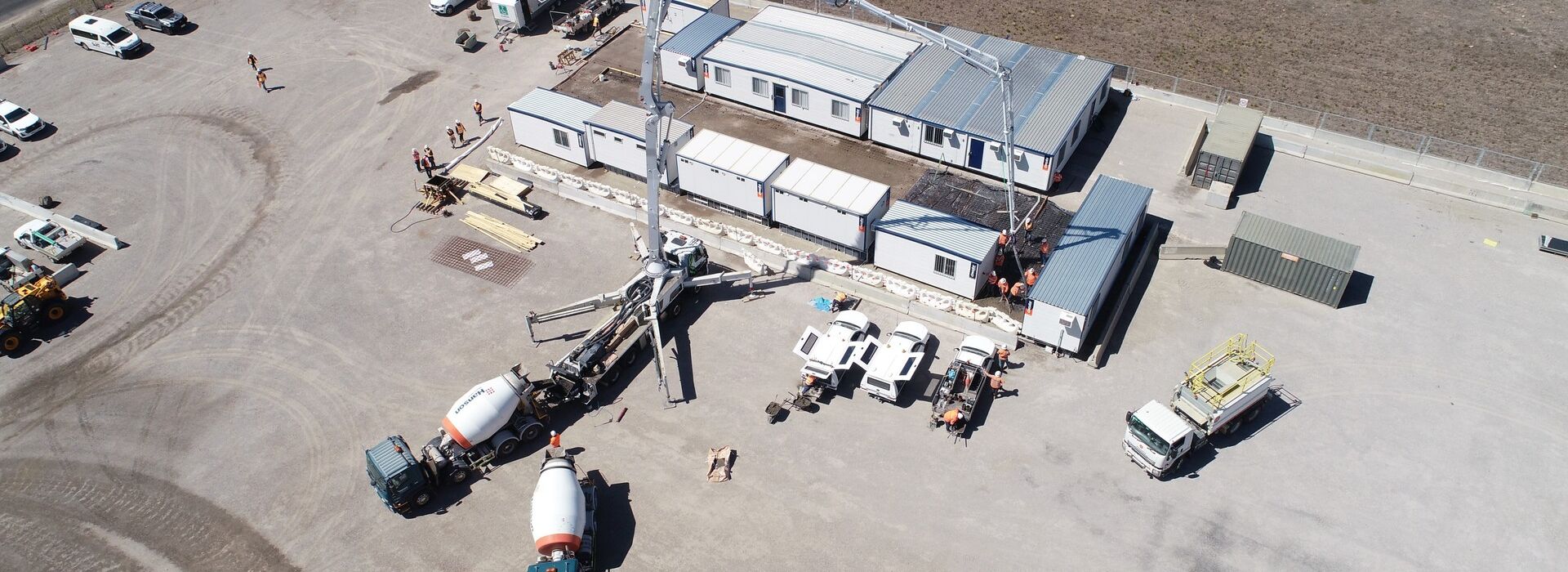
We recently poured the first calcined clay concrete on an Australian rail project.
Produced in the same way as cement, the clay requires only a fraction of the heat to produce it. Therefore, used as a substitute for 30% of the cement in concrete, it lowers greenhouse gas emissions by up to 50%.
Additionally, the mix demonstrated workability and durability, confirming its suitability for large-scale infrastructure projects.
And the great thing is - there’s an extensive supply of suitable clay throughout Australia.
We used the calcined clay in a temporary site slab as a trial. It was a collaborative effort in partnership with the Low Carbon Concrete Working Group, the University of Melbourne, our customer (the Level Crossing Removal Project), Eifers Civil, and Heidelberg Materials.

Advancing Governance through ISO 27001 Certification
As part of our ongoing commitment to strong governance and responsible digital transformation, we have formally commenced our journey toward ISO 27001 certification — the globally recognised standard for Information Security Management.
This strategic initiative reflects our determination to protect information assets across all facets of our operations — extending beyond IT to include project data, client information, and sensitive documentation. It is a key pillar in ensuring that information security is embedded within our broader ESG responsibilities.
Why ISO 27001 Matters
ISO 27001 certification will:
-
Strengthen our competitive edge in securing and delivering complex, high-trust infrastructure projects.
-
Demonstrate to stakeholders our commitment to rigorous information security standards.
-
Safeguard the integrity and resilience of our operations across both field and office environments.
Embedding Information Security into Our Governance Framework
The programme is being rolled out initially across our Australian business, with integration into core processes and ways of working. Following its successful implementation, it will be extended to our operations in other regions.
To support this transformation:
-
A comprehensive Information Security Policy has been finalised and is now available via MMS, also displayed across key sites and offices.
-
A dedicated Information Security Working Group is being established to drive programme delivery and engagement.
Through this initiative, McConnell Dowell is reinforcing its governance foundation — ensuring our systems, people, and practices meet the highest standards of information security while supporting long-term resilience and stakeholder trust.
Switching to sustainable power sources onsite
The team upgrading the Warkworth Pump Station has made some great improvements to the sustainability profile of the project.
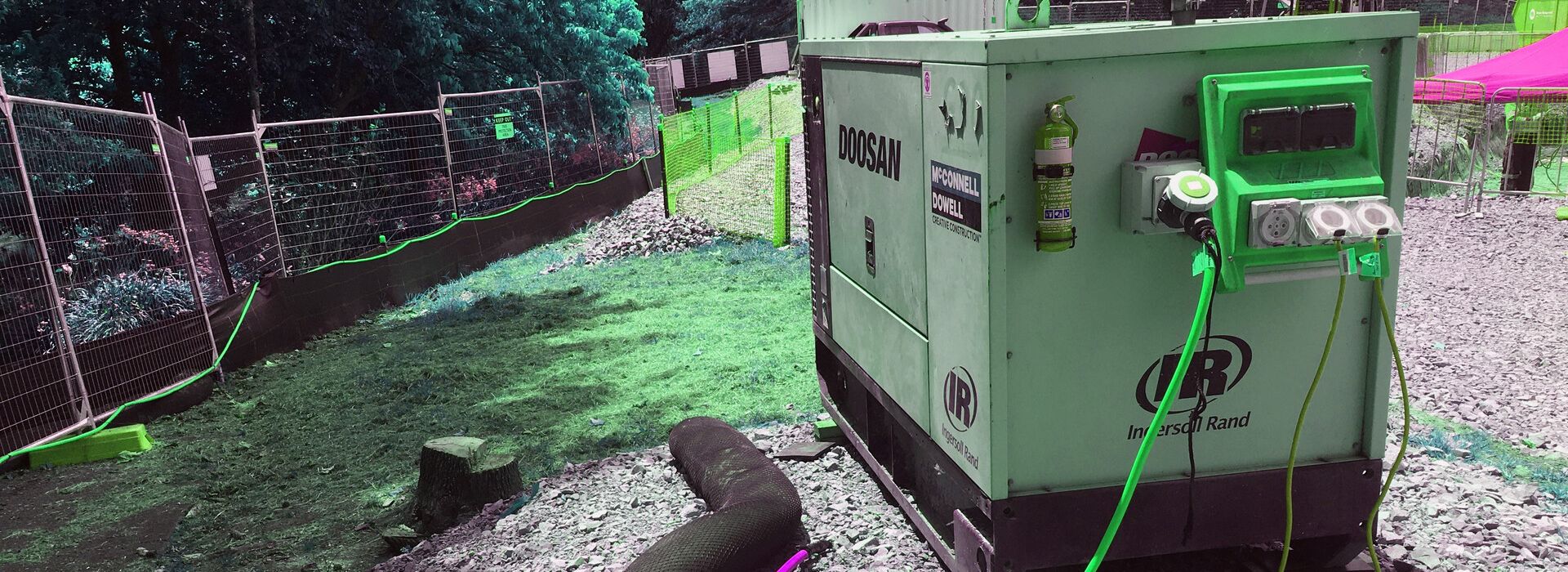
Most of the site services and machinery are usually powered using generators which isn’t very good for the environment. Electricity in the North Island is mostly generated via renewable sources such as hydro, wind, and geothermal so it is much more sustainable to be using mains power rather than diesel where possible.
Watercare was aware that the transformer powering the existing Lilburn Pump Station was too small for the new pump station. They made the decision to upgrade it as soon as possible so the construction project could use mains power rather than diesel generators.
The project started in September 2021, using a 30kVA unit generator until mid-March 2022 when a 60kVA unit was added. The smaller generator used about 200L a week or approximately 8000L over a 10-month period. The larger one used at least the same amount or 3200L over four months.
The site was using about 800L a month to run the generators until July 2022 when the project made the switch. The fact that Auckland’s electricity grid is powered sustainably made connecting to a mains power source much more environmentally friendly than moving to fossil fuel grid power.
The new mains power supply was used to run site offices and fridges and larger machinery like pumps while we were dewatering to get the best value from the upgraded transformer.
By making this switch, from fuel to mains power, we have saved 29 tonnes of carbon equivalent being emitted, this is the same as 480 tree seedlings sequestering carbon for 10 years. Or driving 119,643 kms in a passenger vehicle which is the equivalent of removing the carbon emissions from 57 trips between Cape Reinga and Bluff. See the calculation below the graphics if you want to see the math.
The team has also:
- used leftover 40Mpa concrete in five 1200 x 1000 x 1000 custom concrete barriers that are now being used onsite.
- reused timber from the formwork turning it into handrails, dunnage, propping, access stairs etc.
- All the formply used for constructing the pump station and emergency storage tank has been repurposed for the internal benching concrete and has often been reused three times.
The 2022 Ministry for the Environment Fuel Emission Factor) is 2.66 kg CO2-e/litre (Diesel, Industrial, Stationary-Use)
11,200L x 2.66 kgCO2-e = 29,792 kgCO2-e/litres
29,792 kgCO2-e/litres divided by 1000 = 29.79 TCO2-e / litre - this is assuming this use was the same for the next 10 months.
Safety
We never compromise on safety.
We foster our 'Home Without Harm' safety culture through robust processes, effective systems, and by recognising and rewarding safe behaviours.
Our Site Safety Managers are always on our project leadership teams, ensuring safety is prioritised in all site activities. Every team member has clear safety responsibilities, aimed at protecting themselves, their colleagues, and the community.
We're also leading our industry in the adoption of new safety technologies, like virtual reality plant simulators and AI-enabled blind spot elimination. Check out the case studies below for more information.
Underpinning it all are our Safety Golden Rules. Built on our long-term collective knowledge and learnings, they are specifically targeted at preventing fatalities and serious injuries.
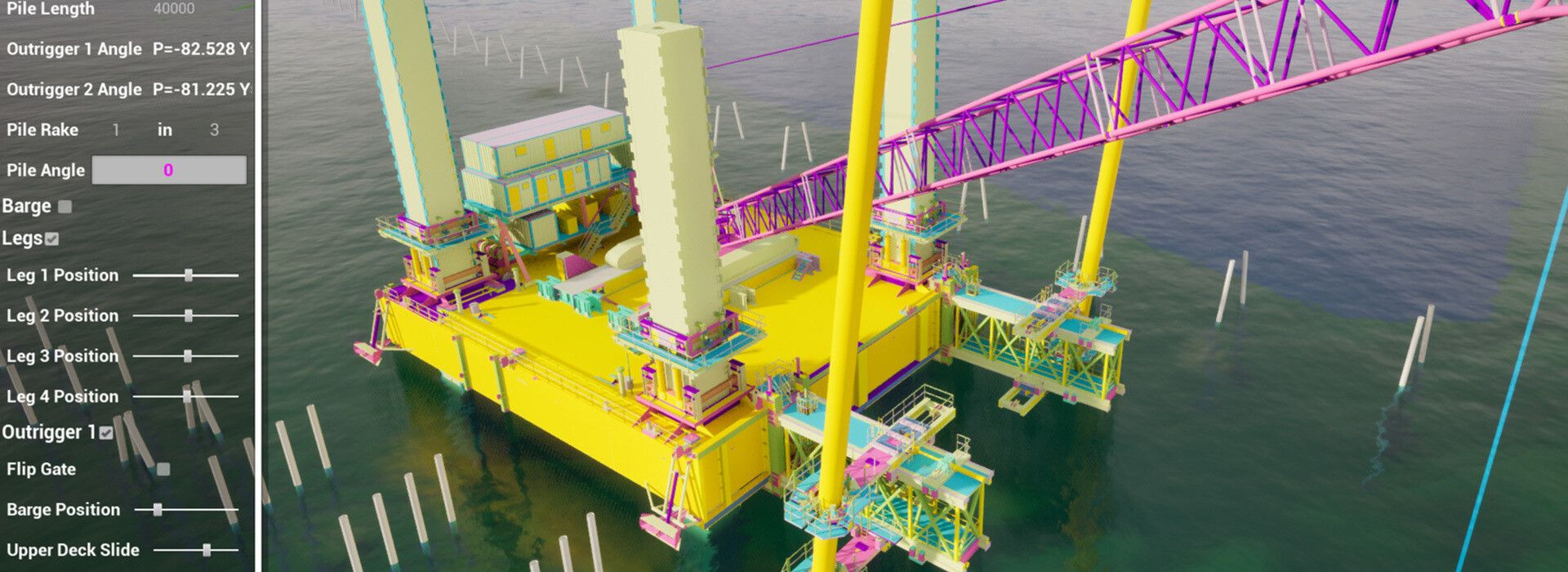
Digital Engineering
We take a ‘Digital First’ approach to all our projects, equipping our teams with the latest digital tools and systems from the design stage forward.
This helps them identify and address potential issues at the earliest stages of project development, effectively eliminating issues at their genesis leading to lower costs and delays once we start on site.
On site, we use digital tools like drones for surveying, and GPS tracked plant to monitor and improve safety and efficiency.
Sustainability (ESG)
Our purpose is 'Providing a Better Life’ - today and into the future. That’s why sustainability, in all its forms, is considered in every project, process and product across our business.
Our approach is clearly articulated in our Sustainability Policy.
We're about action not just aspiration. Our ambitious but achievable {tip title="Carbon Reduction Roadmap" content=" "} carbon reduction road-map {/tip} will see us be operationally net zero by 2030, with 44 initiatives that are being progressively rolled out across the company. Last year we reduced our carbon emissions by 442 tonnes through the use of solar technologies alone, and diverted almost two million tonnes of waste from landfill.
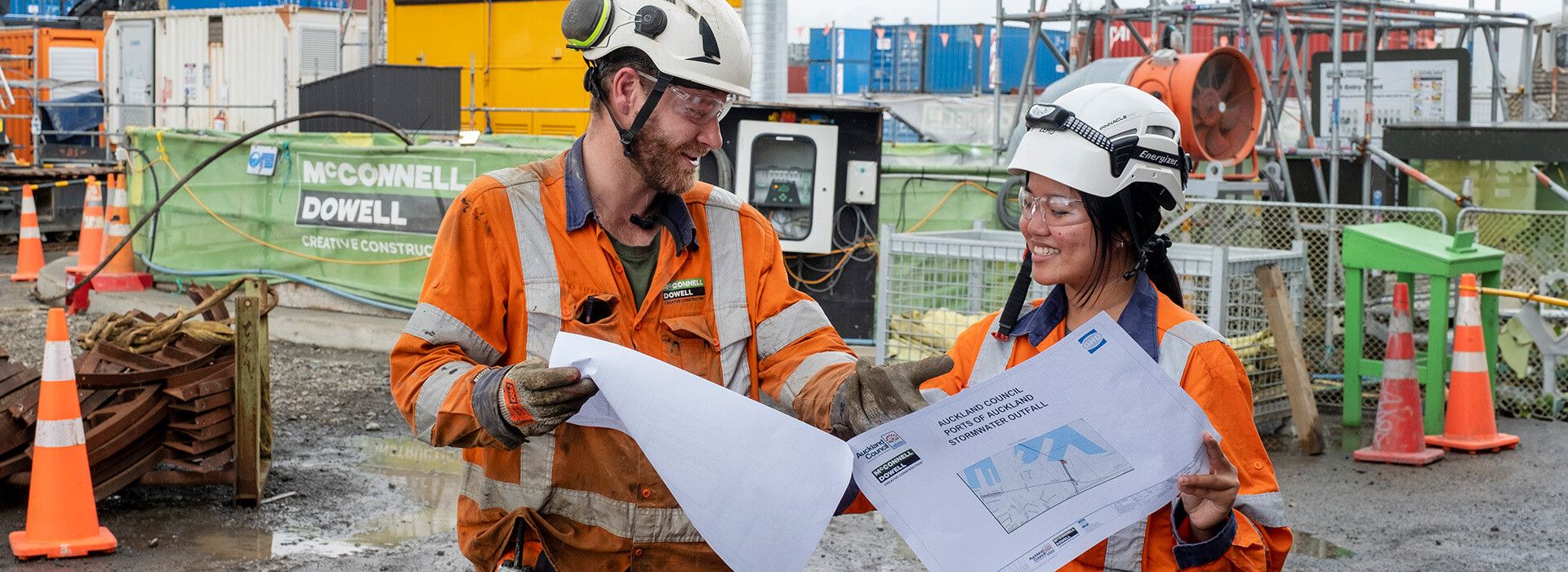
Creative Construction
Creative Construction at McConnell Dowell is the inspired engineering behind the complex infrastructure we deliver.
It's the technical problems and challenges solved behind the scenes by people empowered to think creatively and work collaboratively. It’s the alternative idea or innovation that saves time, reduces cost, makes us safer, and delivers more value.
It might not always be evident when you look at the end product, but it's there, inside every McConnell Dowell project.
Closing text - with contacts and Video
Summary
Thank you for taking an interest in McConnell Dowell's skills, capabilities and approach. Additional information is available on our website, including additional project case studies.
Contact us through the link(s) at the bottom for advice or assistance with your project.
Contacts
Claire Tanner
Pre-Contracts Manager SA & WA
M: +61 (0)418 645 297
claire.tanner@mcdgroup.com LinkedIn