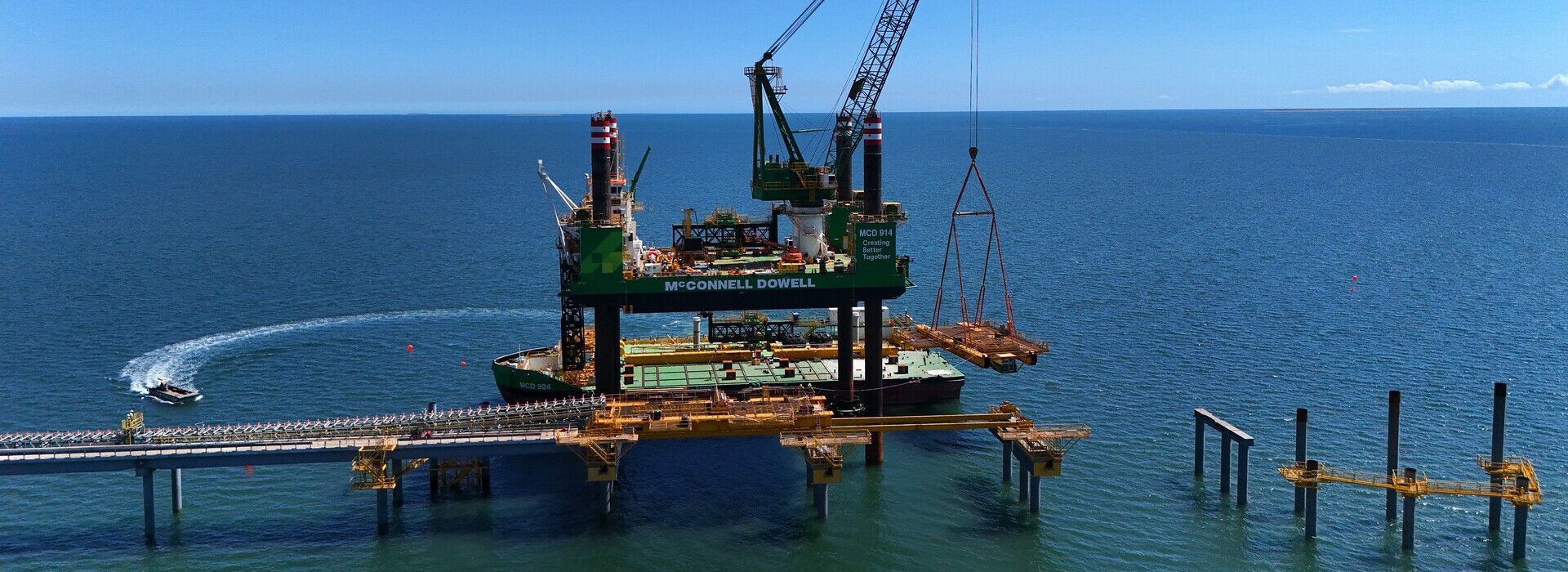
Capability Statement
Prepared for AUKUS SRF-WEST Sustainment Industry Seminar
May 2026
Introduction General
Thank you for the opportunity to present this brief capability statement which details a cross-section of our skills and experience, and showcases a selection of our recent projects.
About Us (typically use first)
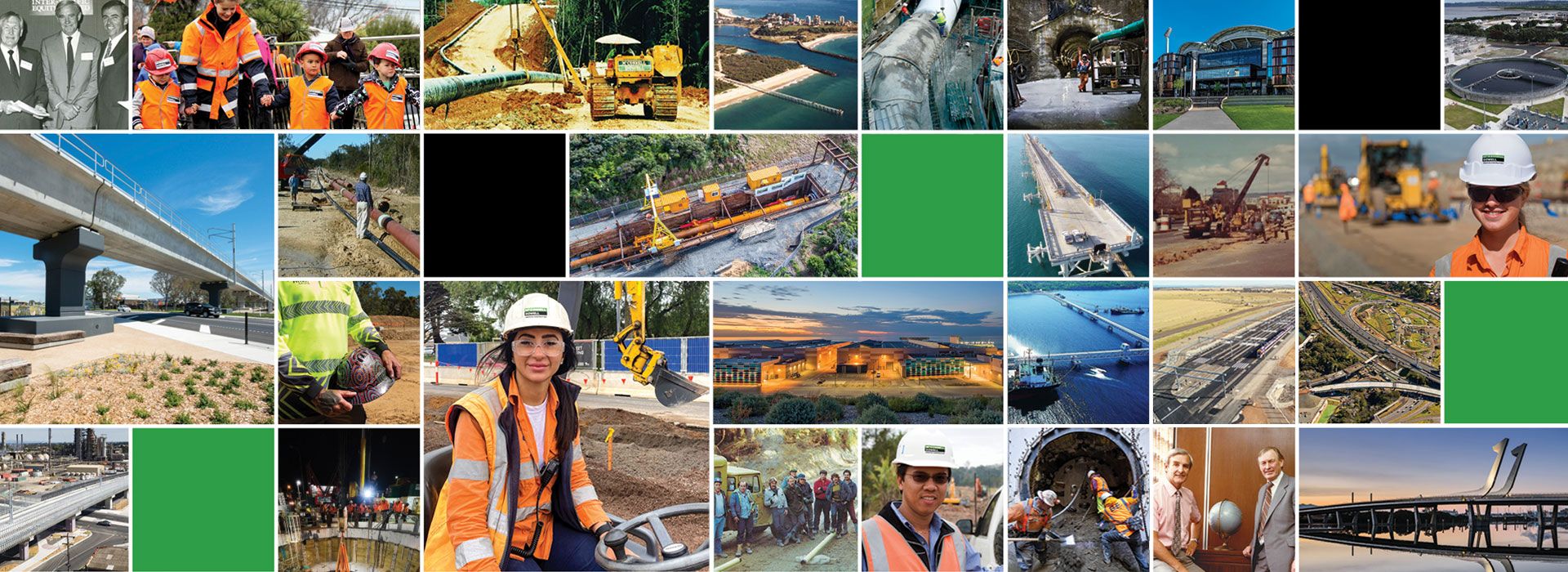
For over 65 years customers have been coming to McConnell Dowell with complex projects that require innovative solutions. That's why we're known as the Creative Construction company.
From remote resources and energy projects to city-shaping infrastructure, we've built thousands of quality assets and facilities.
Engineering-led, our expertise has grown steadily to span building, civil, electrical, fabrication, marine, mechanical, pipelines, rail, tunnel and underground construction..
Purpose & Values (typically use 2nd or 3rd)
We are a Purpose and Values driven organisation. These define what's important to us, guide our decision making and unite us behind a common goal.
Our Purpose is Providing a Better Life.
We do that through delivering projects that connect, sustain and enhance communities, and through providing career opportunities that challenge, reward and grow our people.
We also have five company values that guide our behaviours and decisions. Our values are:
Safety
We never compromise on safety.
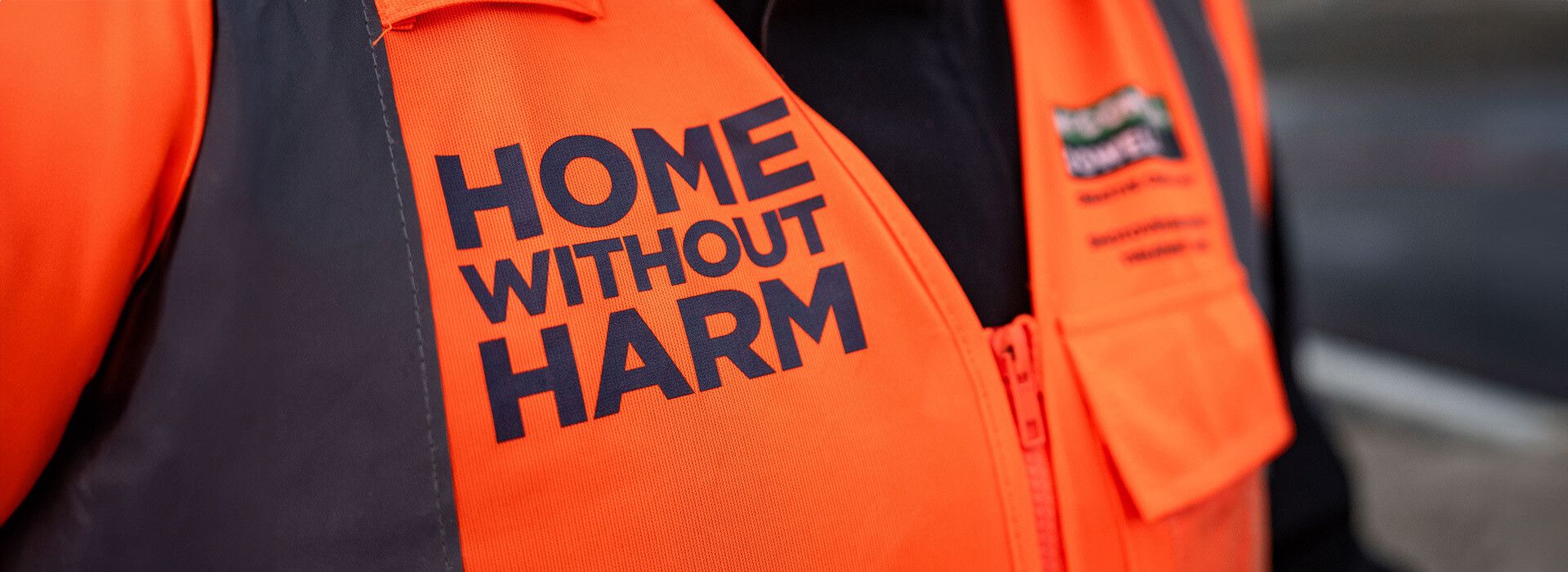
We foster our 'Home Without Harm' safety culture through robust processes, effective systems, and by recognising and rewarding safe behaviours.
Our Site Safety Managers are always on our project leadership teams, ensuring safety is prioritised in all site activities. Every team member has clear safety responsibilities, aimed at protecting themselves, their colleagues, and the community.
We're also leading our industry in the adoption of new safety technologies, like virtual reality plant simulators and AI-enabled blind spot elimination. Check out the case studies below for more information.
Underpinning it all are our Safety Golden Rules. Built on our long-term collective knowledge and learnings, they are specifically targeted at preventing fatalities and serious injuries.


Sustainability (ESG)
Our purpose is 'Providing a Better Life’ - today and into the future. That’s why sustainability, in all its forms, is considered in every project, process and product across our business.
Our approach is clearly articulated in our Sustainability Policy.
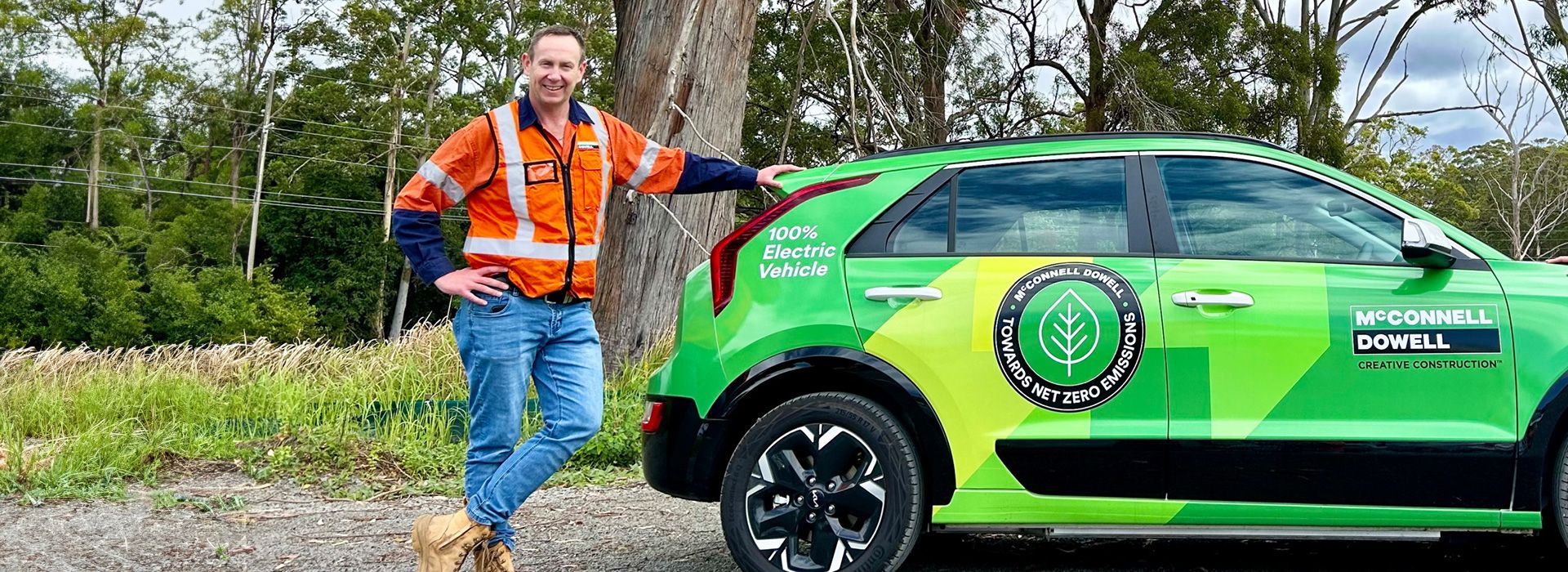
We're about action not just aspiration. Our ambitious but achievable {tip title="Carbon Reduction Roadmap" content=" "} carbon reduction road-map {/tip} will see us be operationally net zero by 2030, with 44 initiatives that are being progressively rolled out across the company. Last year we reduced our carbon emissions by 442 tonnes through the use of solar technologies alone, and diverted almost two million tonnes of waste from landfill.
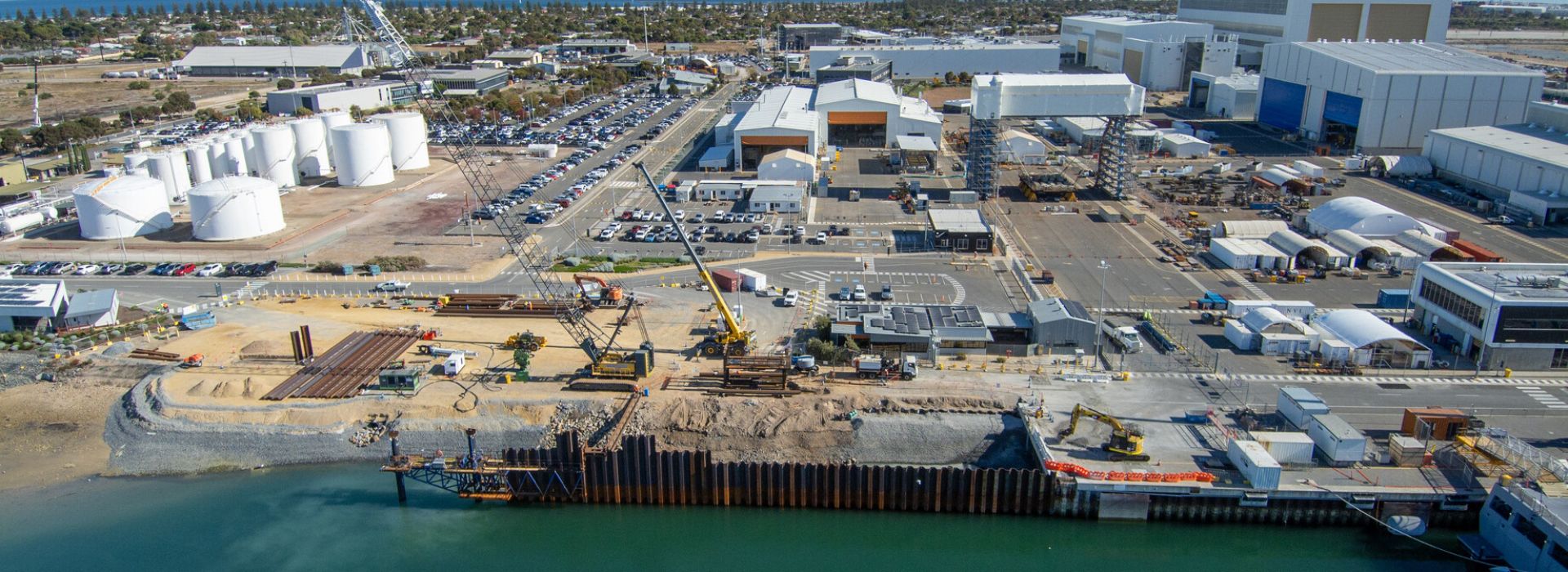
CUF Marine Development Works
Supporting Australia's shipbuilding capacity
Fast Facts
- Construction of 80 - 100 m land backed wharf
- 40,000 m3 of dredging
- Berth kiosk services, including water and eletrical supplies
HMAS Coonawarra
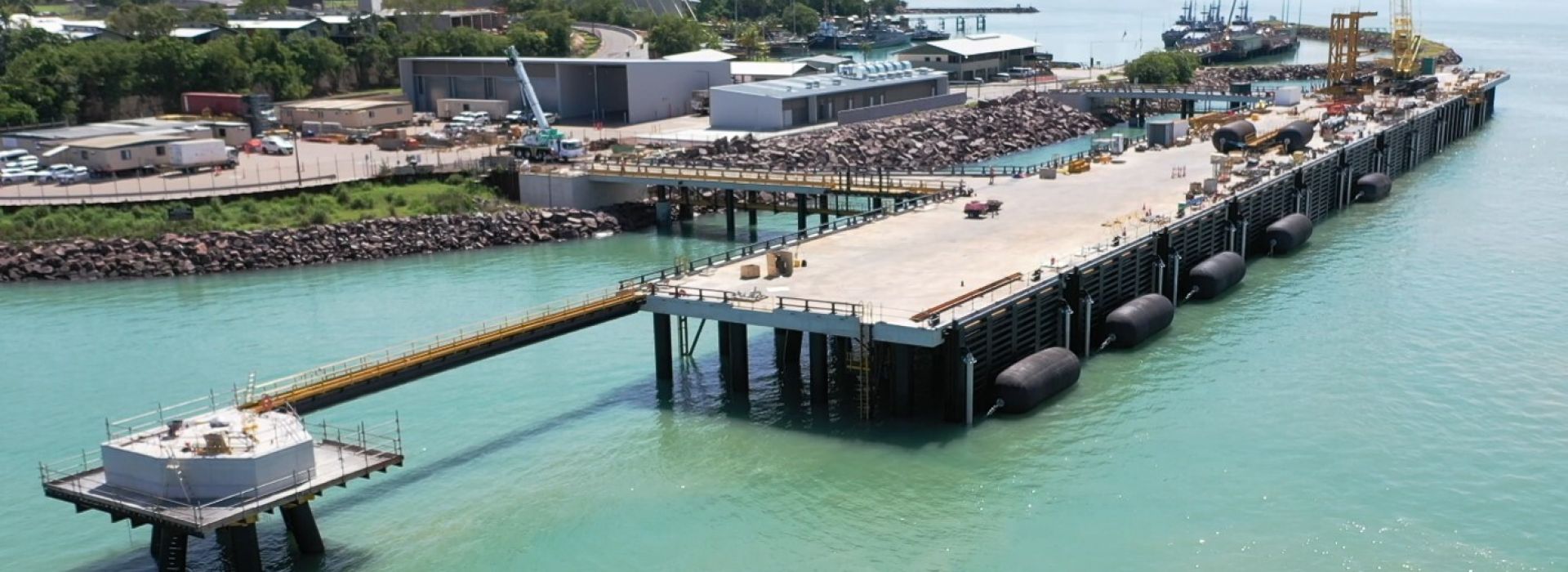
New wharf and approach jetties to support the Australian Defence Force
We refined the initial concept design and constructed a new outer wharf structure at HMAS Coonawarra in Darwin to support the Australian Defence Force (ADF). The project involved the construction of a new 250 m long wharf and two approach jetties.
While the final structures are simple in their geometry and configuration, the site location and operational requirements were challenging.
Fast Facts
- 250 m long wharf
- Two approach jetties
- Enhancing ADF's maritime defence capability
Pacific Maritime Security Programme
Supporting security and safety in nine nations
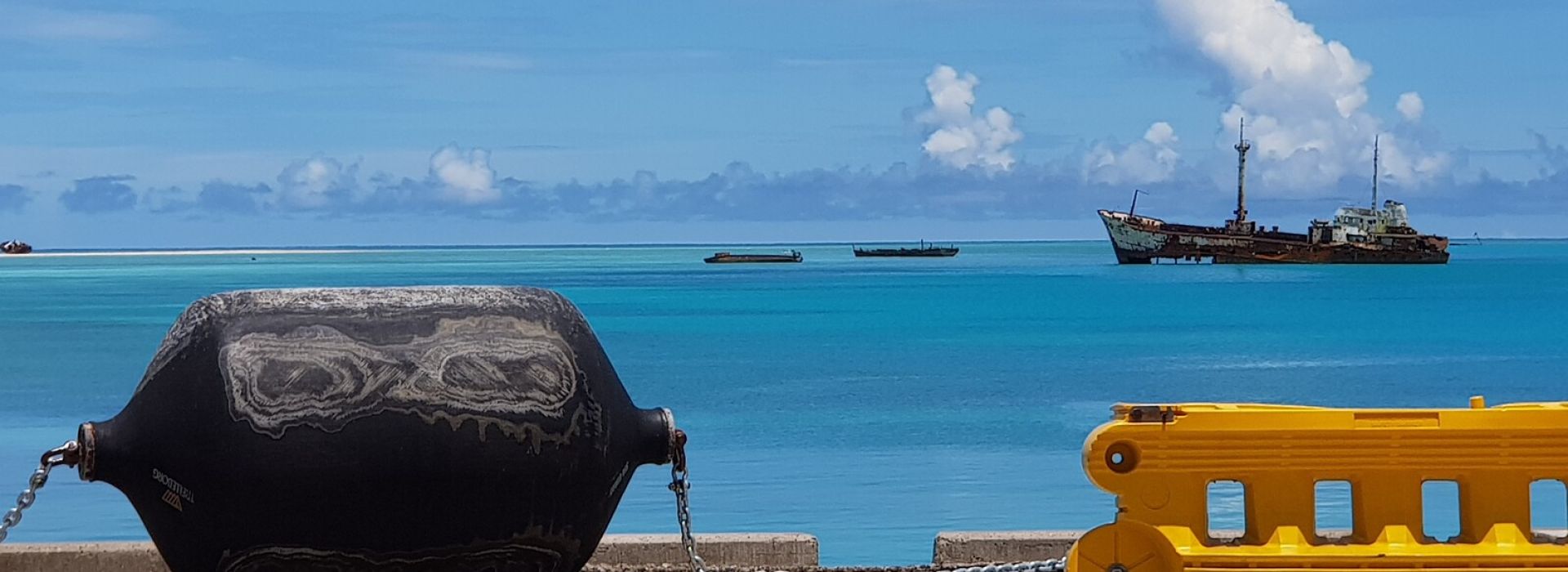
Improving marine infrastructure for nine Pacific Island countries as part of the Australian Government’s Pacific Maritime Security Programme (PMSP) fits perfectly with our vision: Providing a Better Life.
This project also demonstrated our ability to deliver logistically challenging marine projects across the Pacific.
Fast Facts
- wharf upgrades across nine Pacific Island nations
- custom construction activities at each wharf location
- includes piling, dredging, concrete and steel construction,
- facilities will accommodate new Guardian Class Patrol Boats (GPBs)
Common User Facility (Techport)
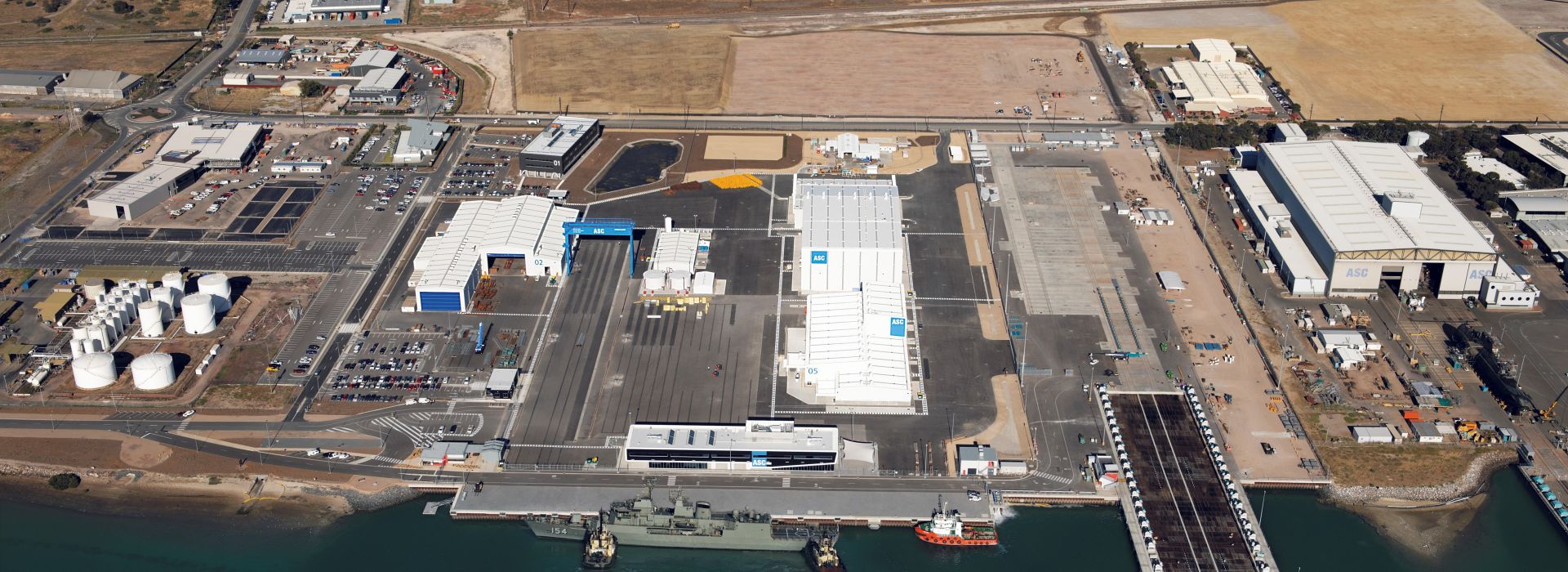
In one of the first Early Contractor Involvement (ECI) contracts in Australia, we designed and delivered the Techport Australia Common User Facility - a new state-of-the-art shipbuilding and maintenance complex on the Port River at Osborne, South Australia. We delivered it in joint venture with our building company, Built Environs (the MDBE JV).
The project was rolled out in two stages. In the first stage, our team worked in collaboration with design and technology partners and DefenceSA to develop the final design and risk adjusted price.
Fast Facts
- 213 m long, 25 m wide wharf
- 450,000 m3 material dredged
- 34 m x 160 m new shiplift pocket
- Installation of Australia's largest shiplift
- Works conducted in a sensitive marine environment and dolphin sanctuary
Ports & Coastal Solutions
With over 330 marine projects completed across six decades, McConnell Dowell is synonymous with marine infrastructure.
From wharves and jetties to ocean outfalls, breakwaters, and submarine pipelines — we bring coastal confidence to every project.
Our modular approach to construction has helped create productive ports for clients like Rio Tinto, FMG, Vale, and BHP, where over 1.2 billion tonnes of iron ore are shipped annually from wharves we built.
Outer Harbour Berth 6 Extension
Increasing container port capacity in South Australia
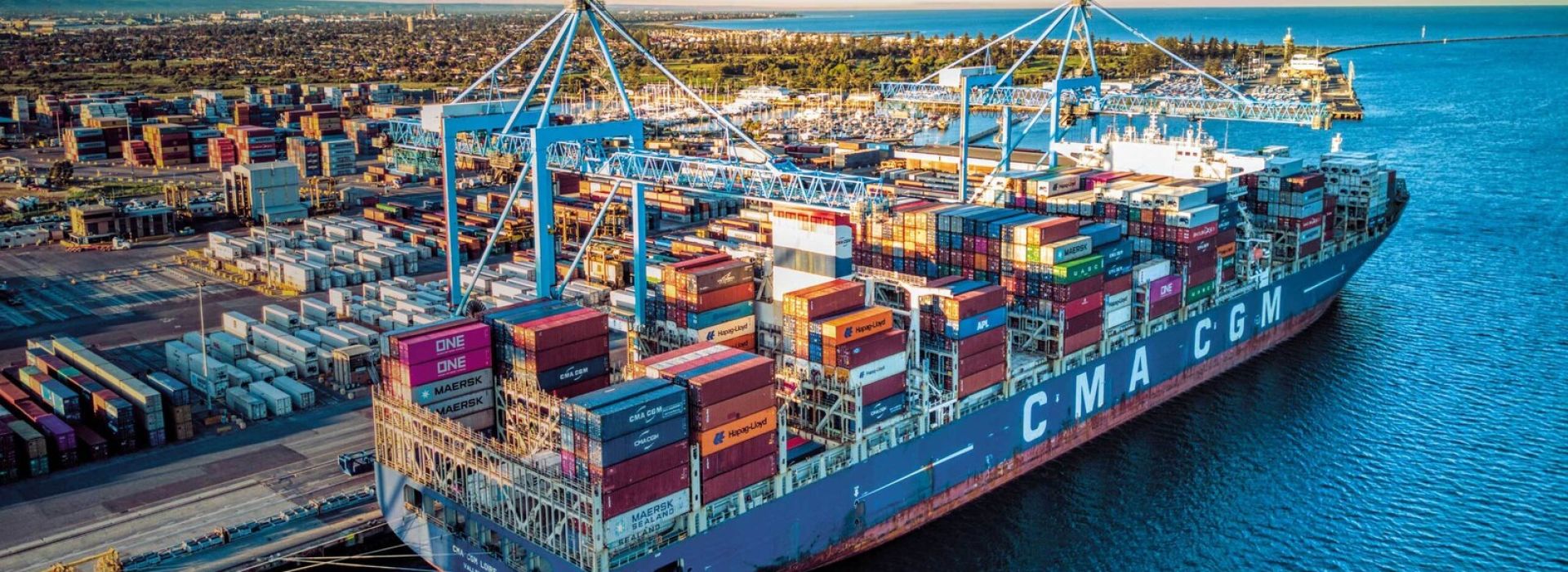
After a 6-month Early Contractor Involvement process, we're now delivering a berth extension and remediation works at the Flinders Adelaide Container Terminal (FACT) — South Australia’s only container terminal.
Our works form part of Flinders Port Holdings’ (FPH) A$350 million GatewaySA Program, a multi-year initiative designed to increase capacity, efficiency and sustainability across the terminal.
Fast Facts
- 135 m berth extension
- Quay-line extention and strutural remediation
- Site-wide services, hardstands and access road upgrades.
Mardie Salt & Potash Marine Structures
Delivering new marine facilities to grow Australian exports
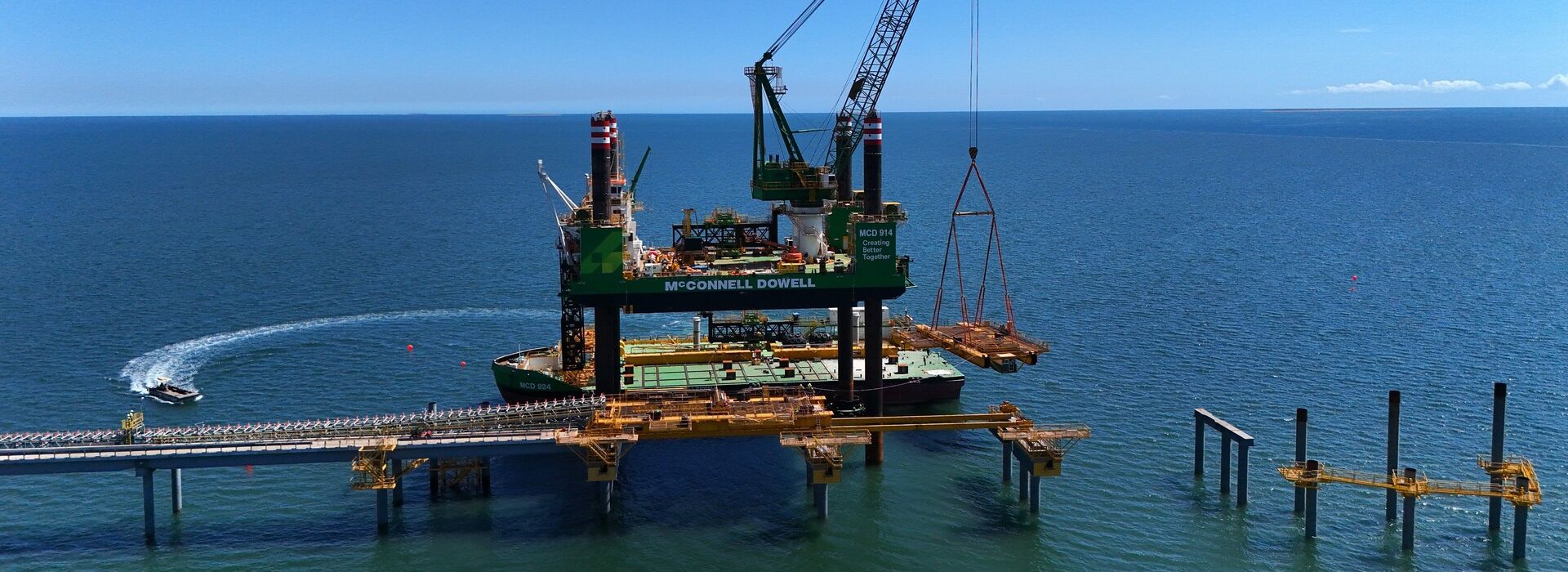
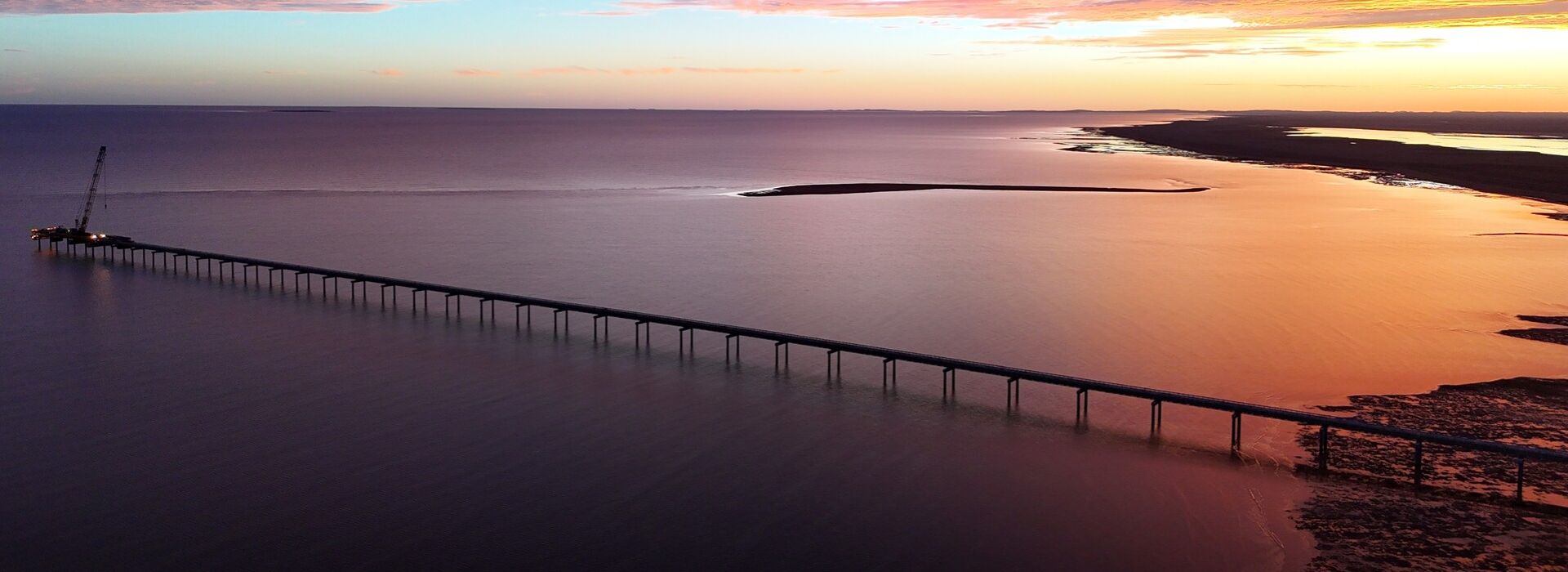
We designed and constructed the marine structures for BCI Minerals’ Mardie Salt & Potash Project in Western Australia, using our innovative canti-traveller system for speed and low impact delivery.
The 'Mardie' Project is a large-scale, solar evaporation operation on the Pilbara coast. Capacity of the completed facility is estimated to be 5.35 million tonnes per annum of high purity salt and 140,000 tonnes per annum of sulphate of potash, over an operating life of at least 60 years.
Fast Facts
- 2.4 km long jetty with berthing and mooring dolphins
- 200 steel piles, up to 30 metres long
- 100 m of jetty completed every 10 days using innovative canti-traveller system
Roy Hill Iron Ore Project (Marine Works)
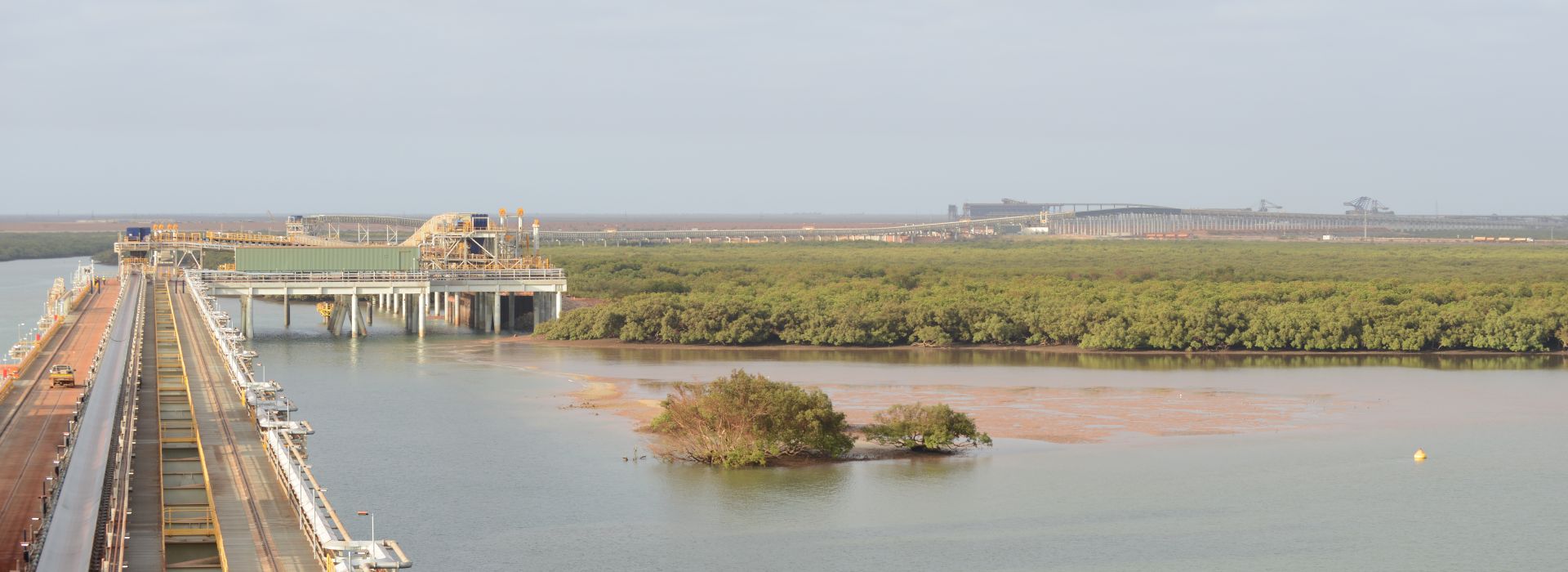
As part of the $10 billion Roy Hill Iron Ore project, we designed and constructed the Stanley Point Iron Ore Terminal at Port Hedland. We used substantial prefabrication and our innovative temporary works system for low impact, high productivity construction.
Our scope consisted of a two berth iron ore load out wharf, connected with a 3600 m long elevated road and overland conveyor to the ore stockyard. In addition to the wharf and the overland conveyor, we delivered an abutment, drive stations, three transfer stations and all SMPE&I works.
Fast Facts
- Two berth load out wharf
- 800 m long wharves
- 30,000 T design and supply steelwork
- 4.5 km of conveyor steelwork
- 3,600 m elevated road and conveyor
- Prefabrication to increase safety and savings to client
Port Capacity Project - Webb Dock
Enhancing and expanding Australia's busiest container port
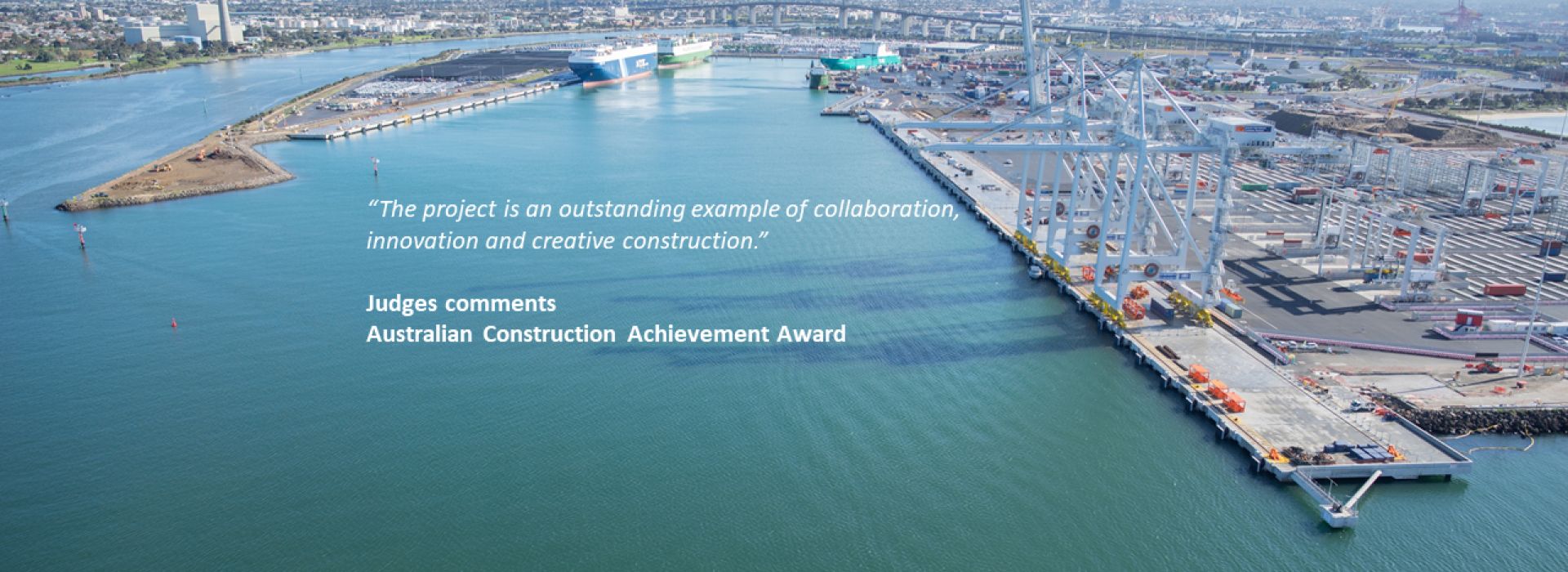
We received the Australian construction industry's highest accolade for this major wharf redevelopment within Melbourne's main port precinct.
This was a large and complex marine project delivered within Australia's busiest operational container port, and within very tight environmental controls to protect the rich marine life within the surrounding bay.
Fast Facts
- 900 tubular steel piles up to 1500 mm diameter and 45 m long driven as single length piles.
- 40,000 m³ of structural concrete.
- 10,000 tonnes of reinforcing steel.
- 40,000 m of sheet pile installation.
- 210,000 tonnes of imported quarry product.
- 15,000 m³ of rehabilitated concrete deck.
Marine
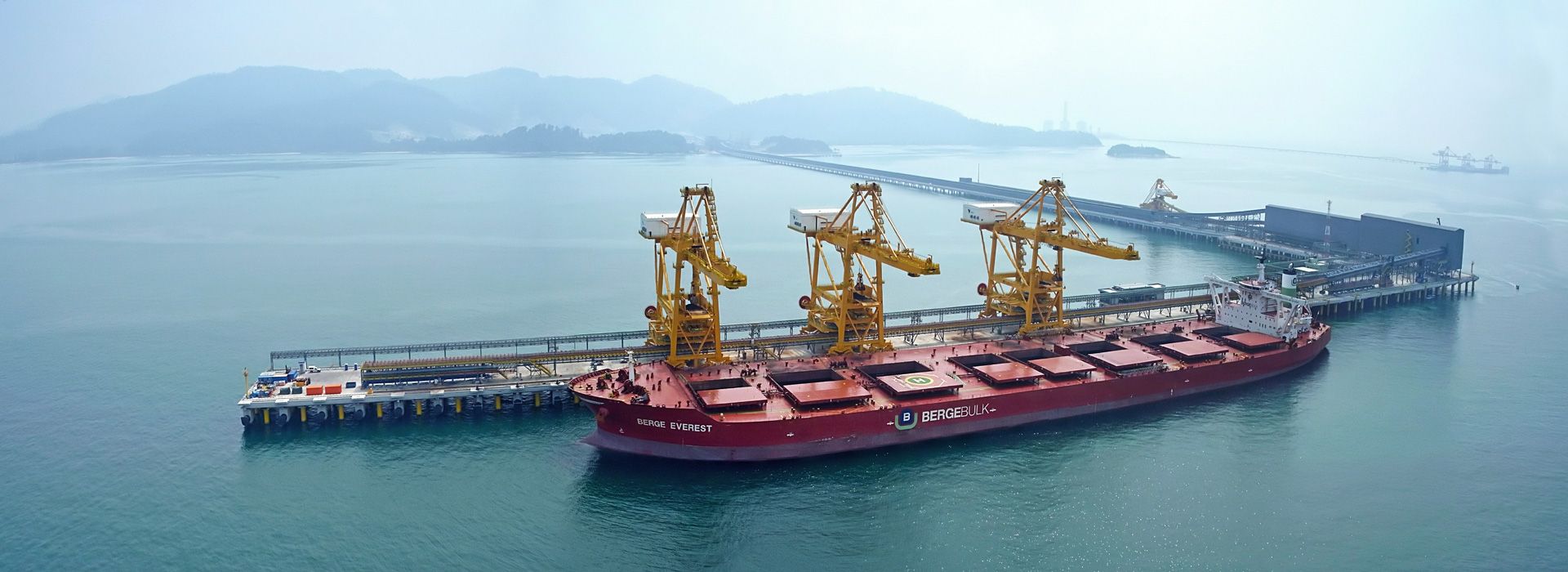
With over 330 marine projects completed across six decades, McConnell Dowell is synonymous with marine infrastructure.
From wharves and jetties to ocean outfalls, breakwaters, and submarine pipelines — we bring coastal confidence to every project.
Our modular approach to construction has helped create productive ports for clients like Rio Tinto, FMG, Vale, and BHP, where over 1.2 billion tonnes of iron ore are shipped annually from wharves we built.
We thrive in complex, operational environments — delivering innovative temporary works and safe, efficient methods that protect people, environment, and productivity. From purpose-built barges to proven marine systems, we engineer safe harbours with precision and care.
At McConnell Dowell, we don’t just build marine infrastructure — we deliver it with certainty, creativity, and a commitment to results.
Pacific Maritime Security Programme
Supporting security and safety in nine nations
Improving marine infrastructure for nine Pacific Island countries as part of the Australian Government’s Pacific Maritime Security Programme (PMSP) fits perfectly with our vision: Providing a Better Life.
This project also demonstrated our ability to deliver logistically challenging marine projects across the Pacific.
Fast Facts
- wharf upgrades across nine Pacific Island nations
- custom construction activities at each wharf location
- includes piling, dredging, concrete and steel construction,
- facilities will accommodate new Guardian Class Patrol Boats (GPBs)
Eyre Peninsula Marine Works
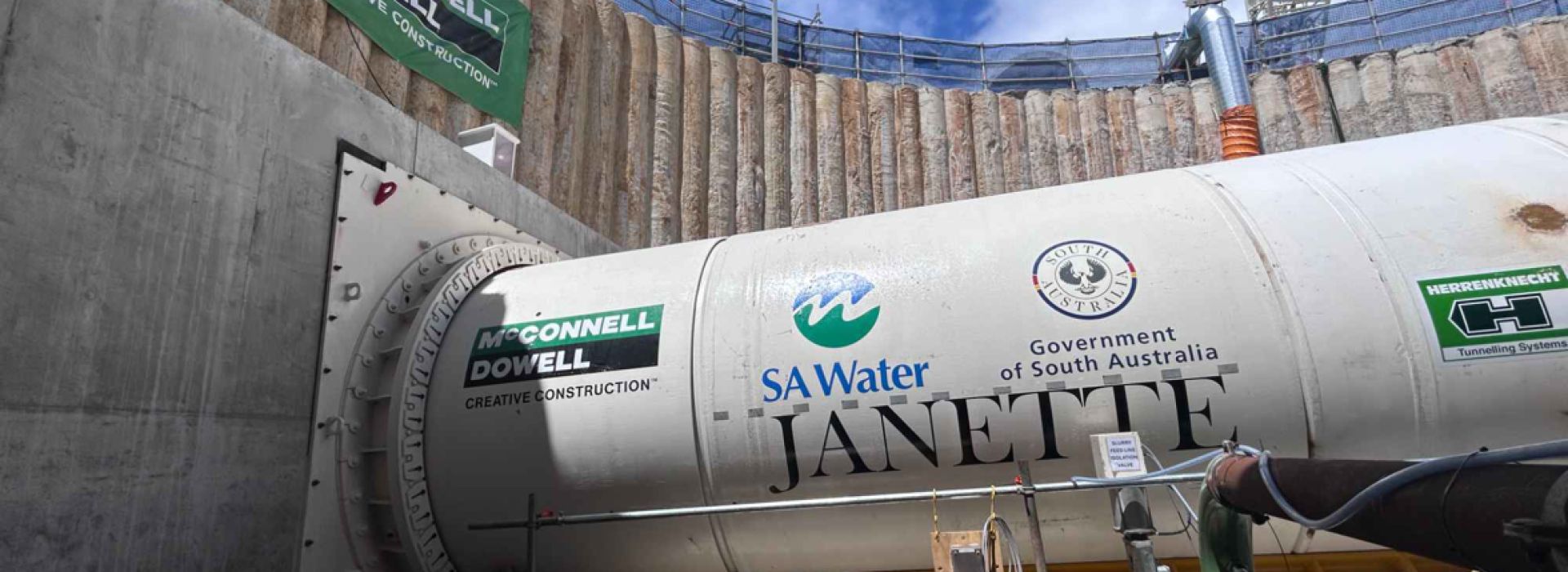
We're delivering the Eyre Peninsula Desalination Plant Marine Works for SA Water.
This project plays a key role in supporting a more reliable and climate independent water supply for the Eyre Peninsula, reducing reliance on the Uley South Basin and preparing the region for future growth.
Fast Facts
- Micro-tunnelled intake and outfall pipelines
- Minor dredging
- Installation of intake tower and outfall diffuser
Rapid Growth Projects (RGP 5&6) - Marine Works
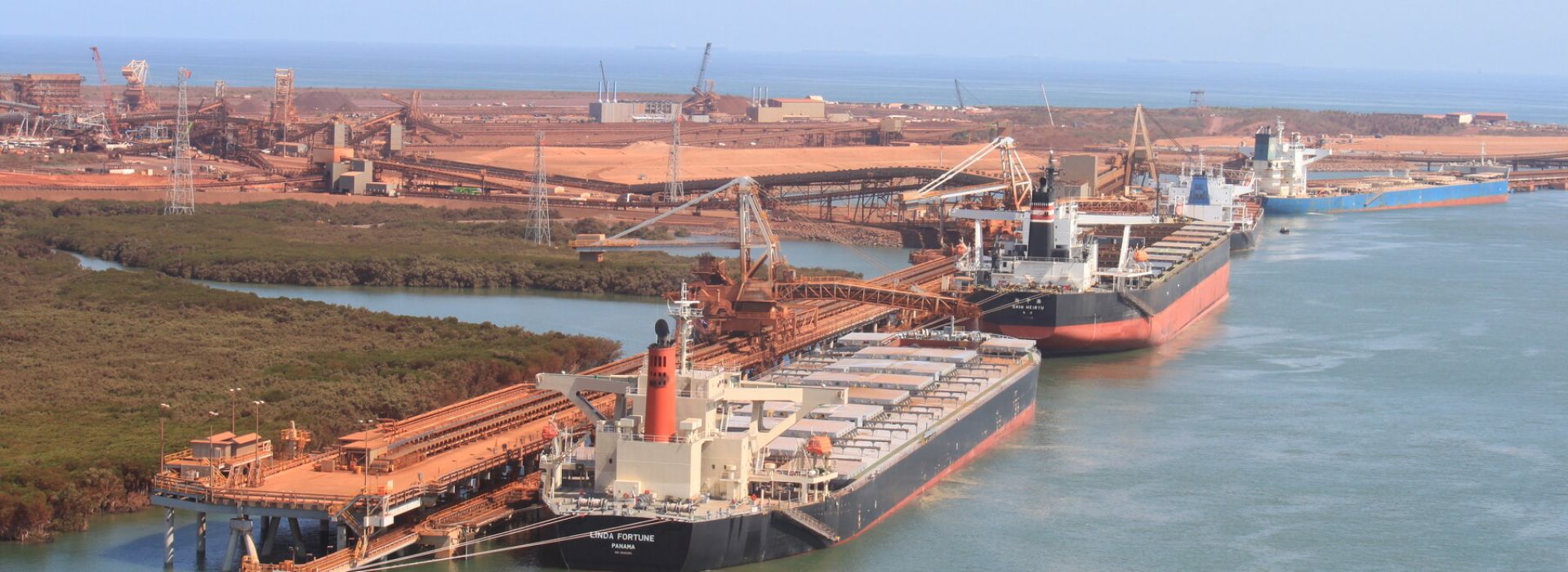
During the Australian resources boom (2004-2014), BHP challenged us to design and construct two new iron export wharves on a fast tracked program to support their rapid growth program (RGP) initiative.
To meet the challenge, while delivering safely and to a high quality, we broke new ground in large-scale marine modularisation, making it central to our construction approach.
Fast Facts
- 1650 m of new wharfing constructed over 2 projects
- Over 600 steel piles installed
- 30 berthing dolphins constructed
- 500 tonne wharf modules lifted into position by heavy lift ship
- 350 person peak workforce
- 7% indigenous employment
Dampier Port Upgrade Phase A & B
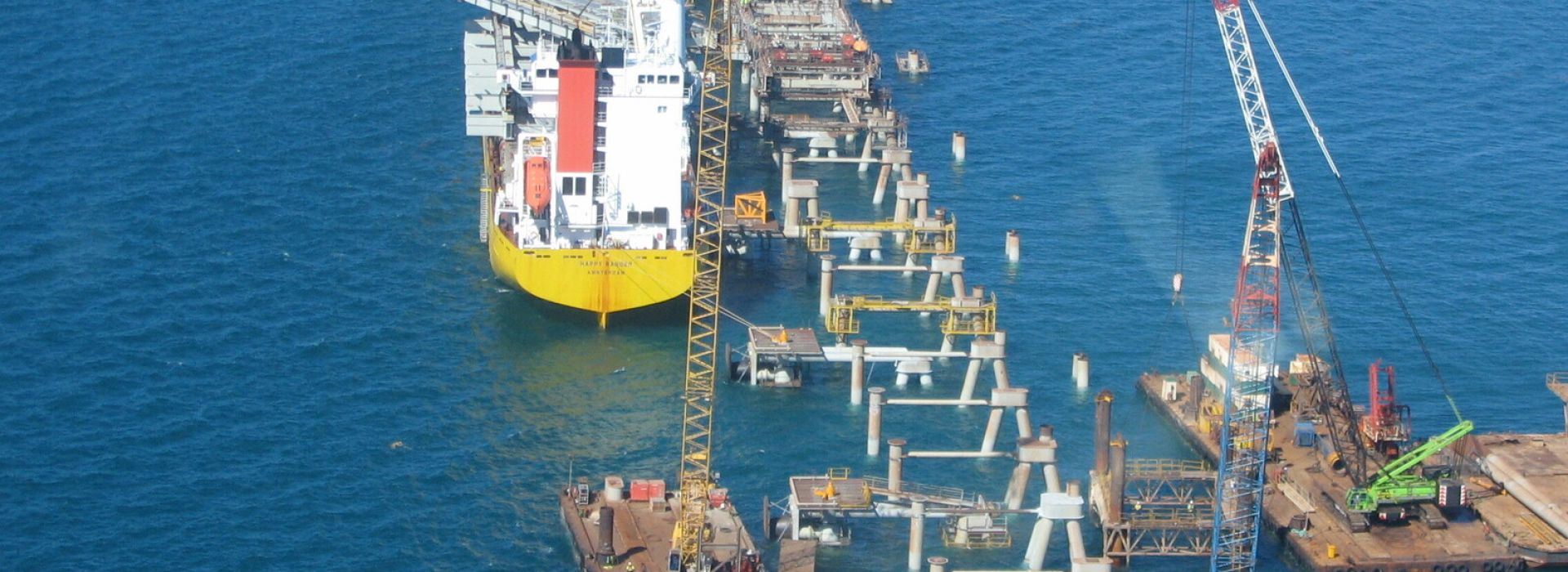
We delivered a major wharf upgrade in two phases for Rio Tinto at Dampier Port, using modularisation to accelerate construction and reduce the cost of onsite labour.
Phase A included the construction of a 455 m wharf extension, a new access jetty, tail end structure, electrical deck, and modifications to the existing wharf.
Fast Facts
- Two phase wharf upgrade
- 600 m overall wharf extension
- Extensive use of large scale modularisation
- Work successfully completed within operating port without distruption
Creative Construction
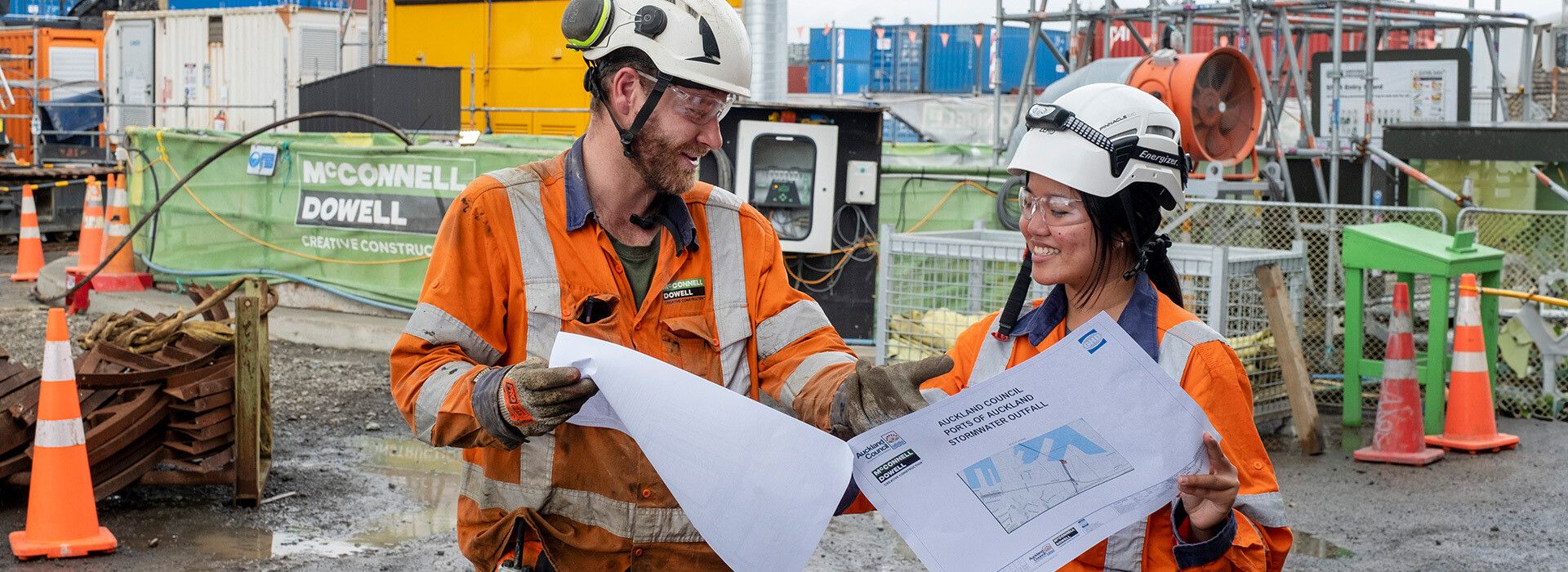
Creative Construction at McConnell Dowell is the inspired engineering behind the complex infrastructure we deliver.
It's the technical problems and challenges solved behind the scenes by people empowered to think creatively and work collaboratively. It’s the alternative idea or innovation that saves time, reduces cost, makes us safer, and delivers more value.
It might not always be evident when you look at the end product, but it's there, inside every McConnell Dowell project.
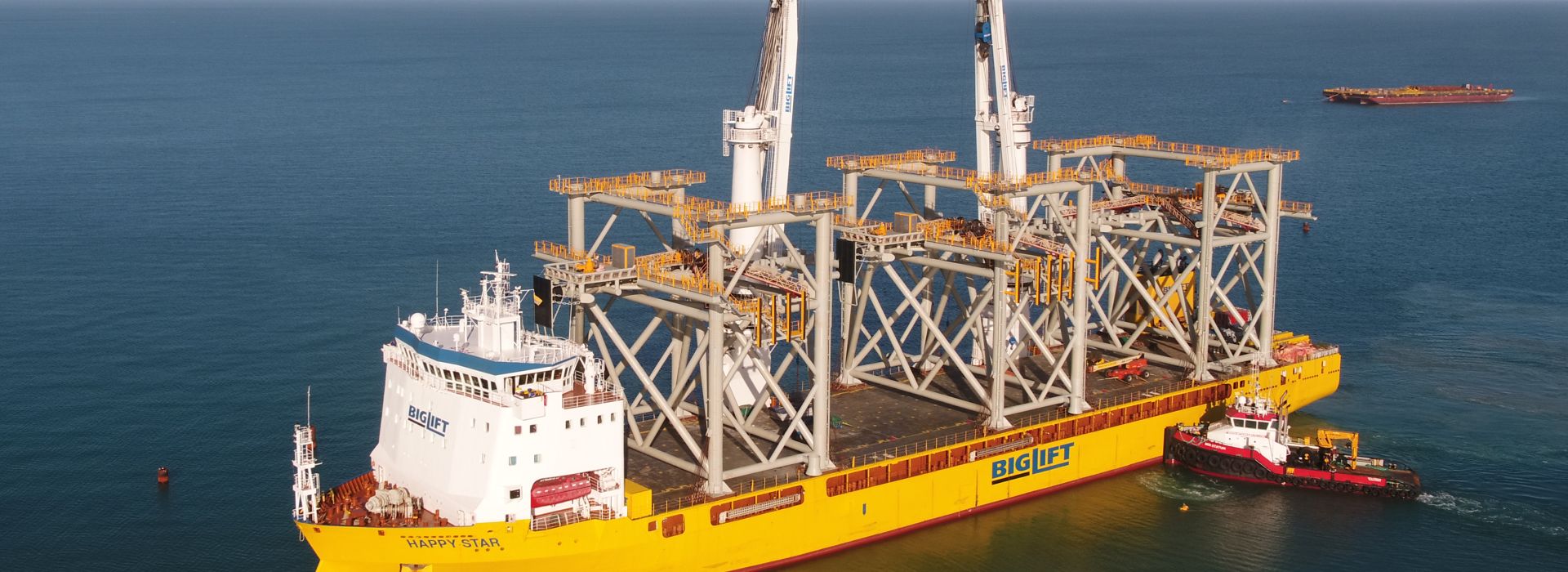
World first wharf modularisation
We helped revolutionise the design and construction approach for large-scale marine infrastructure on Rio Tinto's Chith Export Facility project in remote Far North Queensland.
The 350m wharf structure was split into seven, first-of-a-kind ‘jacket’ modules (the substructure) and six topside modules. Weighing approximately 680 tonnes each and standing 30m high, the jacket modules, with integrated dolphins, reduced the number of permanent wharf piles required from 100 to just 28, minimising environmental impact to marine life – a core focus for the Chith Export Facility team.
The wharf topside modules, placed on the jackets, ranged from 600 to 1400 tonnes and were fabricated complete with all services, conveyors, concrete roadways and access walkways.
In true ‘plug and play’ fashion, the modules were delivered and installed by a heavy-lift ship in a safe, clean and efficient operation.
The project, completed in just 10 months, was awarded the Australian Construction Achievement Award by Engineers Australia and the Brunel Medal by the Institute of Civil Engineers (UK).
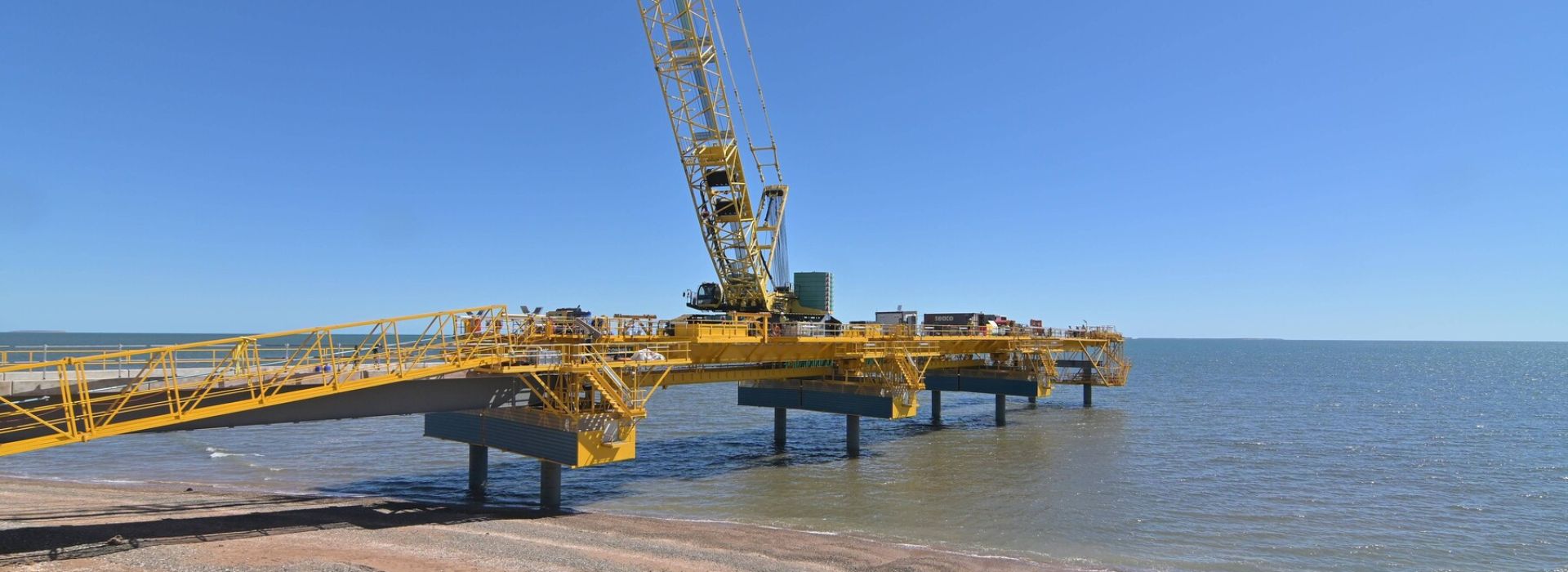
Cantilever traveller - innovative temporary works
Our 'Canti-Traveller' is a purpose-built temporary mobile platform that facilitates fast, safe, low-impact construction of piled marine jetties and piers.
The innovative system, designed and fabricated by our in-house team, provides a platform for progressively installing new piles, propelling itself along the new jetty alignment using hydraulics.
A piling gate fixed to the front of the Traveller allows pitching and driving of piles in a vertical position. If required it can be used to install raking piles using the gate’s hydraulics. The piling gate also provides a working platform for cutting piles and welding headstocks. Bent spacing can extend to 27 m, and it has a system for changing direction. The traveller supports a 450 tonne crawler crane, if required.
One of the primary advantages of the Canti-Traveller is its minimal ecological impact, not touching the earth except for the permanent piles it both drives and sits atop. Removing the need for marine-borne plant, it also operates independently of marine conditions, offering significant program and cost certainty. This makes the Canti-traveller particularly effective in design and construct projects where the program can be optimized for maximum efficiency.
We have a proven track record of successful installations in environmentally sensitive areas and a reputation for delivering safe, efficient, marine solutions for our customers. The Canti-Traveller reinforces our leadership in marine innovation and construction.
Click on the video to see the Canti-Traveller in action (Hint: It's yellow!). Click here for a more detailed specification.
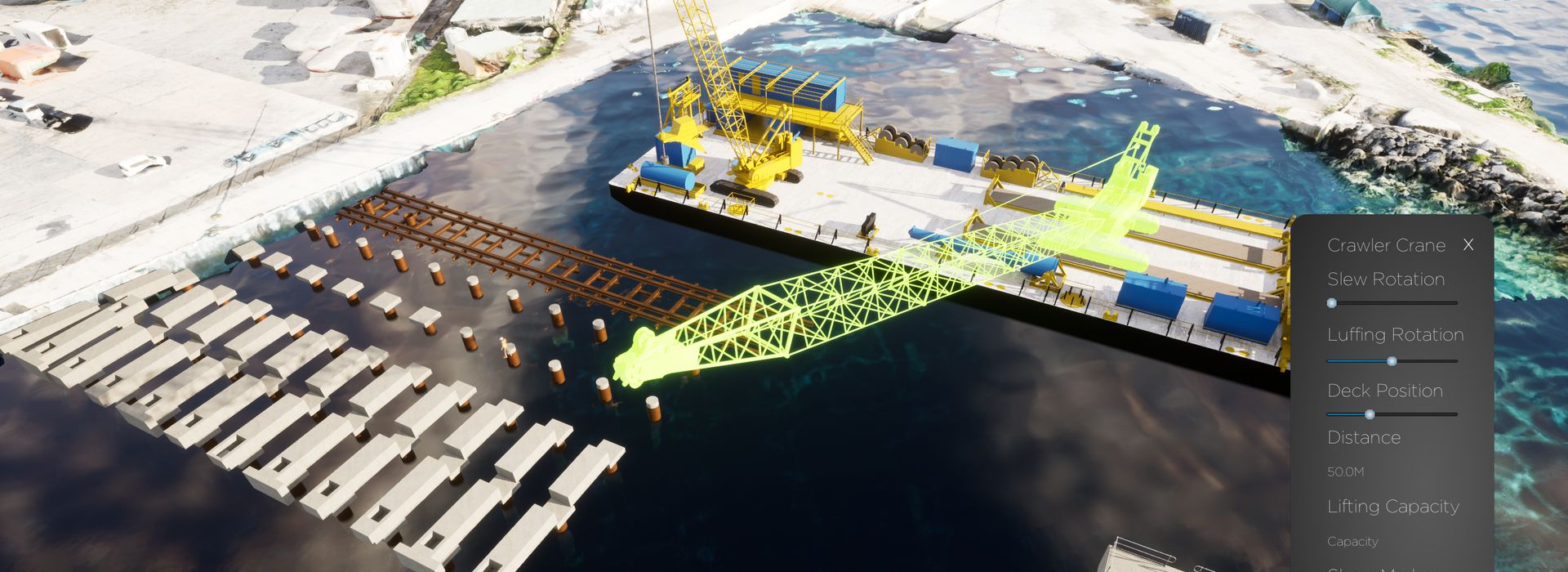
Bringing gaming technology to marine construction
Our digital engineering team are experts at building applications using 'Unreal Engine' - one of the world's most advanced 3D graphics game engines.
We've used Unreal to develop a traffic simulation tool to test temporary traffic management schemes before rollout, and simulated construction works in an operational airport with AI driven crowd behaviours.
The team's most recent application is a powerful marine construction simulator - fully developed in-house. The simulator combines intelligent 3D plant models and reality capture data to accurately place marine plant in a virtual environment and replicate its real-world capabilities.
The tool enables our teams to simulate methodologies and iterate the positioning of plant and equipment around the design models. This is all done in a realistic environment with features such as accurate bathymetric data, reality capture point-cloud models, and real-world tide levels.
The permanent works build sequence can be tested to ensure we avoid clashes during construction. Plant and equipment is programmed with its real-world performance and dynamic constraints to enable equipment limitations to be established and enabling features such as crane hook capacity to be determined in real-time.
We are leading the industry in simulation - identifying and mitigating constructability issues during the design phase, driving program and cost certainty for our customers.

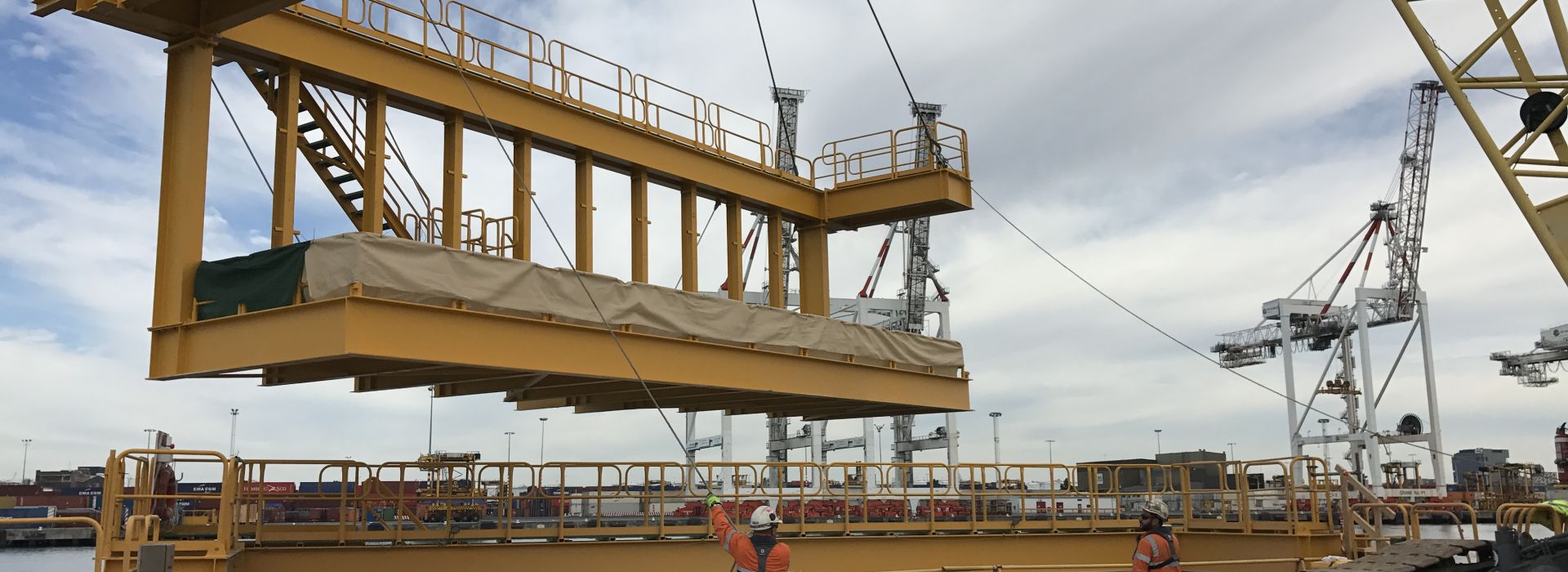
Award-winning innovation for safer working over water
In marine environments, where the margin for error is razor-thin, temporary works aren’t mere enablers—they’re foundational to safe, efficient delivery.
Take the Swanson Dock upgrade at the Port of Melbourne. Our temporary works team engineered an innovative fender access platform, earning the a WorkSafe Victoria award for “Best Solution to a Specific Workplace Health and Safety Issue”
Here’s what set it apart:
- Comprehensive access with one setup – The platform spanned 15 × 4 m and included removable mid‑level decks, enabling seamless access to all faces of the fender beams—front, soffit, and rear—for hydro-demolition, rebar replacement, and gunite spraying.
- Spatial efficiency in live operations – Designed to work within a daily operation window on the busiest container terminal in Australia, the platform kept works tightly within a small footprint.
- Reusability factors in long-term value – Not a one-off rig—it was engineered to be reusable for future fender rehabilitation works, reducing waste and delivering cost efficiencies over time.
- Award-level impact – The solution directly addressed specific HSE risks of working over water, giving our crews a safer, more controlled environment to complete high-risk tasks without compromise.
Why Temporary Works Matter
-
Prioritising safety at early design stages – Proactively engineering safe access platforms significantly diminishes risk in live marine settings.
-
Driving productivity through better access – Easier, safer access means faster cycle times and fewer quay-side delays.
-
Enabling precise engineering works – Demolition, rebar placement, and spraying all demand stable, safe working environments—temporary works deliver just that.
-
Promoting sustainability and reuse – Modular, reusable temporary works not only save time but also cut embodied carbon across projects.
By spotlighting temporary works as a core part of project delivery—not an afterthought—we’re reshaping how marine construction tackles safety, efficiency, and sustainability.
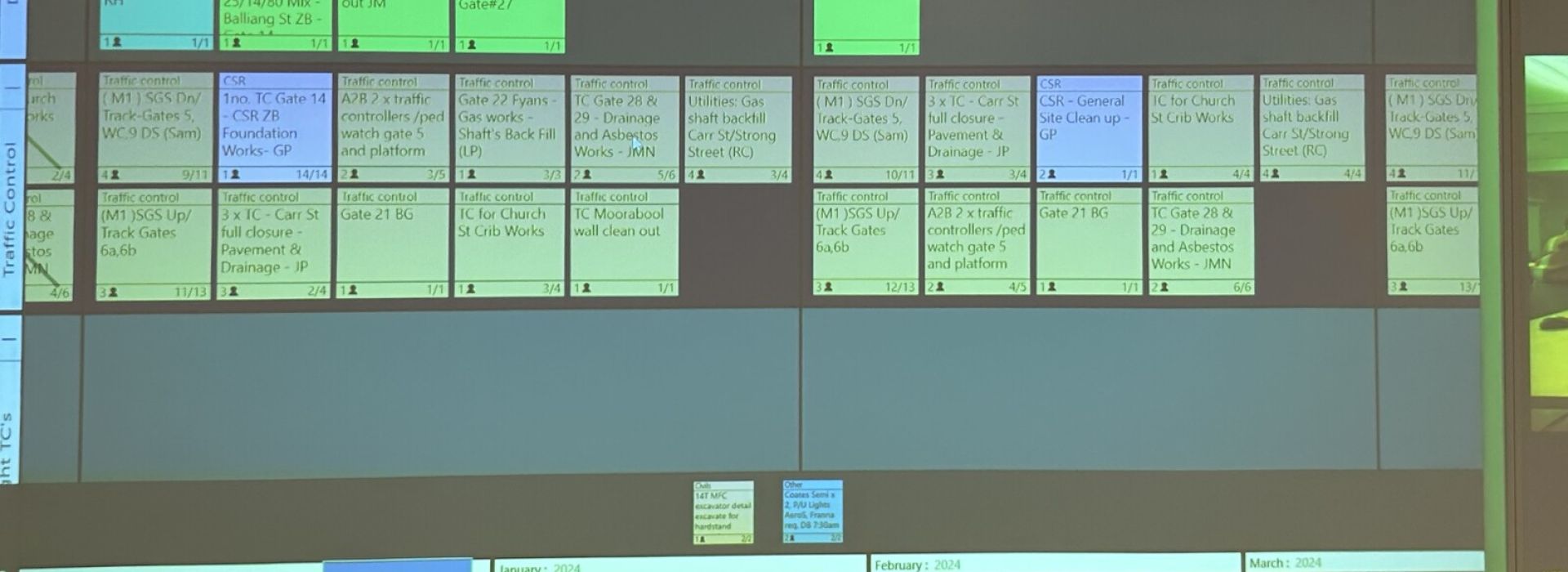
Digitally-delivered “Last Planner System”
Having used the Last Planner® System on multiple major projects across Australia and New Zealand since 2009, we recently introduced industry to a digitally-delivered version on nine of our major rail infrastructure projects in Victoria.
The Last Planner System, or LPS, is a construction-specific lean practice that was developed in the 90s to tackle the variability that restricts productivity in the dynamic world of construction.
The “last planner” refers to those who understand the work best and oversee its execution. Typically this is the foremen, superintendents or frontline supervisors. LPS is an increasingly popular production planning and control system that engages and empowers these ‘last planners’ to progressively create better and more reliable production plans. Our customers and design teams also like to get involved and their engagement really improves how we make work ready to deliver.
We used Touchplan® to turn the traditional physical ‘planning room’, encompassing large wall panels and thousands of sticky notes, into a cloud-based platform. Perfect for the COVID-era of remote collaboration.
When starting, we saw weekly reliability increase by more than 20%. We then asked the University of Melbourne to explore what value digitally-delivered LPS was providing our projects. Their extensive research clearly demonstrated significant process and social benefits that led to improvements in program, cost, safety, quality and sustainability. The teams also felt more empowered and accountable. A great result!
Having developed these project production capabilities, standards and training resources across more than 12 major projects, we continue to build our ‘Lean Construction’ strategies aimed at continuously improving our productivity and project delivery performance for our customers and the community.
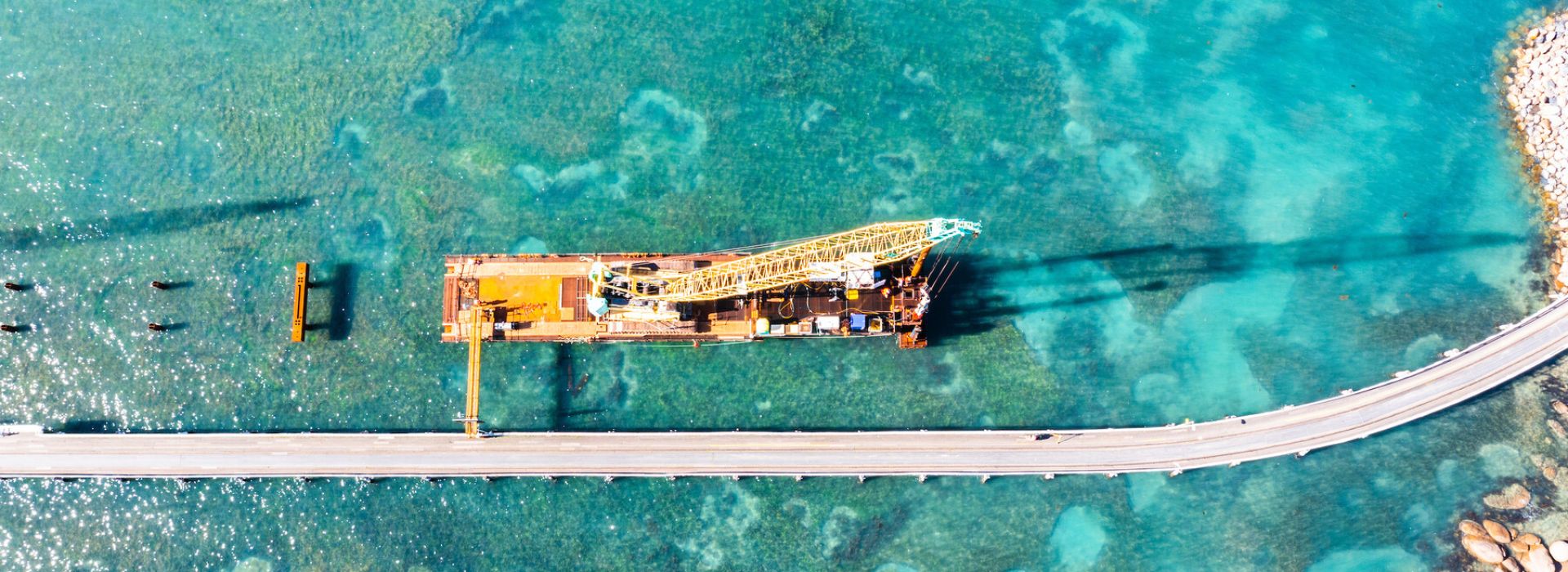
Low impact marine construction
On the Granite Island Causeway Project in South Australia our team used the 'hand over hand' construction method to minimise environmental impacts and ensure delivery on time.
The 'hand over hand' method employs three concurrent work fronts:
- Front one installing the permanent piles
- Front two installing the grouted HDPE sleeves and the precast headstocks
- Front three installing the precast longitudinal girders and decks.
As the structure advances out into the water it acts as a construction platform for the work crews to build the next stage. Each work front takes a similar duration, ensuring maximum certainty in productivity and schedule.
Analysis was conducted on various construction approaches during the tender phase, including the use of jack-up barges or a temporary bridge structure to facilitate construction. However, the 'hand over hand' method was the only one capable of achieving completion by the target date.
The other benefit of the method is its minimal footprint. Minimising the impact on the sensitive marine environment was a key consideration during the tender and design phases of the project.
The adoption of the method, along with the use of precast prestressed deck units which pushed the span out as far as possible, minimised the number of pile driving operations further reducing the impact on the marine environment.
The design and construction methodology was fit-for-purpose and extremely efficient. It resulted in on time and on budget completion and had a low impact on Victor Harbor's rich marine ecology.
Safety
We never compromise on safety.
We foster our 'Home Without Harm' safety culture through robust processes, effective systems, and by recognising and rewarding safe behaviours.
Our Site Safety Managers are always on our project leadership teams, ensuring safety is prioritised in all site activities. Every team member has clear safety responsibilities, aimed at protecting themselves, their colleagues, and the community.
We're also leading our industry in the adoption of new safety technologies, like virtual reality plant simulators and AI-enabled blind spot elimination. Check out the case studies below for more information.
Underpinning it all are our Safety Golden Rules. Built on our long-term collective knowledge and learnings, they are specifically targeted at preventing fatalities and serious injuries.
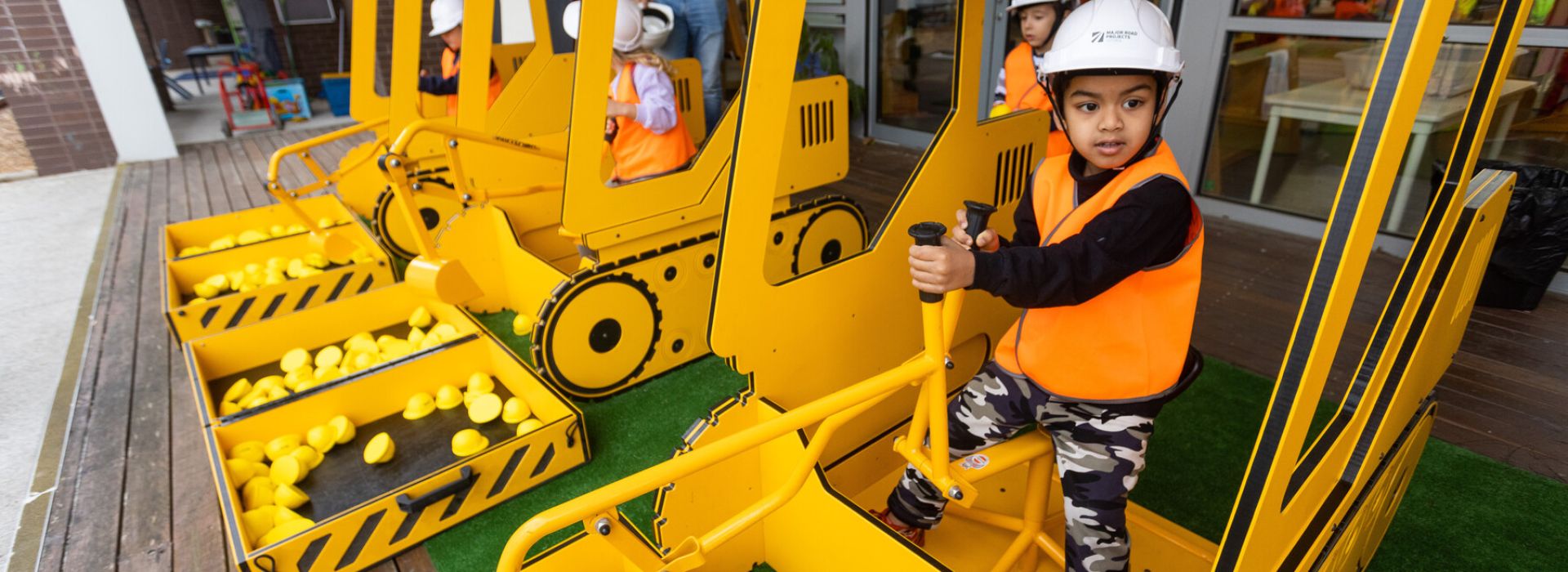
Social
We consider the 'Social' aspect of ESG to encompass everything related to people.
That's from ensuring everyone goes Home Without Harm, to making a positive and meaningful impact on the well-being and prosperity of our employees, stakeholders, and the communities we engage with. This focus aligns seamlessly with our purpose of 'Providing a Better Life'.
Our commitment begins with our rigorous safety management system and extends to maximising local employment and supply opportunities, as well as delivering needs-based community support and uplift initiatives through our projects.
Sustainability (ESG)
Our purpose is 'Providing a Better Life’ - today and into the future. That’s why sustainability, in all its forms, is considered in every project, process and product across our business.
Our approach is clearly articulated in our Sustainability Policy.
We're about action not just aspiration. Our ambitious but achievable {tip title="Carbon Reduction Roadmap" content=""} carbon reduction road-map {/tip} will see us be operationally net zero by 2030, with 44 initiatives that are being progressively rolled out across the company. Last year we reduced our carbon emissions by 442 tonnes through the use of solar technologies alone, and diverted almost two million tonnes of waste from landfill.
Closing Text - General, with video, no contacts
Summary
Thank you for taking an interest in McConnell Dowell's skills, capabilities and approach. Additional information is available on our website, including additional project case studies.
Contacts
Claire Tanner
Pre-Contracts Manager SA & WA
M: +61 (0)418 645 297
claire.tanner@mcdgroup.com LinkedIn